Education & explainersDT Civil CoreRoad or Tunnel How Engineers Choose Routes Through Nepal’s Himalayas
Road or Tunnel How Engineers Choose Routes Through Nepal’s Himalayas
Long-form18:01
Published Sep 20, 2026, 11:00 AM · 3w ago

DT Civil Core
3.9K subscribers · median 1.4K views
AI imagery · confirmed$Likely
Views
1,477
+0 views/hour
Likes
5
0.3% of views
Comments
5
0.34% of views
Checked every 12 h while the video is this age · last check 11h ago · next in 34 min. YouTube itself updates public counts with a short delay.
Views / hour now
0
measured 11h ago
Peak views / hour
—
Avg views / day
58
since upload
First 24 hours
—
not tracked from upload
vs channel median
1.0×
Rank in channel
#8
of 20 tracked
Engagement
0.7%
likes + comments / views
Est. ad revenue
$6–$15
lifetime, $4–10 RPM
Views over time
3 readings · line: total views · bars: views gained per hour
Description
Should Nepal keep its highways on the mountainside — or tunnel straight through the Himalayas?
There is no universal answer.
A surface highway can remain practical where slopes, drainage, rockfall and river-side hazards can be controlled.
A tunnel can bypass difficult surface terrain — but it replaces those problems with another engineering world: fractured rock, groundwater, excavation support, ventilation, emergency escape and decades of underground operation.
This documentary explores how engineers make that choice in Nepal.
We begin near Nagdhunga, where a localized section of the Prithvi Highway at Pataleban sank on September 2, 2026. Traffic was halted, and eligible small vehicles could be diverted through the new Nagdhunga Tunnel.
The contrast was striking:
the surface road had a problem,
while the underground route provided an alternative.
But that does not mean every dangerous mountain road should become a tunnel.
On the 33-kilometer Narayanghat–Mugling corridor, engineers instead strengthened the surface highway. More than 100 slopes received protection works using methods that included drainage and bioengineering, while 23 more complex slopes received combinations of stronger site-specific treatments.
Nagdhunga represents another strategy.
Its approximately 2.68-kilometer road tunnel moves part of the highway beneath difficult terrain, while also requiring ventilation, lighting, communications, emergency systems and a parallel evacuation system.
Then there is Siddhababa, where the engineering solution is not simply road or tunnel.
The project combines a roughly 1.1-kilometer main tunnel with surface-road upgrading, a 780-meter rock shed and additional bypass-tunnel elements.
And on the Kathmandu–Terai Fast Track, roads, bridges and tunnels form parts of a larger corridor, while additional tunnel locations have been considered through design review.
The deeper question is not which technology is “better.”
It is:
What is the dominant hazard?
Can the surface
Tags
Nepal tunnelNepal road tunnelNepal mountain roadsHimalayan tunnelsHimalayan road engineeringmountain road constructionroad tunnel engineeringimpossible engineeringNepal infrastructureNagdhunga TunnelNagdhunga road tunnelNarayanghat Mugling roadSiddhababa Tunnellandslide engineeringrockfall protection
Details
- Published
- Sep 20, 2026, 11:00 AM
- Length
- 18:01 (1,081 s)
- Format
- Long-form
- Category
- —
- Audio language
- —
- Quality
- —
- Captions
- —
- Made for kids
- —
- Licensed content
- —
- Video ID
- 0Yx_Vo7O7vY
More from DT Civil Core
 What Really Triggered the Nepal–Tibet Mountain Collapse? New Evidence Explained642 views · 2w ago
 Why Engineers Build Hydropower Plants Inside Himalayan Mountains (Full Process)1.4K views · 2w ago
 Why Himalayan Bridges Fail Even When the Bridge Is Strong?1.9K views · 2w ago
 How Nepal Rebuilds Himalayan Highways After the Mountains Destroy Them2.2K views · 3w ago
 How the UAE Is Building a Second Oil Pipeline to Bypass the Strait of Hormuz1.2K views · 3w ago
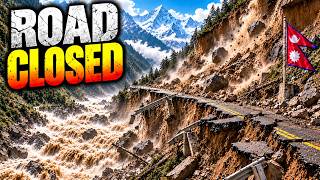 Why Nepal Keeps Building Roads Through the Himalayas — Even When the Mountains Keep Destroying Them2.1K views · 3w ago
 Nepal Built a Highway Through the Himalayas — Then the River Took the Road Back7.7K views · 3w ago
 Why Rebuilding Fast Is an Engineering Trap ⚠️192 views · 4w ago
Statistics from the YouTube Data API, tracked by FameX. Views per hour, revenue and comparisons are FameX estimates.