The World Is Rearming. What Gets Cut to Pay for It?
Long-form16:12EducationPublished Oct 19, 2026, 3:24 PM · 1d ago

Views
9,129
+86 views/hour
Views / hour now
86
measured 14m ago
Peak views / hour
356
6h ago
First 24 hours
7K
views at 24 h
Engagement
2.6%
likes + comments / views
Likes
187
2.1% of views
Comments
52
0.57% of views
Est. ad revenue
$91–$219
lifetime, $10–24 RPM
Checked every 30 min while the video is this age · last check 14m ago · next in 15 min. YouTube itself updates public counts with a short delay.
Avg views / day
6.3K
since upload
vs channel median
0.4×
this video's views ÷ the channel's usual
Rank in channel
#19
of 20 tracked
Views over time
24 readings
Total views Views gained per hour
Description
The peace dividend is over. Now governments have to decide who pays for security.
Global military spending is surging across Europe, Asia, the Middle East, and the United States as governments respond to Russia, China, Iran, North Korea, and growing uncertainty over the future of American security guarantees. But defence spending does not exist outside the economy.
Every missile, ship, drone, ammunition factory, satellite network, and air-defence system competes with pensions, healthcare, infrastructure, research, education, energy investment, and debt service. In this episode of The Financial Historian, we examine the economics of global rearmament, the end of the post-Cold War peace dividend, and the uncomfortable fiscal question behind the new arms race: when governments spend hundreds of billions more on defence, what gets less?
Key Facts & Insights
• Global military spending reached a record $2.9 trillion in 2025, marking the eleventh consecutive annual increase in worldwide defence expenditure.
• European military spending rose sharply as NATO members committed to spending at least 3.5% of GDP on core defence by 2035, with additional spending planned for infrastructure, cybersecurity, civil preparedness, and defence-industrial capacity.
• Rising military budgets are colliding with ageing populations, higher healthcare and pension costs, infrastructure needs, energy investment, and rising government interest expenses.
• Israel’s revised 2026 budget offers a direct example of the trade-off: higher defence spending was accompanied by more borrowing and a 3% reduction in civilian government spending.
• Japan faces a particularly difficult fiscal dilemma as it increases defence spending while supporting one of the world’s oldest populations and carrying one of the largest public-debt burdens among advanced economies.
• Taiwan is rapidly expanding spending on missiles, drones, air defence, and military resilience as regional security risks rise and governments place greater emphasis on self-defence.
• Rearmament can be financed only through a combination of higher taxes, additional government debt, cuts to other public spending, or stronger economic growth. There is no cost-free fifth option.
• Military spending can also support manufacturing, aerospace, semiconductors, cybersecurity, shipbuilding, robotics, and advanced research — but the economic impact depends heavily on what is purchased, where it is produced, and what civilian investment is displaced.
Further Reading
• The Rise and Fall of the Great Powers — Paul Kennedy — A classic examination of the relationship between military commitments, economic capacity, state power, and the danger of strategic overextension.
• The Guns of August — Barbara W. Tuchman — A masterful account of how military planning, alliances, and strategic assumptions can lock governments into conflicts with enormous economic and political consequences.
• The Price of Peace — Zachary D. Carter — A broader exploration of public spending, economic policy, state capacity, and the political choices societies make about where national resources should go.
#DefenseSpending #MilitarySpending #GlobalEconomy #NATO #Rearmament #PeaceDividend #GovernmentSpending #GovernmentDebt #FiscalPolicy #DefenseBudget #Geopolitics #GlobalSecurity #JapanDefense #Taiwan #MiddleEast #EconomicHistory #FinancialHistory #FinanceExplained #MoneyAndPower #financialhistorian
If this gave you a new perspective, hit subscribe. History has the answers—and I’ll show you where to look.
Tags
financial historyeconomic historyfinancial historianhistory financemoney explainedmoney historyhow money worksfinance historyfinance historianhistory of moneyhistory of financeeconomic collapsefinance history channeleconomic history of the worldhistory of bankinginflationinflation explainedfinance documentaryglobal economymoney mindsetmoney documentaryfinancial crisisglobal financeglobal wealth inequalitydebt crisis
Details
- Published
- Oct 19, 2026, 3:24 PM
- Length
- 16:12 (972 s)
- Format
- Long-form
- Category
- Education
- Audio language
- EN-CA
- Quality
- HD
- Captions
- Yes
- Made for kids
- No
- Licensed content
- Yes
- Video ID
- 0uy1fMzdlhI
More from Financial Historian
 How the Great Fire of London Created Modern Insurance8.8K views · 4d ago · +20/h
 Why Does the Richest Country Feel So Poor?15.1K views · 6d ago · +12/h
 What Happens When “Risk-Free” Debt Becomes the Risk?17K views · 1w ago · +10/h
 Why Financial Crises Create Strongmen23.9K views · 1w ago · +3/h
 The World Is Building a Backup Economy10.9K views · 1w ago · +2/h
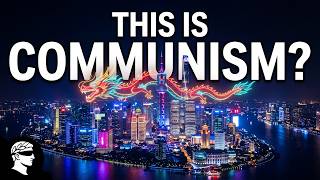 Is China Actually Communist?67.9K views · 2w ago · +3/h
 Why Every Empire Eventually Prints Too Much Money38.3K views · 2w ago · +3/h
 What Happens If Everyone Wants Their Money Back?22.1K views · 2w ago · +3/h
Statistics from the YouTube Data API, tracked by FameX. Views per hour, revenue and comparisons are FameX estimates.