What If NOM Ate LUMI? (Black Hole vs White Hole)
Long-form8:10Entertainment
Published Oct 15, 2026, 10:26 AM · 8h ago

Predators SIMULATOR
3.4K subscribers · median 16.8K views
Animation · confirmed$Likely
Views
3,725
+581 views/hour
Likes
67
1.8% of views
Comments
11
0.29% of views
Checked every 30 min while the video is this age · last check 1h ago · next in 0 min. YouTube itself updates public counts with a short delay.
Views / hour now
581
measured 1h ago
Peak views / hour
721
3h ago
Avg views / day
3.7K
since upload
First 24 hours
—
not tracked from upload
vs channel median
0.2×
Rank in channel
#20
of 23 tracked
Engagement
2.1%
likes + comments / views
Est. ad revenue
$15–$37
lifetime, $4–10 RPM
Views over time
15 readings · line: total views · bars: views gained per hour
Description
Nom has eaten everything… except Lumi. A white hole is the one thing nothing can get into, so what happens when a black hole tries anyway? On the third try they lock together and tear spacetime open: a WORMHOLE. Fused, Nom and Lumi tunnel through 10 universes, each with a different law of nature (antimatter, a mirror universe, 2D Flatland, a newborn universe, a dark universe, a universe where time runs backward, the Nom-verse, a simulated universe and the multiverse itself), swallowing every one while the multiverse gets less and less stable…
Watch the ruler under the wormhole: a wormhole's throat is as wide as a black hole of the same mass (4GM/c²), so every universe it swallows makes it wider. The STABILITY bar above it shows how close the multiverse is to collapsing.
Real science, cartoon licence: the masses in universe 1 are real; antimatter, mirror matter, Flatland, the cosmic dawn, dark matter, white holes, many-worlds, the simulation argument and eternal inflation are real ideas (most of them hypotheses, see the sources). A fused, traversable Nom + Lumi wormhole is pure fiction. 86 named things, 54 universes swallowed before the count breaks.
Chapters
0:00 Intro: what if Nom ate Lumi?
0:05 10 universes · 1 wormhole
0:15 Universe 1 · Three tries → a wormhole
0:58 Universe 2 · Antimatter universe
1:42 Universe 3 · Mirror universe
2:26 Universe 4 · Flatland
3:10 Universe 5 · Newborn universe
3:54 Universe 6 · Dark universe
4:38 Universe 7 · Backward universe
5:22 Universe 8 · The Nom-verse
6:06 Universe 9 · Simulated universe
6:50 Universe 10 · The multiverse
7:16 Multiverse collapse → MEGA PTOO
7:26 Everything goes back
7:38 Home
7:58 Where should Nom & Lumi go next?
Sources
• Wormhole: Einstein & Rosen, "The Particle Problem in the General Theory of Relativity", Phys. Rev. 48, 73 (1935); the full (Kruskal) Schwarzschild spacetime joins a black-hole and a white-hole region; such a bridge pinches off too fast to cross (Fuller & Wheeler 1962) — a fused, traversable Nom+Lumi wormhole is fiction
• White hole: a white hole is the time-reverse of a black hole: nothing can enter it from outside (general relativity, e.g. Wald, General Relativity, 1984)
• Throat width: a Schwarzschild wormhole's throat has the Schwarzschild radius r = 2GM/c², so its width is 4GM/c²; start: Nom 10 + Lumi 10 solar masses (illustrative); each universe torn = ~1.5 × 10^53 kg (ordinary matter of our observable universe, assumed the same in every universe)
• Universe 1 masses: NASA Planetary Fact Sheets (Moon, Mars, Saturn, Jupiter, Sun) · Sirius A 2.06 M☉ (Bond et al. 2017) · Crab Nebula ejecta ~4.6 M☉ (Fesen et al. 1997) · Betelgeuse ~16–19 M☉ · Orion Nebula ~2,000 M☉ · Andromeda ~1 × 10^12 M☉, Milky Way ~1.5 × 10^12 M☉ (total incl. dark matter; published estimates vary)
• Antimatter: annihilation turns all mass into energy, E = mc²: 1 g + 1 g → 1.8 × 10^14 J ≈ 43 kilotons of TNT; antimatter has the same mass as matter (CERN ALPHA-g 2023: it falls the same way)
• Mirror matter: Lee & Yang (1956) suggested mirror partners of particles; "mirror world" by Kobzarev, Okun & Pomeranchuk (1966) — hypothetical
• Flatland: Edwin A. Abbott, "Flatland: A Romance of Many Dimensions" (1884) — A Square, Triangles, Pentagons, Hexagons, Circles (priests); in 2+1-dimensional general relativity masses do not attract each other (Deser, Jackiw & 't Hooft 1984)
• Newborn universe: recombination ~380,000 years after the Big Bang at ~3,000 K; that light is the cosmic microwave background, now 2.7 K (Planck 2018); first stars ~100–200 million years later; primordial gas ~75% hydrogen, ~25% helium by mass, traces of deuterium and lithium
• Dark matter: ~85% of all matter (Planck 2018: Ωc ≈ 0.26 of Ωm ≈ 0.31); seen only through gravity, e.g. gravitational lensing; axions and WIMPs are hypothetical candidates; "dark stars" are hypothetical
• Backward time: the white-hole solution is the time reversal of the black-hole solution; a universe with a reversed arrow of time is a thought experiment
• Many worlds: Hugh Everett III, "Relative State Formulation of Quantum Mechanics", Rev. Mod. Phys. 29 (1957) — an interpretation, not a proven fact
• Simulation: Nick Bostrom, "Are You Living in a Computer Simulation?", Philosophical Quarterly 53 (2003) — hypothesis
• Multiverse: eternal inflation: Vilenkin (1983), Linde (1986), Guth — bubble universes are a hypothesis
• Cartoon licence: Nom & Lumi, all on-screen sizes, eating universes, the multiverse collapse and the mega-PTOO are illustration; real values above
#BlackHole #WhiteHole #Wormhole #Multiverse #NomAndLumi #Universe
Tags
black holewhite holewormholeblack hole vs white holewhat if a black hole ate a white holeeinstein rosen bridgemultiverseparallel universesantimattermirror universeflatlanddark mattertime reversalmany worldssimulation theoryeternal inflationspace animationastronomyscience animationnom and lumiuniverse
Details
- Published
- Oct 15, 2026, 10:26 AM
- Length
- 8:10 (490 s)
- Format
- Long-form
- Category
- Entertainment
- Audio language
- EN-US
- Quality
- HD
- Captions
- No
- Made for kids
- No
- Licensed content
- Yes
- Video ID
- 2qqk_qlD2hQ
More from Predators SIMULATOR
 Can NOM crack Lumis DIARY2.3K views · 20h ago · +60/h
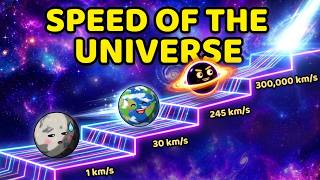 Slowest to Fastest Things in the Universe — The Great Space Race3.6K views · 23h ago · +126/h
 Can Lumis JELLY survive NOM3.1K views · 1d ago · +35/h
 Can NOM skip to the FUTURE5.6K views · 1d ago · +203/h
 Which Planet Wins the Halloween Costume Contest? | Style Comparison3.9K views · 1d ago · +14/h
 Can Lumi take NOMs PHOTO6.1K views · 2d ago · +34/h
 What can NOM MELT5.1K views · 2d ago · +24/h
 Black Hole NOM Eats Everything LUMI Spits Out17.1K views · 2d ago · +133/h
Statistics from the YouTube Data API, tracked by FameX. Views per hour, revenue and comparisons are FameX estimates.