Grosse Île: The Quarantine Island Every Ship Had to Stop At
Long-form53:52People & BlogsPublished Sep 27, 2026, 9:33 PM · 3w ago

Views
267
+0 views/hour
Views / hour now
0
measured 3h ago
Peak views / hour
—
First 24 hours
—
not tracked from upload
Engagement
4.9%
likes + comments / views
Likes
10
3.8% of views
Comments
3
1.12% of views
Est. ad revenue
$1–$2
lifetime, $4–9 RPM
Checked every 12 h while the video is this age · last check 3h ago · next in 533 min. YouTube itself updates public counts with a short delay.
Avg views / day
12
since upload
vs channel median
0.1×
this video's views ÷ the channel's usual
Rank in channel
#19
of 20 tracked
Views over time
1 readings
Total views Views gained per hour
Live tracking started
The chart fills in as FameX records new readings.
Description
For more than a century, nobody sailing up the St Lawrence to Quebec could go past a small island thirty miles downstream without stopping. A gun battery on the shore made sure of it. Ships were inspected at anchor, the sick were taken off, the healthy were washed and held, and the bedding was spread on the grass and fumigated. Most years this was an ordinary if unpleasant procedure that almost nobody remembered afterwards. In the summer of 1847 the system collapsed: forty vessels lay in a line two miles down the river, the sheds and the tents and finally the chapels filled up, and the staff who were supposed to be inspecting them began dying themselves. This is the everyday working life of Grosse Ile - the signal, the rope across the deck, the washing sheds, the bakery, the wages, the winter - and what that one summer was actually like for the people on it.
Most of this film is the ordinary station. The famous summer comes last, and it lands harder once you know the machine that broke.
📌 What you'll learn
• How the station worked in a normal year: the signal and the inspection at anchor, the four categories a passenger could be placed in, the washing tubs and the fumigation of clothes and bedding, the fifteen-day detention, the five shillings a head emigrant tax, and what the healthy actually did while they waited
• Who lived on the island and what their days were: the medical superintendent on twenty-five shillings a day, the assistant surgeons, the orderlies and nurses, the boatmen, the cooks, the carpenters, the clergy of several churches and the garrison - with the pay, the quarters, the food, the winter and the risk each of them took by being there
• The summer of 1847: the warning given in February, the three thousand pounds asked for and the three hundred granted, the queue of ships, the twelve new buildings thrown up in weeks, the staff and clergy who fell ill, the burials, and the children left without parents - told from the record and without spectacle
• Why the death toll has never been agreed on, what each of the competing figures is actually counting, and which records let a family trace an ancestor through the island today
Educational and historical content.
📚 Key sources
- Parks Canada - Grosse Ile and the Irish Memorial National Historic Site (site history, the 1847 season, and the station statistics pages)
- Library and Archives Canada - Immigrants at Grosse Ile Quarantine Station, 1832 to 1937 (indexed database of 11,612 references)
- Andre Charbonneau and Andre Sevigny, 1847, Grosse Ile: A Record of Daily Events, Parks Canada / Canadian Heritage, Ottawa, 1997
- Dictionary of Canadian Biography - DOUGLAS, GEORGE MELLIS (University of Toronto and Universite Laval)
- Michael Quigley, Grosse Ile: Canada's Island Famine Memorial, History Ireland, volume 5 number 2, Summer 1997
- and other sources.
#GrosseIle #Quebec #IrishCanadian #CanadianHistory #Genealogy #HowWeLivedHere #StLawrence #Quarantine #IrishDiaspora #LocalHistory
ℹ️ About this video
Educational and historical content. The script, research and edit are the author's own, based on the sources listed in the description. The visual reconstructions and the narrator's voice are created with the help of AI, for illustrative purposes — these are not real recordings or authentic archival footage. Stories are simplified for a general audience and may contain small approximations. Purpose: to inform and to remember.
🕰️ Historical context
The events described took place under legal and social conditions very different from today's. They are presented for historical understanding, without intent to justify or condemn any person, community or group.
Details
- Published
- Sep 27, 2026, 9:33 PM
- Length
- 53:52 (3,232 s)
- Format
- Long-form
- Category
- People & Blogs
- Audio language
- EN
- Quality
- HD
- Captions
- No
- Made for kids
- No
- Licensed content
- Yes
- Video ID
- 3DTCXoHSFX4
More from How We Lived Here
 Lunenburg, 1921: The Winter They Built the Bluenose3.4K views · 1d ago
 Springhill and the Coal: Life Above the Deepest Mine Before the Last Shift7.3K views · 2d ago · +61/h
 Barkerville, 1868: The Gold Town That Burned and Was Rebuilt Before Winter4.6K views · 3d ago · +31/h
 Roughing It in the Bush: Two Sisters in the Backwoods of Upper Canada, 18324.4K views · 4d ago · +64/h
 Waterloo County, 1925: The Mennonite Farms That Said No to the Car6.6K views · 5d ago · +38/h
 THIS IS HOW CANADA LIVED: 100 Years of One Family (1867–1967) | Full Documentary777 views · 6d ago · +3/h
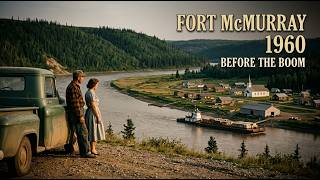 Fort McMurray, 1960: The River Town Before the Oil Sands28K views · 1w ago · +94/h
 Halifax, 1912: The City That Buried the Titanic's Dead51.1K views · 1w ago · +183/h
Statistics from the YouTube Data API, tracked by FameX. Views per hour, revenue and comparisons are FameX estimates.