Every Type of Nebula Explained in 11 Minutes
Long-form11:26Science & Technology
Published Sep 1, 2026, 7:00 PM · 6w ago

Patrick Explained
1.6K subscribers · median 2.4K views
Animation · confirmed$Likely
Views
1,388
+0 views/hour
Likes
29
2.1% of views
Comments
3
0.22% of views
Checked every 24 h while the video is this age · last check 2h ago · next in 1264 min. YouTube itself updates public counts with a short delay.
Views / hour now
0
measured 2h ago
Peak views / hour
—
Avg views / day
31
since upload
First 24 hours
—
not tracked from upload
vs channel median
0.6×
Rank in channel
#13
of 20 tracked
Engagement
2.3%
likes + comments / views
Est. ad revenue
$6–$14
lifetime, $4–10 RPM
Views over time
0 readings · line: total views · bars: views gained per hour
Live tracking started
The chart fills in as FameX records new readings.
Description
In this video, I take you on a journey through every type of nebula in the universe — from the glowing clouds where stars are born, to the violent remains of stars that died, to the single cloud that became you. We start with emission nebulae, vast clouds of gas set glowing by the young stars inside them, and reflection nebulae that don't shine on their own but scatter the blue light of nearby stars. Then the dark nebulae — cold, dense clouds so thick they blot out the stars behind them — and the stellar nurseries where new suns are actively forming. We go deeper: bok globules, tiny dark knots quietly collapsing into stars, and planetary nebulae, the glowing shells a dying sun-like star throws off in its final act. Then it gets stranger — bipolar nebulae shaped like glowing hourglasses, supernova remnants left behind when a massive star detonates, and Wolf-Rayet nebulae carved by some of the hottest, most violent stars known. We look at the rarest and youngest: pre-planetary nebulae caught in a fleeting transition, Herbig-Haro objects where jets from newborn stars slam into space at hundreds of miles per second, and protoplanetary disks — the swirling rings where planets are being built right now. Finally we reach the giants, the solar nebula our own system was born from, and the great cosmic cycle that turns dead stars back into new ones. And by the end, you'll understand the strangest truth of all: every atom in your body was once part of one of these clouds. You are made of this.
⏱️ CHAPTERS
0:00 Emission Nebula
0:00 Reflection Nebula
0:00 Dark Nebula
0:00 Stellar Nursery
0:00 Bok Globules
0:00 Planetary Nebula
0:00 Bipolar Nebula
0:00 Supernova Remnant
0:00 Wolf-Rayet Nebula
0:00 Pre-Planetary Nebula
0:00 Herbig-Haro Objects
0:00 Protoplanetary Disks
0:00 Giant Nebula
0:00 The Solar Nebula
0:00 The Cycle
0:00 You Are Made of This
▶ More explainers coming soon — links added here as they drop:
Check out
Check out
For business inquiries: [email protected]
— DISCLAIMER —
This video is made for entertainment and educational purposes. Some concepts have been simplified to keep things clear and accessible, and a few details may not be perfectly precise. The goal is to spark your curiosity — not to replace proper research.
Patrick Explained breaks down the biggest, strangest, and most extreme things in the universe — explained simply, visually, and without the fluff.
#space #nebula #astronomy #universe #science #stardust #cosmos
Tags
solar systemearthblack holenebulaspaceEvery Type of
Details
- Published
- Sep 1, 2026, 7:00 PM
- Length
- 11:26 (686 s)
- Format
- Long-form
- Category
- Science & Technology
- Audio language
- EN
- Quality
- HD
- Captions
- No
- Made for kids
- No
- Licensed content
- Yes
- Video ID
- 4idFa45VAVg
More from Patrick Explained
 Closest Black Holes To Earth Explained in Under 11 Minutes740 views · 3d ago · +6/h
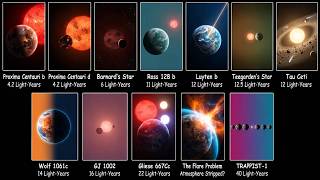 Closest Planets That Could Support Life Explained in 11 Minutes586 views · 1w ago
 The BIGGEST Things in The Universe Explained in 10 Minutes495 views · 1w ago
 Every Type of Comet / Every Type of Asteroid Explained in 11 Minutes410 views · 2w ago
 The SCARIEST Sounds in Space1.8K views · 2w ago
 The Biggest Stars Near Us Explained in 13 Minutes8.1K views · 3w ago
 Every Star System Closest To Earth Explained in 10 Minutes59.4K views · 3w ago · +4/h
 Every Type of Dimension Explained in 13 Minutes2.4K views · 4w ago
Statistics from the YouTube Data API, tracked by FameX. Views per hour, revenue and comparisons are FameX estimates.