Humanity Almost Went Extinct — Here’s How We Survived
Long-form12:28EducationPublished Aug 10, 2026, 10:00 PM · 2mo ago

Views
133
+0 views/hour
Views / hour now
0
measured 15h ago
Peak views / hour
—
First 24 hours
—
not tracked from upload
Engagement
2.3%
likes + comments / views
Likes
3
2.3% of views
Comments
0
0.00% of views
Est. ad revenue
—
channel not monetized
Checked every 24 h while the video is this age · last check 15h ago · next in 538 min. YouTube itself updates public counts with a short delay.
Avg views / day
2
since upload
vs channel median
0.8×
this video's views ÷ the channel's usual
Rank in channel
#13
of 21 tracked
Views over time
0 readings
Total views Views gained per hour
Live tracking started
The chart fills in as FameX records new readings.
Description
Humanity has almost gone extinct more than once — and most people have never heard the full story. This video breaks down four of the closest calls in human history: the Toba supervolcano genetic bottleneck, the Black Death, the 1918 flu pandemic, and the nuclear near-misses of the Cold War.
Each of these moments could have ended the human species entirely. Instead, they reveal just how fragile our existence really is — and how close we might still be to the next one.
If you're into dark history, existential questions, ancient human survival, and the psychology of near-extinction events, subscribe for more videos like this one.
Topics covered: human extinction events, Toba catastrophe theory, population bottleneck, Black Death pandemic, 1918 Spanish flu, Cuban Missile Crisis, Stanislav Petrov, Vasili Arkhipov, the Great Filter, existential risk, ancient human history
#humanhistory #historydocumentary #humanextinction #ancienthistory #humansurvival
Tags
humanity almost went extincthuman extinctionhuman survivalhistory documentaryancient history
Details
- Published
- Aug 10, 2026, 10:00 PM
- Length
- 12:28 (748 s)
- Format
- Long-form
- Category
- Education
- Audio language
- EN
- Quality
- HD
- Captions
- Yes
- Made for kids
- No
- Licensed content
- No
- Video ID
- 7X8JfJrdNVE
More from SimplyTold
 How Did Humans Invent the Toilet?1.5K views · 1d ago · +2/h
 Why Did Humans Start Wearing Clothes?288K views · 1w ago · +576/h
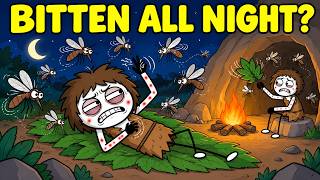 How Did Ancient Humans Sleep With Mosquitoes Everywhere6.2K views · 2w ago
 What Happened After Captain Smit Machchhar Was Attacked at 34,000 Feet?198 views · 2w ago · +1/h
 Did Ancient Humans Survive Without Painkillers?421 views · 6w ago
 How Did We Discover Light Takes Time?476 views · 6w ago
 How we invented spear?63 views · 6w ago
 How we discoverd gold?208 views · 7w ago
Statistics from the YouTube Data API, tracked by FameX. Views per hour, revenue and comparisons are FameX estimates.