The DANGEROUS Guide to Master METACOGNITION (Ayanokoji Method)
Long-form11:22People & BlogsPublished Sep 16, 2026, 1:59 PM · 4w ago

Views
2,309
+0 views/hour
Views / hour now
0
measured 10h ago
Peak views / hour
—
First 24 hours
—
not tracked from upload
Engagement
1.9%
likes + comments / views
Likes
39
1.7% of views
Comments
5
0.22% of views
Est. ad revenue
$9–$23
lifetime, $4–10 RPM
Checked every 24 h while the video is this age · last check 10h ago · next in 819 min. YouTube itself updates public counts with a short delay.
Avg views / day
68
since upload
vs channel median
0.9×
this video's views ÷ the channel's usual
Rank in channel
#14
of 22 tracked
Views over time
0 readings
Total views Views gained per hour
Live tracking started
The chart fills in as FameX records new readings.
Description
This video challenges the popular understanding of the Dunning-Kruger effect, citing new research from the University of Bath and the London School of Economics, published July 2026, suggesting the causality behind the effect may be reversed from how it's commonly understood. It revisits the original 1999 Kruger and Dunning study, explaining that bottom-quartile performers overestimated their scores by roughly 50 percentile points while top performers actually underestimated their own relative performance—both driven by the same underlying metacognitive limitation. The video also references a study published in Psychological Review arguing the popular version of the effect is a statistical artifact, and that high-ability people may actually be the more overconfident group when methodology is corrected. It then connects this to a 2026 phenomenon researchers call the "illusion of fluency," where confident, well-structured AI-generated answers create false confidence and reduce genuine learning through a mechanism called "metacognitive laziness." The video closes by outlining a three-step calibration training protocol—predict, monitor, check—designed to close the gap between perceived and actual competence, tying it to what it calls the "Ayanokoji principle" of ruthless self-assessment.
**Keywords**
Dunning-Kruger effect, metacognition, University of Bath, London School of Economics, Kruger and Dunning 1999 study, Psychological Review, overconfidence research, self-assessment, illusion of fluency, metacognitive laziness, AI tools learning, calibration training, retrieval practice, spaced repetition, interleaving, desirable difficulties, cognitive bias, self-awareness research, learning science, illusion of competence
In this video, you'll learn why the popular version of the Dunning-Kruger effect may be scientifically backwards, how new research links AI tool use to a dangerous illusion of understanding, and the exact three-step calibration training protocol you can use to close the gap between what you think you know and what you actually know.
Details
- Published
- Sep 16, 2026, 1:59 PM
- Length
- 11:22 (682 s)
- Format
- Long-form
- Category
- People & Blogs
- Audio language
- EN-US
- Quality
- HD
- Captions
- No
- Made for kids
- No
- Licensed content
- Yes
- Video ID
- Aik4Gs5SFWA
More from TriForge
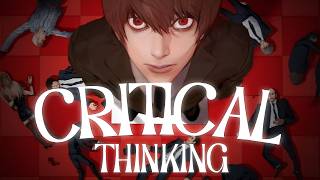 The ULTIMATE Guide to Critical THINKING (How to Make It Work for You)395 views · 1d ago · +180/h
 The Most DANGEROUS Way to Force Your Brain to Enjoy Hard Work (and How to Use It)343 views · 1d ago
 The Most DANGEROUS Way to Train Your BRAIN to BECOME A MASTERMIND4.6K views · 2d ago · +25/h
 The Art of Not Giving A F*ck (Like Ayanokoji)1.4K views · 1w ago · +1/h
 The FULL Guide to Increase IQ | School never taught you744 views · 1w ago · +1/h
 The ULTIMATE Guide to Become a MASTERMIND | School never taught you3.4K views · 1w ago · +1/h
 The FULL Guide to Master Of Human Behavior3.2K views · 3w ago
 The ULTIMATE Guide to Master OBSERVATION (Full Guide)2.6K views · 3w ago · +1/h
Statistics from the YouTube Data API, tracked by FameX. Views per hour, revenue and comparisons are FameX estimates.