Every Star That Could Exist Explained In 8 Minutes
Long-form8:04Science & Technology
Published Jul 24, 2026, 2:12 AM · 2mo ago

Patrick Explained
1.6K subscribers · median 2.4K views
Animation · confirmed$Likely
Views
589
+0 views/hour
Likes
20
3.4% of views
Comments
0
0.00% of views
Checked every 24 h while the video is this age · last check 18h ago · next in 305 min. YouTube itself updates public counts with a short delay.
Views / hour now
0
measured 18h ago
Peak views / hour
—
Avg views / day
7
since upload
First 24 hours
—
not tracked from upload
vs channel median
0.3×
Rank in channel
#17
of 20 tracked
Engagement
3.4%
likes + comments / views
Est. ad revenue
$2–$6
lifetime, $4–10 RPM
Views over time
0 readings · line: total views · bars: views gained per hour
Live tracking started
The chart fills in as FameX records new readings.
Description
In this video, I take you on a journey through every star that could exist — not just the ordinary ones burning in the night sky, but the strange, the theoretical, and the downright impossible. We start with the familiar: red dwarfs, sun-like stars, and blue giants, the tame, shining balls of gas everyone knows. But those are only the beginning. From there we climb into the graveyard — white dwarfs, neutron stars, and magnetars, the dense corpses stars leave behind — before things get truly bizarre. We meet the vampire stars that steal life from their neighbors, and the buried star with a neutron star hidden at its core. Then we cross the line into exotic matter entirely: quark stars, where the very particles inside atoms dissolve; preon stars, so dense a marble of them would outweigh a planet; and boson stars, ghostly, see-through objects that may be made of dark matter and could be mistaken for black holes. We reach the dark stars — the theorized first stars in the universe, powered not by fusion but by dark matter itself, growing millions of times larger than the Sun. And then the strangest of all: black hole stars — a discovery so new the James Webb telescope may have only just found them, giant balls of gas lit from within by a black hole at their heart. We finish at the very end of time, with the last stars the universe will ever make: frozen spheres of iron, glowing at almost absolute zero in a dead and empty cosmos. And by the end, you'll understand a strange truth — every star you have ever seen is one of the ordinary ones. The night sky was never the full catalogue of stars. It's only the first page.
▶ More explainers coming soon — links added here as they drop:
Check out: The Biggest Black Holes Explained in 8 Minutes
https://youtu.be/aJVrfKKvx9k
Check out: Every Way A Star Can Die Explained in 10 Minutes
https://youtu.be/nakTGy2bTdY
For business inquiries: [email protected]
— DISCLAIMER —
This video is made for entertainment and educational purposes. Some concepts have been simplified to keep things clear and accessible, and a few details may not be perfectly precise. The goal is to spark your curiosity — not to replace proper research.
Patrick Explained breaks down the biggest, strangest, and most extreme things in the universe — explained simply, visually, and without the fluff.
Details
- Published
- Jul 24, 2026, 2:12 AM
- Length
- 8:04 (484 s)
- Format
- Long-form
- Category
- Science & Technology
- Audio language
- EN
- Quality
- HD
- Captions
- No
- Made for kids
- No
- Licensed content
- Yes
- Video ID
- JNf7tzfeXbc
More from Patrick Explained
 Closest Black Holes To Earth Explained in Under 11 Minutes766 views · 4d ago
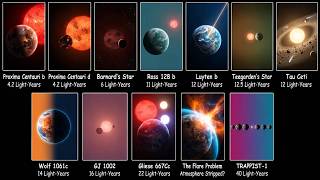 Closest Planets That Could Support Life Explained in 11 Minutes586 views · 1w ago
 The BIGGEST Things in The Universe Explained in 10 Minutes495 views · 1w ago
 Every Type of Comet / Every Type of Asteroid Explained in 11 Minutes410 views · 2w ago
 The SCARIEST Sounds in Space1.8K views · 2w ago
 The Biggest Stars Near Us Explained in 13 Minutes8.1K views · 3w ago
 Every Star System Closest To Earth Explained in 10 Minutes59.4K views · 3w ago · +4/h
 Every Type of Dimension Explained in 13 Minutes2.4K views · 4w ago
Statistics from the YouTube Data API, tracked by FameX. Views per hour, revenue and comparisons are FameX estimates.