Science & spaceB ExperimentHow Japan Built a $20B “Floating” Airport That Keeps Sinking — Kansai International Airport
How Japan Built a $20B “Floating” Airport That Keeps Sinking — Kansai International Airport
2.2× channel medianLong-form10:11EducationPublished Sep 30, 2026, 2:30 PM · 2w ago

Views
984
+0 views/hour
Views / hour now
0
measured 11h ago
Peak views / hour
—
First 24 hours
—
not tracked from upload
Engagement
0.2%
likes + comments / views
Likes
2
0.2% of views
Comments
0
0.00% of views
Est. ad revenue
$4–$10
lifetime, $4–10 RPM
Checked every 12 h while the video is this age · last check 11h ago · next in 3 min. YouTube itself updates public counts with a short delay.
Avg views / day
52
since upload
vs channel median
2.2×
this video's views ÷ the channel's usual
Rank in channel
#10
of 20 tracked
Views over time
1 readings
Total views Views gained per hour
Live tracking started
The chart fills in as FameX records new readings.
Description
How Japan Built a $20B “Floating” Airport That Keeps Sinking — Kansai International Airport
This is the incredible engineering story of Kansai International Airport, one of the world's most ambitious airports built entirely on an artificial island in Osaka Bay.
But there was a massive problem.
The soft seabed beneath the airport was never going to remain completely stable. As engineers added enormous amounts of material to create the artificial island, the weight compressed the underlying marine clay and caused the ground to settle.
So how did Japan build an international airport on the sea — and keep it operating while the ground beneath it continued to settle?
In this documentary, we explore:
• Why Japan needed an airport away from the crowded city of Osaka
• How engineers created an artificial island in deep water
• How seawalls and massive amounts of fill material created new land
• The soft marine soil beneath Kansai Airport
• Why ground settlement became one of the project's biggest engineering challenges
• How soil improvement and drainage techniques were used
• How engineers monitor and manage the changing ground
• How the airport was connected to the mainland by a massive bridge
• How Kansai International Airport continues to operate on its artificial island
Kansai International Airport is more than an airport. It is a giant engineering experiment where land, ocean, soft soil and infrastructure had to work together.
This documentary explores how Japan turned open water into a functioning international airport — and the engineering challenge of keeping it operational for decades.
Watch until the end to understand how Kansai International Airport was built and why its changing ground remains such an extraordinary engineering challenge.
If you enjoy engineering documentaries, mega projects, artificial islands, unusual infrastructure and real-world engineering stories, subscribe to B Experiment for more documentaries.
⚠️ DISCLAIMER: This video is created for educational and documentary purposes. Some visuals are AI-generated or cinematic reconstructions used to explain real engineering concepts and historical construction processes. The visuals are not intended to represent exact archival footage.
#KansaiAirport #KansaiInternationalAirport #Japan #Engineering #ArtificialIsland #MegaProjects #CivilEngineering #Airport #OceanEngineering #JapanEngineering #AirportEngineering #LandReclamation #EngineeringDocumentary #Construction
Tags
Kansai AirportKansai International AirportKansai Airport JapanKansai International Airport JapanKIX airportJapan airportJapan engineeringsinking airportJapan mega projectsJapan artificial islandOsaka Bay airportinfrastructure documentarKansai Airport documentaryJapan documentaryhow Kansai Airport was builtocean engineering
Details
- Published
- Sep 30, 2026, 2:30 PM
- Length
- 10:11 (611 s)
- Format
- Long-form
- Category
- Education
- Audio language
- HI
- Quality
- HD
- Captions
- No
- Made for kids
- No
- Licensed content
- No
- Video ID
- KmM1KToTJ4w
More from B Experiment
 1975 Emergency 😱 इतिहास फिर चर्चा में! #shorts #Emergency1975 #cjp #IndianPolitics #news34 views · 3d ago
 अगर Flight के दोनों Engines बंद हो जाएँ तो क्या होगा? What Happens During Dual Engine Failure?147 views · 4d ago
 पृथ्वी की 460 करोड़ साल की कहानी | Earth’s History, Dinosaurs & Human Evolution325 views · 1w ago
 अंटार्कटिका के नीचे क्या है? | What REALLY Lies Beneath Antarctica’s Ice?6 views · 2w ago
 समुद्र के नीचे 50 KM लंबी सुरंग कैसे बनी? | How Engineers Built The Channel Tunnel583 views · 3w ago
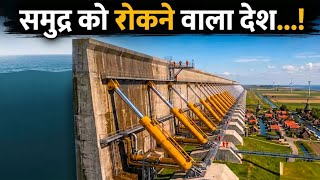 समुद्र के नीचे बसा पूरा देश फिर भी नहीं डूबता! | How the Netherlands Built a Country Below Sea Level5.7K views · 4w ago
 Russia’s 12 KM Deep Mystery 😱 #shorts #earth #facts #viral #science #ytshorts1.5K views · 4w ago
 Why Can’t Ships Stop Suddenly? 🚢😱 #shorts #ShipFacts #OceanFacts427 views · 4w ago
Statistics from the YouTube Data API, tracked by FameX. Views per hour, revenue and comparisons are FameX estimates.