RMS LUSITANIA Construction - In Color (1904–1907)
Long-form17:012.2× channel median
Published Sep 26, 2026, 4:15 PM · 2w ago

Thomas Relives History
33.4K subscribers · median 11.5K views
AI imagery · confirmed$Likely
Views
25,777
+7 views/hour
Likes
272
1.1% of views
Comments
17
0.07% of views
Checked every 12 h while the video is this age · last check 2h ago · next in 559 min. YouTube itself updates public counts with a short delay.
Views / hour now
7
measured 2h ago
Peak views / hour
7
2h ago
Avg views / day
1.3K
since upload
First 24 hours
—
not tracked from upload
vs channel median
2.2×
Rank in channel
#7
of 22 tracked
Engagement
1.1%
likes + comments / views
Est. ad revenue
$103–$232
lifetime, $4–9 RPM
Views over time
4 readings · line: total views · bars: views gained per hour
Description
Discover how RMS Lusitania was built between 1904 and 1907—brought back to life in color from the first steel frames at Clydebank to the sea trials that revealed a problem hidden inside the finished ship.
In this AI-powered historical reconstruction, we rebuild Lusitania one stage at a time using ship plans, engineering records, historical accounts, construction details, and surviving photographs. See how John Brown & Company had to rebuild part of its Clydebank shipyard before construction could even begin, creating a new reinforced slipway, dredging the River Clyde, extending the dock, and installing a massive new crane for a liner far larger than the yard had previously handled.
Follow the ship as thousands of steel components became an enormous 787-foot hull. Watch frames rise, high-tensile steel plates arrive by rail, and riveters fasten the structure together with row after row of red-hot rivets. Then step inside the engineering challenge that made Lusitania revolutionary: four enormous direct-drive steam turbines producing tens of thousands of horsepower, supplied by 25 boilers and 192 coal-fired furnaces. Nothing close to this turbine installation had ever been attempted on a passenger liner of this scale.
See how the unfinished 16,000-ton hull was launched sideways into a river narrower than the ship was long, restrained by roughly 1,000 tons of drag chains before six tugboats took control. Then follow more than a year of fitting out as turbines, boilers, funnels, electrical systems, lifts, wireless equipment, luxury interiors, and machinery transformed the empty steel shell into one of the most advanced ocean liners in the world.
Finally, join Lusitania's 1907 sea trials as she exceeds 25 knots—only for engineers to discover severe vibration in the stern. With the maiden voyage already approaching, builders returned to the completed ship, gutted passenger spaces, strengthened the structure, and rebuilt the interiors around the modifications.
Most peop
Tags
RMS LusitaniaLusitaniaLusitania HistoryLusitania ConstructionBuilding the LusitaniaHow Lusitania Was BuiltRMS Lusitania ConstructionCunard LusitaniaCunard LineJohn Brown ClydebankClydebank ShipyardOcean Liner HistoryOcean Liner ConstructionShipbuilding HistoryHistoric Shipbuilding
Details
- Published
- Sep 26, 2026, 4:15 PM
- Length
- 17:01 (1,021 s)
- Format
- Long-form
- Category
- —
- Audio language
- —
- Quality
- —
- Captions
- —
- Made for kids
- —
- Licensed content
- —
- Video ID
- O-jTxmErkyM
More from Thomas Relives History
 Venice should have been impossible to built994 views · 17h ago
 How America Built a $6.4Mio Bridge That Took 19 Months to Build and 40 Seconds to Collaps2.8K views · 1d ago
 The Grand Central you see isn't the real Grand Central20.6K views · 4d ago · +40/h
 How New York Built Ellis Island Out of the Ocean (1890–1900)6.9K views · 5d ago · +5/h
 Inside Ford's Factory That Built a Bomber Every Hour During WW210K views · 1w ago · +32/h
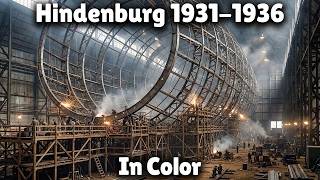 Building the Hindenburg's Massive Skeleton2.4K views · 1w ago · +2/h
 The Empire State Building Should Have Been Impossible in 19309.7K views · 1w ago · +3/h
 Before Automation: 20,000 Trees to a Fleet – The Spanish Armada5.2K views · 1w ago · +1/h
Statistics from the YouTube Data API, tracked by FameX. Views per hour, revenue and comparisons are FameX estimates.