Education & explainersTany ExplainsPsychology of Discipline (And How to Trick Your Brain Into Loving It)
Psychology of Discipline (And How to Trick Your Brain Into Loving It)
Long-form16:02EducationPublished Sep 14, 2026, 11:50 AM · 5w ago

Views
2,011
+0 views/hour
Views / hour now
0
measured 13h ago
Peak views / hour
—
First 24 hours
—
not tracked from upload
Engagement
3.0%
likes + comments / views
Likes
58
2.9% of views
Comments
3
0.15% of views
Est. ad revenue
$8–$20
lifetime, $4–10 RPM
Checked every 24 h while the video is this age · last check 13h ago · next in 617 min. YouTube itself updates public counts with a short delay.
Avg views / day
55
since upload
vs channel median
0.2×
this video's views ÷ the channel's usual
Rank in channel
#19
of 20 tracked
Views over time
0 readings
Total views Views gained per hour
Live tracking started
The chart fills in as FameX records new readings.
Description
What if discipline isn't about forcing yourself harder, but about creating fewer moments where force is needed at all?
This episode looks at the psychology behind self-control, habits, temptation, immediate rewards, implementation intentions, friction, and why effort itself can eventually start to feel meaningful.
We explore why disciplined people may experience less inner conflict, why instant rewards often beat distant goals, how habits gradually become more automatic, and why consistency depends on more than motivation.
Research referenced:
Hofmann, W., Baumeister, R. F., Förster, G., & Vohs, K. D. (2012). Everyday temptations: An experience sampling study of desire, conflict, and self-control. Journal of Personality and Social Psychology, 102(6), 1318–1335.
Galla, B. M., & Duckworth, A. L. (2015). More than resisting temptation: Beneficial habits mediate the relationship between self-control and positive life outcomes. Journal of Personality and Social Psychology, 109(3), 508–525.
Woolley, K., & Fishbach, A. (2017). Immediate rewards predict adherence to long-term goals. Personality and Social Psychology Bulletin, 43(2), 151–162.
Milkman, K. L., Minson, J. A., & Volpp, K. G. (2014). Holding the Hunger Games hostage at the gym: An evaluation of temptation bundling. Management Science, 60(2), 283–299.
Gollwitzer, P. M., & Sheeran, P. (2006). Implementation intentions and goal achievement: A meta-analysis of effects and processes. Advances in Experimental Social Psychology, 38, 69–119.
Lally, P., van Jaarsveld, C. H. M., Potts, H. W. W., & Wardle, J. (2010). How are habits formed: Modelling habit formation in the real world. European Journal of Social Psychology, 40(6), 998–1009.
Inzlicht, M., Shenhav, A., & Olivola, C. Y. (2018). The effort paradox: Effort is both costly and valued. Trends in Cognitive Sciences, 22(4), 337–349.
Created, written, narrated, illustrated and edited for Tany Explains.
Disclaimer: This content is intended for educational and informational purposes only. It does not provide professional psychological, psychiatric, medical, diagnostic, or therapeutic advice and should not be used to diagnose yourself or another person. If these difficulties are causing significant distress, affecting your daily life, or raising concerns about your mental or physical health, consider speaking with a licensed mental health professional or qualified medical provider.
#Discipline #Psychology #SelfDiscipline #Habits #SelfControl #Motivation #Productivity #BehaviorChange #TanyExplains
Tags
psychology of disciplineself discipline psychologyhow to become disciplinedbuild disciplinehabit psychologyself control psychologyhow to stay consistenttemptation bundlingimplementation intentionseffort paradoxhabit formationmotivation psychologyproductivity psychologybehavior changeTany Explains
Details
- Published
- Sep 14, 2026, 11:50 AM
- Length
- 16:02 (962 s)
- Format
- Long-form
- Category
- Education
- Audio language
- EN
- Quality
- HD
- Captions
- No
- Made for kids
- No
- Licensed content
- Yes
- Video ID
- d0_ARNBycVE
More from Tany Explains
 11 Strange Habits of Highly Intelligent People (Psychology Explained)8.5K views · 1d ago · +131/h
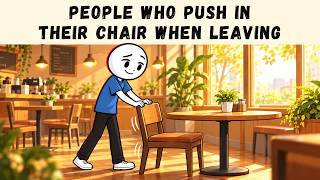 7 Traits of People Who Always Push Their Chairs in When Leaving14.9K views · 3d ago · +98/h
 Can You Detect a Lie? (The Language of Lying)2.2K views · 4d ago · +7/h
 Psychology of Polymaths: Why Having Multiple Interests Is an Advantage8.3K views · 6d ago · +2/h
 9 Ways to Think Critically in a World Full of Misinformation15.8K views · 1w ago · +4/h
 Why Do We Have to Pretend to Sleep to Fall Asleep?686 views · 1w ago
 How to Become Unbothered by Almost Anything (Psychology Explained)56.2K views · 1w ago · +184/h
 Stop Doing These 8 Things If You Want a Stronger Mind9.2K views · 1w ago · +1/h
Statistics from the YouTube Data API, tracked by FameX. Views per hour, revenue and comparisons are FameX estimates.