Fort Lauderdale (1910s–1920s): Before Paradise Was Built
Long-form17:09
Published Oct 1, 2026, 4:15 PM · 2w ago

Thomas Relives History
33.4K subscribers · median 11.5K views
AI imagery · confirmed$Likely
Views
13,073
+1 views/hour
Likes
155
1.2% of views
Comments
18
0.14% of views
Checked every 12 h while the video is this age · last check 9h ago · next in 153 min. YouTube itself updates public counts with a short delay.
Views / hour now
1
measured 9h ago
Peak views / hour
3
1d ago
Avg views / day
871
since upload
First 24 hours
—
not tracked from upload
vs channel median
1.1×
Rank in channel
#12
of 22 tracked
Engagement
1.3%
likes + comments / views
Est. ad revenue
$52–$118
lifetime, $4–9 RPM
Views over time
4 readings · line: total views · bars: views gained per hour
Description
Discover how Fort Lauderdale was built from the Everglades—and how engineers, dredges, railroads, canals, bridges, and a spectacular real-estate boom transformed a swampy river crossing into the “Venice of America.”
In this AI-powered historical reconstruction, we rebuild Fort Lauderdale from the 1890s through the Florida land boom of the 1920s, revealing how much of the city recognizable today had to be physically manufactured before it could be developed.
Using historical maps, photographs, engineering records, development history, and contemporary accounts, this documentary follows Fort Lauderdale stage by stage. See how Frank Stranahan established a ferry and trading post along the New River in 1893, how Henry Flagler’s Florida East Coast Railway transformed the isolated crossing into a settlement, and how a town incorporated with fewer than 200 residents began expanding across land that still flooded for months of the year.
Then follow the enormous drainage effort that changed South Florida itself. Steam-powered bucket dredges carved canals through Everglades sawgrass, lowering the water table while depositing excavated material along their banks. Those spoil banks created elevated, buildable ground—and in some places eventually became the routes followed by city streets.
But drainage soon became development. Additional canals were dredged not simply to control water, but to manufacture valuable waterfront property. The Intracoastal Waterway separated the barrier island from the mainland, while a new bridge at Las Olas finally gave vehicles direct access to the beach. The drainage created land. The canals created waterfront. The bridge created access. And together they created the conditions for one of the most extraordinary real-estate booms in American history.
By the mid-1920s, speculative “binders” allowed parcels to change hands without buyers ever intending to build on them. Subdivisions were surveyed into wetlands without roads, utilities, or even r
Tags
Fort LauderdaleFort Lauderdale HistoryHistory of Fort LauderdaleHow Fort Lauderdale Was BuiltBuilding Fort LauderdaleOld Fort LauderdaleFlorida HistorySouth Florida HistoryVenice of AmericaEvergladesEverglades DrainageFlorida Land BoomFlorida Land Boom 1920s1926 HurricaneNew River
Details
- Published
- Oct 1, 2026, 4:15 PM
- Length
- 17:09 (1,029 s)
- Format
- Long-form
- Category
- —
- Audio language
- —
- Quality
- —
- Captions
- —
- Made for kids
- —
- Licensed content
- —
- Video ID
- kzqiaWQo2ec
More from Thomas Relives History
 Venice should have been impossible to built1.1K views · 1d ago · +8/h
 How America Built a $6.4Mio Bridge That Took 19 Months to Build and 40 Seconds to Collaps2.9K views · 1d ago · +6/h
 The Grand Central you see isn't the real Grand Central20.8K views · 5d ago · +14/h
 How New York Built Ellis Island Out of the Ocean (1890–1900)6.9K views · 6d ago · +5/h
 Inside Ford's Factory That Built a Bomber Every Hour During WW210K views · 1w ago · +32/h
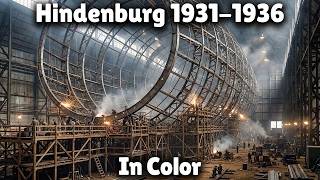 Building the Hindenburg's Massive Skeleton2.4K views · 1w ago · +2/h
 The Empire State Building Should Have Been Impossible in 19309.7K views · 1w ago · +3/h
 Before Automation: 20,000 Trees to a Fleet – The Spanish Armada5.2K views · 1w ago · +1/h
Statistics from the YouTube Data API, tracked by FameX. Views per hour, revenue and comparisons are FameX estimates.