How Ancient Coastal Cities Protected Themselves From the Sea
Long-form5:37
Published Oct 11, 2026, 11:00 PM · 4d ago

Historium TV
1.5K subscribers · median 67 views
Animation · confirmed$Likely
Views
46
+0 views/hour
Likes
—
hidden
Comments
0
0.00% of views
Checked every 3 h while the video is this age · last check 1h ago · next in 92 min. YouTube itself updates public counts with a short delay.
Views / hour now
0
measured 1h ago
Peak views / hour
1
1d ago
Avg views / day
10
since upload
First 24 hours
—
not tracked from upload
vs channel median
0.7×
Rank in channel
#15
of 23 tracked
Engagement
—
likes + comments / views
Est. ad revenue
$0–$0
lifetime, $4–9 RPM
Views over time
10 readings · line: total views · bars: views gained per hour
Description
How did ancient coastal cities survive storms, powerful waves, flooding, and an unpredictable sea — without modern concrete seawalls, weather forecasts, powered pumps, or advanced machinery?
In this episode of Historium TV, we explore how ancient coastal cities protected themselves from the sea and reveal the remarkable engineering strategies used by Greek, Roman, and other Mediterranean communities to build and maintain cities beside dangerous waters.
From massive stone breakwaters and artificial harbors to sheltered bays, elevated settlements, drainage systems, narrow harbor entrances, and Roman hydraulic concrete, ancient engineers developed sophisticated ways to reduce the destructive power of the sea.
You'll discover how ancient builders constructed enormous harbor structures directly in the water, why geography was one of their most important defenses, how breakwaters created calmer areas for ships, and how cities adapted when storms, earthquakes, tsunamis, erosion, and sediment changed their coastlines.
We also explore one of the most impressive examples of ancient coastal engineering: Caesarea Maritima, where Roman engineers created a huge artificial harbor using techniques that pushed the limits of ancient construction.
But these defenses were never perfect.
Extreme storms and tsunamis could overwhelm coastal structures, while sediment could slowly fill harbors and transform entire shorelines. Ancient coastal survival therefore depended not on a single invention, but on a complete system of engineering, geography, maintenance, observation, and adaptation.
And surprisingly, many of those fundamental principles remain part of coastal engineering today.
🌊 In this video you'll discover:
• How ancient breakwaters protected harbors
• How Greek and Roman ports controlled incoming waves
• How ancient builders constructed foundations underwater
• Why Roman hydraulic concrete changed harbor construction
• How Caesarea Maritima became an engineering marvel
•
Tags
AncientEngineeringAncientHistoryRomanEngineeringCoastalEngineeringAncientTechnologyRomanEmpireAncientRomeHistoryDocumentaryEngineeringHistoryForgottenTechnologyHistoricalEngineeringMaritimeHistoryAncientCitiesCaesareaMaritimaHistoriumTV
Details
- Published
- Oct 11, 2026, 11:00 PM
- Length
- 5:37 (337 s)
- Format
- Long-form
- Category
- —
- Audio language
- —
- Quality
- —
- Captions
- —
- Made for kids
- —
- Licensed content
- —
- Video ID
- mIUJHnu3YJI
More from Historium TV
 Cuban Missile Crisis: The Discovery That Shocked the White House2 views · 9h ago
 How Ancient People Escaped Erupting Volcanoes17 views · 1d ago
 Did a Volcano Help Destroy the Minoan Civilization?22 views · 2d ago
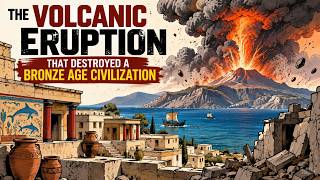 The Volcanic Eruption That Destroyed a Bronze Age Civilization24 views · 3d ago
 The Deadliest Tsunamis of the Ancient World7 views · 5d ago
 How Ancient People Survived Earthquakes Without Emergency Services27 views · 6d ago
 The Ancient Earthquake That Destroyed Entire Cities Overnight33 views · 1w ago
 What It Was Like to Live Underground 2,000 Years Ago76 views · 1w ago
Statistics from the YouTube Data API, tracked by FameX. Views per hour, revenue and comparisons are FameX estimates.