Money & frugal livingHouseTricks11 White Vinegar Car Seat Stain Tricks That Make Professional Detailers Look Overpriced
11 White Vinegar Car Seat Stain Tricks That Make Professional Detailers Look Overpriced
Long-form16:50Education
Published Oct 11, 2026, 4:00 PM · 3d ago

HouseTricks
5.5K subscribers · median 1K views
AI imagery · confirmed$Likely
Views
1,011
+12 views/hour
Likes
16
1.6% of views
Comments
0
0.00% of views
Checked every 3 h while the video is this age · last check 5h ago · next in 0 min. YouTube itself updates public counts with a short delay.
Views / hour now
12
measured 5h ago
Peak views / hour
14
8h ago
Avg views / day
290
since upload
First 24 hours
—
not tracked from upload
vs channel median
1.0×
Rank in channel
#9
of 17 tracked
Engagement
1.6%
likes + comments / views
Est. ad revenue
$8–$18
lifetime, $8–18 RPM
Views over time
3 readings · line: total views · bars: views gained per hour
Description
https://housetricks.netlify.app/
Stop Overaying For Expensive Repair -- Save $5,000+ With Our Complete 👆Handbook With Hidden Features, Pro Tips, And The Money-Saving Hacks Most Owners Were Never Shown
Your car seats aren’t ruined. They just look ruined. That coffee ring, the dried mud, the dark patch you’ve been embarrassed about for two years — most of it is sitting on top of the fabric, not soaked into it, and a two-dollar bottle of white vinegar lifts it right back out for pennies. In this video I’m showing you 11 white vinegar car seat stain tricks that do the exact work a detail shop charges you a fortune for.
And let’s be honest about that gap. A standard interior detail runs about $100 to $225. A deep clean with shampoo extraction, stain treatment, and odor removal runs $225 to $400 and up. Even a single “stain treatment” or “odor treatment” add-on can run $30 to $150 on top of the base price. A whole gallon of white vinegar costs about $3 to $5. Once you see what that bottle actually does to a filthy seat, the detailer’s quote starts to look a little ridiculous — and that’s the whole point of this channel.
Here’s the reason it works. White vinegar is about 5% acetic acid — a mild acid that’s strong enough to break down the stuff that stains a seat, but gentle enough that it won’t bleach your fabric or strip the color out of it like harsher cleaners do. Most seat stains are either organic (coffee, food, sweat, dirt, biological messes) or mineral (the chalky residue hard water and road salt leave behind), and acetic acid goes after both. It breaks the bond holding the stain to the fibers so it lifts away instead of smearing around, and because it’s acidic, it also kills the bacteria that make a seat smell — instead of just burying the smell under fake pine. No bleach, no ammonia, no fumes trapped in a closed car.
Inside, I walk you through all of it step by step: the exact mix ratios for every stain, the base all-purpose spray that every other trick is built on, and why distilled water matters more than people think. You’ll learn the right way to blot (and the scrubbing mistake that grinds a stain in for good), which stains need baking soda down first before the vinegar, how to beat greasy food without leaving a dark halo, and how to pull a water ring out of cloth by re-wetting the whole panel so it dries with no outline. I cover the one rule that makes a blood stain permanent if you get it wrong, the proper way to handle vomit and biohazard messes, how to kill the smell that soaks into the foam long after the stain is gone, and what to realistically expect from old, set-in mystery stains. Number 7 is the full seat restore — the one that takes a dingy, tired, gray interior and brings it back to looking years newer in one afternoon, and it’s the one that saves you around $200.
But I’ll also show you the one seat you should never put vinegar on, because getting this wrong is genuinely expensive. Leather and vinyl don’t play by the same rules as cloth — the acid dries leather out, leads to cracking, and eats into the factory finish over time. If you’ve got that kind of interior, you’ll want to hear the warning before you spray anything.
A few honest ground rules that save people a lot of grief: always spot-test a hidden area first, every single time. Never soak the seat — water that sinks into the foam and can’t dry turns into mildew that smells far worse than the stain you started with. Keep everything damp and blotted, not flooded. And know the limit: deep mold in the padding after a flood, or a mess that’s soaked all the way through, is a real job for a pro with an extractor, not a spray bottle. Take the easy wins for pennies and save the money you kept for the stuff that actually needs it.
If saving this kind of cash with a simple bottle of white vinegar is your kind of thing, subscribe — it’s a new cheap fix every single week, where vinegar works, how to use it correctly, and which surfaces to avoid. And if you want the same honest breakdown for the rest of your car — what white vinegar really does to your dashboard, your glass, and your trim, and the one mistake that undoes all of it — that one’s a great one to watch next.
No sponsors. No affiliate links. Just the method.
#WhiteVinegar #CarCleaning #CleaningHacks #CarDetailing #CarSeats #CarSeatCleaning #DIYCarCare #CleaningTips #CarInterior #CarUpholstery
Details
- Published
- Oct 11, 2026, 4:00 PM
- Length
- 16:50 (1,010 s)
- Format
- Long-form
- Category
- Education
- Audio language
- EN
- Quality
- HD
- Captions
- No
- Made for kids
- No
- Licensed content
- Yes
- Video ID
- nnOR-2SSI5A
More from HouseTricks
 13 Things Car Detailers Want You to Know About White Vinegar (#8 Saves $500)181 views · 12h ago
 Put White Vinegar on Your Car Tires and Watch What Happens (11 Secrets Mechanics Won’t Tell You)859 views · 1d ago
 POUR WHITE VINEGAR IN YOUR TOILET AND WATCH WHAT HAPPENS (11 Secrets Plumbers Won’t Tell You)322 views · 2d ago · +4/h
 11 Things Body Shops Don't Want You to Know About White Vinegar (#7 Saves $500)1.5K views · 4d ago · +27/h
 13 Things HVAC Technicians Don't Want You to Know About White Vinegar (#8 Saves $300)254 views · 5d ago
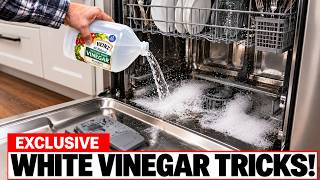 11 Things Dishwasher Repairmen Don't Want You to Know About White Vinegar (#4 Saves $300)546 views · 6d ago · +1/h
 11 Things Appliance Repair Techs Don't Want You to Know About White Vinegar (#7 Saves $300)542 views · 1w ago
 11 Things Car Washes Don't Want You to Know About White Vinegar (#7 Saves $400)20K views · 1w ago
Statistics from the YouTube Data API, tracked by FameX. Views per hour, revenue and comparisons are FameX estimates.