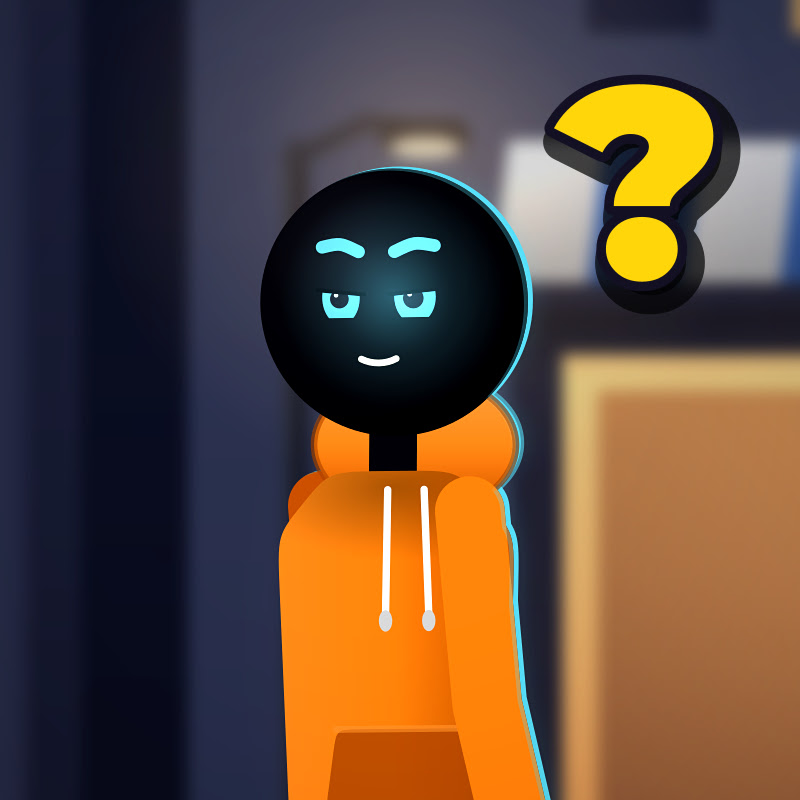
What If You Could See in Total Darkness?
3.9× channel medianLong-form8:18People & BlogsPublished Oct 16, 2026, 9:31 PM · 3d ago
Views
13,011
+76 views/hour
Views / hour now
76
measured 1h ago
Peak views / hour
76
1h ago
First 24 hours
—
not tracked from upload
Engagement
1.6%
likes + comments / views
Likes
194
1.5% of views
Comments
10
0.08% of views
Est. ad revenue
—
channel not monetized
Checked every 3 h while the video is this age · last check 1h ago · next in 108 min. YouTube itself updates public counts with a short delay.
Avg views / day
3.3K
since upload
vs channel median
3.9×
this video's views ÷ the channel's usual
Rank in channel
#2
of 14 tracked
Views over time
6 readings
Total views Views gained per hour
Description
It's 3:07 a.m. and the whole building just went dark. Your neighbors are walking into doors and hunting for the fuse box with their phone flashlights. You're making cereal. Because you can see in total darkness, all the way down to a single particle of light.
But eyes that catch every photon pay for it. Daylight hits you like a camera flash that never ends, the colors slowly drain out of your life, and one stormy night 200 people are trapped in a tunnel full of smoke. The only way to get them out is to stare straight into the light.
A standalone story with an open ending: you're not the only one who can see in the dark.
Could this really happen? What would YOU do if you could see in total darkness? Tell us in the comments.
Chapters:
0:00 The blackout
0:47 How it works
2:02 Seeing in the dark
3:22 The cost
4:32 The tunnel
7:01 Is any of this real?
8:01 What do you think?
Science notes:
In 2016, scientists in Vienna and New York sent single photons into volunteers' eyes: across more than 30,000 trials, people noticed them slightly more often than pure chance. After about 30 minutes in the dark, a normal eye becomes roughly 10,000 times more sensitive, as the rods take over from the cones. Rods can't see color, so a red rose in moonlight looks almost black; that's why astronomers use dim red flashlights, which barely disturb the rods and keep their night vision intact.
Every story starts with if. Subscribe for the next one.
#whatif #animation #science #nightvision
Details
- Published
- Oct 16, 2026, 9:31 PM
- Length
- 8:18 (498 s)
- Format
- Long-form
- Category
- People & Blogs
- Audio language
- EN
- Quality
- HD
- Captions
- No
- Made for kids
- No
- Licensed content
- No
- Video ID
- nwUwlebl35U
More from Suppose You
 What If Your City Had No Laws for 24 Hours #whatif #animation #supposeyou1.5K views · 1d ago · +19/h
 What If Your City Had No Laws for 24 Hours1.3K views · 1d ago
 What If You Could See in Total Darkness? #whatif #animation #seeinthedark1.9K views · 3d ago
 Untitled videoYou Can't Feel Pain. That's the Problem. #whatif #animation #pain #feelnopain604 views · 6d ago
 You Can't Feel Pain. That's the Problem.815 views · 6d ago
 What If You Never Needed to Breathe? #whatif #animation #stoptime #sleep #sleepscience #breathing513 views · 6d ago
 What If You Never Needed to Breathe?38.9K views · 6d ago · +152/h
 What If You Never Slept Again? #whatif #animation #sleep #sleepscience1.3K views · 1w ago
Statistics from the YouTube Data API, tracked by FameX. Views per hour, revenue and comparisons are FameX estimates.