Why Cheetahs Hunted Alongside Ancient Humans (But Never Became Like Dogs)
3.2× channel medianLong-form12:37People & BlogsPublished Aug 31, 2026, 4:11 PM · 7w ago

Views
1,900
+0 views/hour
Views / hour now
0
measured 47m ago
Peak views / hour
—
First 24 hours
—
not tracked from upload
Engagement
0.7%
likes + comments / views
Likes
13
0.7% of views
Comments
1
0.05% of views
Est. ad revenue
$6–$15
lifetime, $3–8 RPM
Checked every 24 h while the video is this age · last check 47m ago · next in 1392 min. YouTube itself updates public counts with a short delay.
Avg views / day
36
since upload
vs channel median
3.2×
this video's views ÷ the channel's usual
Rank in channel
#3
of 21 tracked
Views over time
0 readings
Total views Views gained per hour
Live tracking started
The chart fills in as FameX records new readings.
Description
You’ve always been told that domestication is just about taming a friendly animal, but the real story is much stranger. The common belief that cheetahs were simply too dangerous or wild to become our permanent companions is completely false. Today, we are dismantling the simplified evolutionary myths taught in textbooks to reveal the truth about humanity's most extraordinary hunting partnership. Based on documented historical records and modern evolutionary biology, this is what actually happens when human culture collides with animal genetics.
RIGHT NOW, MILLIONS OF PEOPLE LOOK AT THEIR DOGS AND ASSUME ANY ANIMAL COULD BE DOMESTICATED IF WE JUST GAVE IT ENOUGH LOVE AND TIME. BEFORE YOU FALL FOR THAT ROMANTICIZED VERSION OF NATURE, YOU NEED TO UNDERSTAND THE HARSH BIOLOGICAL REALITY. MOST PEOPLE COMPLETELY IGNORE THE DIFFERENCE BETWEEN TAMING AN INDIVIDUAL AND DOMESTICATING A SPECIES, MISSING OUT ON ONE OF THE GREATEST EVOLUTIONARY MYSTERIES HAPPENING RIGHT UNDER OUR NOSES.
The truth comes down to three undeniable evolutionary pillars: ecological integration, reproductive control, and generational selection. Humans managed to tame individual cheetahs and use them as highly specialized hunting weapons for centuries, but they never created the necessary feedback loop to alter their genetics.
What you are about to see is a definitive breakdown of why dogs evolved to fit into our homes, while cheetahs remained borrowed wild specialists. This rare perspective shifts how we view every single animal we interact with.
✅ The number 1 secret about domestication that simplified science books don't want you to know
✅ Why the belief that "cheetahs are too dangerous" is completely wrong
✅ How ancient rulers hunted alongside wild predators for centuries without domesticating them
✅ The truth about the evolutionary trap that prevented cheetahs from becoming like dogs
✅ The three biological barriers used by nature to stop captive breeding
✅ Why understanding taming versus domestication changes everything from now on
✅ The reproductive step that humans never executed—and that makes all the difference
✅ The surprising connection between wild capture incentives and genetic stagnation
CHAPTERS:
00:00 — The Strange Historical Mystery
02:47 — The Danger Myth: Why Aggression Wasn't the Problem
04:17 — Taming vs. Domestication: The Crucial Difference
06:18 — The Dog Comparison: Why Wolves Transformed
07:18 — The Biological Wall: Why Breeding Failed
09:29 — The Final Evolutionary Reveal
References & Sources
✅ [Evolutionary Biology: Domestication Syndrome and Genetic Pathways]
✅ [Historical Records of Ancient and Mughal Empire Cheetah Hunting Practices]
✅ [Conservation Genetics: The Cheetah Population Bottleneck and Captive Breeding]
DISCLAIMER: This video is for educational and entertainment purposes only. We do not replace formal academic instruction or peer-reviewed scientific literature. Our goal is to make complex evolutionary and historical concepts accessible, fascinating, and accurate for a broad audience. Stay curious, stay primal.
Copyright
© Professor Primal 2026. All rights reserved.
#animalevolution #cheetahdomestication #evolutionarybiology #humanhistory #animalbehavior
Details
- Published
- Aug 31, 2026, 4:11 PM
- Length
- 12:37 (757 s)
- Format
- Long-form
- Category
- People & Blogs
- Audio language
- EN
- Quality
- HD
- Captions
- No
- Made for kids
- No
- Licensed content
- Yes
- Video ID
- vlYqI8hjQH8
More from Professor Primal
 Why Vultures Can Eat Rotten Meat (But Humans Can't)133 views · 1d ago
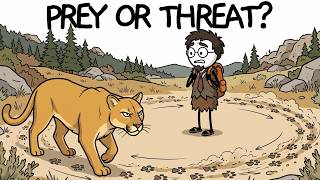 Why Do Wild Animals Circle Humans Instead of Attacking Them?329 views · 2w ago
 Why Do Predators Chase the Moment a Human Starts Running?382 views · 3w ago
 Why Do Animals Risk Their Lives to Save Humans? (The Real Reason)601 views · 3w ago
 Why Do Cats Bring Dead Animals to Their Owners? (The Real Reason)235 views · 3w ago
 What Do Predators Think Of Humans?384 views · 4w ago
 What Do Animals Think When Humans Get Close?677 views · 4w ago
 Why Do Predators Follow Humans When They’re Completely Alone?2K views · 4w ago
Statistics from the YouTube Data API, tracked by FameX. Views per hour, revenue and comparisons are FameX estimates.