If YOU Are Saving Money, You NEED To Stop!
Long-form8:08
Published Oct 4, 2026, 3:14 PM · 1w ago

Logical Money
25.6K subscribers · median 6.3K views
Animation · confirmed$Likely
Views
12,392
+3 views/hour
Likes
111
0.9% of views
Comments
56
0.45% of views
Checked every 12 h while the video is this age · last check 15h ago · next in 0 min. YouTube itself updates public counts with a short delay.
Views / hour now
3
measured 15h ago
Peak views / hour
4
3d ago
Avg views / day
931
since upload
First 24 hours
—
not tracked from upload
vs channel median
1.9×
Rank in channel
#5
of 19 tracked
Engagement
1.4%
likes + comments / views
Est. ad revenue
$124–$297
lifetime, $10–24 RPM
Views over time
5 readings · line: total views · bars: views gained per hour
Description
If you’re saving money, you NEED to stop… and ask yourself one question: what exactly are you saving it for?
Saving money is one of the first financial lessons most of us learn.
Earn $100.
Spend $80.
Save $20.
Keep doing that for decades and eventually… you should be rich.
Right? - Not necessarily.
Because saving money and building wealth are not the same thing.
Cash is incredibly useful. It pays your bills, protects you during emergencies, and gives you financial flexibility. But if money is being saved for decades simply to sit as cash, there’s a problem: Inflation gradually reduces its purchasing power.
In this video, Logical Money breaks down:
1. How money actually works.
2. Why money and wealth are different.
3. How banks create money through lending.
4. How inflation affects your savings.
5. How to think about saving vs investing, emergency funds, cash, assets, and long-term wealth building.
We’ll go from the giant stone money of Yap and ancient systems of debt and credit to modern bank deposits and the Federal Reserve's 2% longer-run inflation goal.
And it all leads to one important distinction:
Money is the tool. Wealth is the valuable things that money ultimately allows you to own.
Think about your money as having three different jobs:
NOW — Money for rent, groceries, utility bills, school fees, everyday spending, and other expenses you need to cover now.
SAFETY — Your emergency fund and money you expect to need relatively soon.
WEALTH — Money you don't expect to need for years. This is where the objective can change from simply storing dollars to potentially using those dollars to acquire assets.
Before saving another dollar, understand its job.
Is it for next month's rent?
An emergency fund?
A purchase next year?
Or wealth you want to build over the next 20 or 30 years?
Those are very different financial objectives—and the same strategy doesn't necessarily make sense for all of them.
If you want to better understand personal finance, investing, f
Details
- Published
- Oct 4, 2026, 3:14 PM
- Length
- 8:08 (488 s)
- Format
- Long-form
- Category
- —
- Audio language
- —
- Quality
- —
- Captions
- —
- Made for kids
- —
- Licensed content
- —
- Video ID
- w-_hUZn5aoE
More from Logical Money
 7 Money Lessons You Learned as a KID that Keep You BROKE1.6K views · 6d ago · +7/h
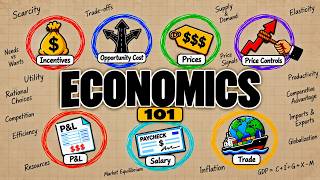 Once You Understand ECONOMICS, You See the World DIFFERENTLY6.3K views · 2w ago · +1/h
 How to Manage Your Money LIKE THE 1%8K views · 3w ago · +2/h
 Why Looking Poor Is SO Important | Logical Money12.4K views · 4w ago · +1/h
 Buy, Finance or Lease a Car in 2026 — Which Is Cheaper?10.7K views · 5w ago · +1/h
 How to Think Like an Investor (Not a Speculator)3.3K views · 6w ago
 8 Minimalist Money Habits to Stay Financially Stable156K views · 7w ago · +64/h
 5 Rules That Guarantee WEALTH – No Matter Where You Start4.2K views · 2mo ago · +1/h
Statistics from the YouTube Data API, tracked by FameX. Views per hour, revenue and comparisons are FameX estimates.