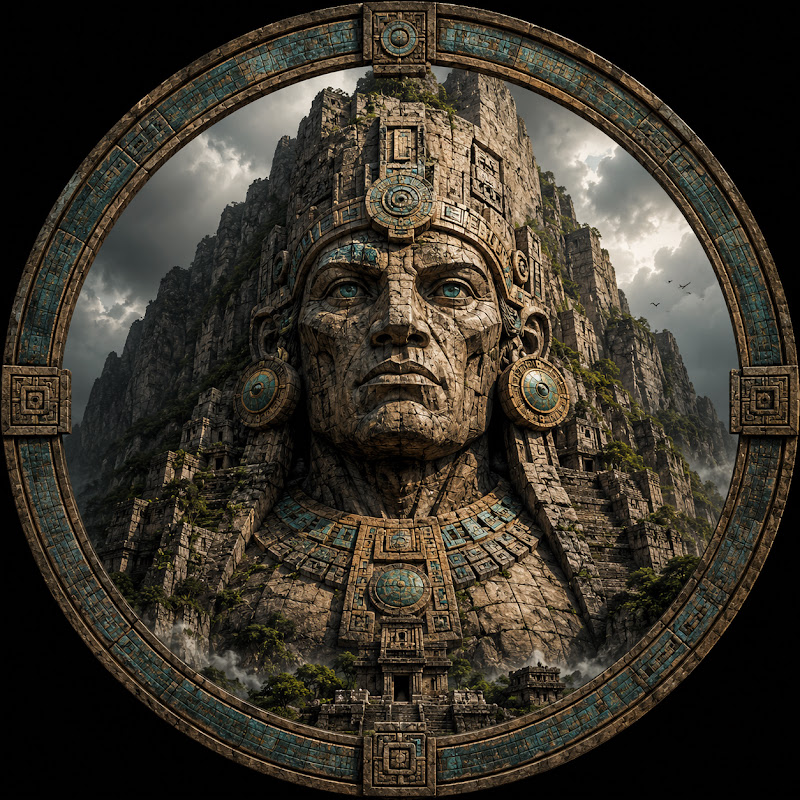
A City With no Road: how did 40-Ton Stones Reach Machu Picchu?
Long-form19:41Science & TechnologyPublished Oct 6, 2026, 11:00 PM · 2w ago
Views
2,727
+2 views/hour
Views / hour now
2
measured 2h ago
Peak views / hour
2
2h ago
First 24 hours
—
not tracked from upload
Engagement
0.7%
likes + comments / views
Likes
15
0.5% of views
Comments
4
0.15% of views
Est. ad revenue
$11–$25
lifetime, $4–9 RPM
Checked every 12 h while the video is this age · last check 2h ago · next in 551 min. YouTube itself updates public counts with a short delay.
Avg views / day
175
since upload
vs channel median
1.3×
this video's views ÷ the channel's usual
Rank in channel
#10
of 21 tracked
Views over time
3 readings
Total views Views gained per hour
Description
"These were built by others, long before us." The Inca said that about their own walls — and Spanish chroniclers wrote it down in the 1550s. Forty-ton blocks on a ridge at 7,970 feet, joints under a fiftieth of an inch, an empire that lasted about ninety years. A documentary investigation into who really laid the finest stonework of the Andes: we examine the evidence, run the calculations, and compare the chronicles with the walls themselves.
In this video:
• A stone in Cusco with twelve corners — and a workshop that left no waste behind
• Why 60% of Machu Picchu is hidden underground, and what that tells us about its builders
• The rope math: why 1,600 haulers can't fit on a 31-inch mountain trail
• The Berkeley architect who tried hardest to prove the Inca method — and where it stopped working
• Walls that survived at least eight major earthquakes while the churches on top of them fell
• Three chroniclers, three decades, one answer the Inca gave about their own stones
• A calendar that runs out before the stone does
• The same building method in Egypt, Lebanon and Japan
• Read a Cusco wall from the bottom up — and see who came first
📍 Locations: Cusco (Hatun Rumiyoc, Coricancha / Santo Domingo, Sacsayhuamán), Machu Picchu, Ollantaytambo, Tiwanaku (Bolivia), Abydos (Egypt), Baalbek (Lebanon), Osaka, Nagoya and Kumamoto castles (Japan)
🔗 Series:
← Previous: "A Thousand Years Without a Single War — Then ONE Night Erased Everything"
→ Next: "8 Holes in the Earth No Geologist Can Explain"
⏱ Timecodes:
00:00 — "Built by others, long before us"
00:40 — The twelve-cornered stone of Cusco
02:30 — Machu Picchu: the 60% you never see
04:30 — Forty tons on a 31-inch trail
07:10 — Protzen's experiment and the bronze problem
09:50 — Walls that move like joints
11:50 — What the Inca told the Spanish
14:40 — The ninety-year calendar
17:30 — One method, four regions
19:20 — Reading the wall from the bottom up
21:40 — Who the Inca said built it
💬 Which chronicler convinces you most — Cieza, Betanzos or Garcilaso? And who do you think laid the bottom course? Tell us in the comments.
🔔 Subscribe — next time: eight holes in the earth, perfectly round, two thousand feet deep, and one of them has a forest growing at the bottom.
A research channel about the mysteries of ancient history. We verify facts, check calculations, and compare theories. All facts are verifiable, sources provided.
📚 Sources:
• Jean-Pierre Protzen, "Inca Architecture and Construction at Ollantaytambo" (Oxford University Press, 1993)
• Kenneth R. Wright & Alfredo Valencia Zegarra, "Machu Picchu: A Civil Engineering Marvel" (ASCE Press, 2000)
• Pedro de Cieza de León, "Chronicle of Peru" (1553)
• Juan de Betanzos, "Suma y narración de los Incas" (1551)
• Inca Garcilaso de la Vega, "Royal Commentaries of the Incas" (1609)
#MachuPicchu #Inca #Cusco #AncientCivilizations #Megaliths #AncientMysteries #Archaeology #Peru
Tags
AncientCivilizationsAncientMysteriesArchaeologyCuscoIncaMachuPicchuMegalithsPeru
Details
- Published
- Oct 6, 2026, 11:00 PM
- Length
- 19:41 (1,181 s)
- Format
- Long-form
- Category
- Science & Technology
- Audio language
- EN
- Quality
- HD
- Captions
- Yes
- Made for kids
- No
- Licensed content
- Yes
- Video ID
- 1Ya8PuZhpVg
More from Before Humanity
 7 Impossible Ancient Finds Science Can't Explain1.5K views · 13h ago
 6 Ancient Stones Polished Smoother Than Modern Machines can8.5K views · 2d ago · +38/h
 How did They Move 150 Tons of Stone 6,000 Years ago?24.7K views · 4d ago · +44/h
 7 Ancient Roads That Shouldn't Exist8K views · 5d ago · +9/h
 Who Walked the Silk Road Before It Existed? 7 Ancient Finds1.3K views · 1w ago · +1/h
 18,600 Miles of Ancient Roads No Engineer Can Explain18.8K views · 1w ago · +13/h
 8 Holes in the Earth No Geologist Can Explain179K views · 1w ago · +100/h
 Iran's Sunken Civilization: Older Than Sumer?412 views · 1w ago
Statistics from the YouTube Data API, tracked by FameX. Views per hour, revenue and comparisons are FameX estimates.