Science & spaceFixvival Secrets Can Epsom Salt Really Revive a Dead Car Battery? The Forgotten Mechanic Trick
Can Epsom Salt Really Revive a Dead Car Battery? The Forgotten Mechanic Trick
Long-form8:38People & Blogs2.9× channel median
Published Sep 15, 2026, 5:00 PM · 4w ago

Fixvival Secrets
1.1K subscribers · median 166 views
AI imagery · confirmed88%
Views
486
+0 views/hour
Likes
1
0.2% of views
Comments
0
0.00% of views
Checked every 24 h while the video is this age · last check 18h ago · next in 301 min. YouTube itself updates public counts with a short delay.
Views / hour now
0
measured 18h ago
Peak views / hour
—
Avg views / day
15
since upload
First 24 hours
—
not tracked from upload
vs channel median
2.9×
Rank in channel
#2
of 20 tracked
Engagement
0.2%
likes + comments / views
Est. ad revenue
—
channel not monetized
Views over time
0 readings · line: total views · bars: views gained per hour
Live tracking started
The chart fills in as FameX records new readings.
Description
What if a weak lead-acid battery isn't completely dead?
For decades, mechanics and DIY enthusiasts have experimented with a surprisingly simple compound found in many kitchens and medicine cabinets: **Epsom salt (magnesium sulfate)**. But does this old battery-revival method actually work, or is it just another internet myth?
In this video, we explore the chemistry behind **Epsom salt and lead-acid batteries**, including the process known as **battery sulfation** and why sulfate crystals can reduce a battery's ability to hold and deliver a charge.
You'll learn:
• How lead-acid batteries work
• What battery sulfation actually is
• Why batteries become weak after sitting unused
• How Epsom salt became associated with battery restoration
• Which flooded lead-acid batteries this historical method may apply to
• Why sealed AGM and lithium-ion batteries are different
• Why temperature and storage conditions affect battery life
• How battery performance can be tested after charging
• When an old battery should simply be recycled instead of repaired
This video is especially relevant to owners of older flooded lead-acid batteries used in cars, trucks, boats, RVs, lawn equipment, generators, and backup power systems.
But there's an important reality: **Epsom salt is not a guaranteed battery-repair solution.** It cannot fix physically damaged plates, internal shorts, severe corrosion, cracked cases, leaking batteries, or every type of sulfation. Some batteries may show improvement, while others may show little or no change.
The goal of this video isn't to promise a miracle. It's to explain the **chemistry, history, limitations, and safety considerations** behind one of the most interesting old-school battery-maintenance methods.
Have you ever tried to revive an old car battery instead of replacing it? Tell us your experience and your state in the comments. Your experience could help another viewer understand what to realistically expect.
Subscribe to **Fixvival Secrets** for more forgotten practical knowledge, historical techniques, old-school chemistry, self-reliance ideas, and modern explanations of methods that deserve a second look.
⚠️ DISCLAIMER:
This video is provided for **educational and historical purposes only**. It is not a guarantee that Epsom salt or any other method will restore a battery. Results vary depending on battery type, age, condition, storage history, temperature, and the extent of sulfation.
Lead-acid batteries contain corrosive sulfuric acid and can produce explosive gases. Mishandling batteries can cause serious injury, burns, fire, or other hazards. Do not attempt to open or modify sealed batteries, AGM batteries, lithium-ion batteries, or other battery types for which this procedure is not designed. Always use appropriate gloves and eye protection, work in a well-ventilated area, keep sparks and flames away, and follow the battery manufacturer's instructions.
If you are uncertain about the condition of a battery, have it inspected and tested by a qualified mechanic or battery professional. Damaged, swollen, cracked, or leaking batteries should not be experimented with and should be handled according to local hazardous-material and recycling requirements. Local laws, regulations, and disposal requirements vary by location.
This information should not be considered professional mechanical advice. Always use appropriate judgment and follow applicable safety standards.
#EpsomSalt, #CarBattery, #BatteryRepair, #BatteryRestoration, #LeadAcidBattery, #BatterySulfation, #DIY, #MechanicTips, #BatteryMaintenance, #FixvivalSecrets
Details
- Published
- Sep 15, 2026, 5:00 PM
- Length
- 8:38 (518 s)
- Format
- Long-form
- Category
- People & Blogs
- Audio language
- EN-US
- Quality
- HD
- Captions
- No
- Made for kids
- No
- Licensed content
- No
- Video ID
- 496_5TIS5Nk
More from Fixvival Secrets
 American Ginseng: The Wild Forest Plant That Can Be Worth Hundreds Per Pound25 views · 1w ago
 Why Disney World Doesn’t Seem to Have Mosquitoes — The Real Reason23 views · 1w ago
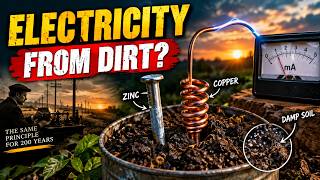 The Ground Can Make Electricity? How an Earth Battery Really Works128 views · 1w ago
 Can a $10 Bucket of Salt Really Heat Your Home All Winter? The Truth269 views · 1w ago
 Tesla Cybercab Is HERE: No Steering Wheel, No Driver — What Happens Next?235 views · 2w ago
 Tesla Powerwall + Solar: Why My Electric Bill Went UP255 views · 3w ago
 Tesla Roadster Is Finally Coming? The October 1 Reveal Explained416 views · 3w ago · +1/h
 Voyager Heard a Strange Signal Beyond Our Solar System — Scientists Finally Know What It Is28 views · 3w ago
Statistics from the YouTube Data API, tracked by FameX. Views per hour, revenue and comparisons are FameX estimates.