Watch ROME Grow for 3,000 Years - 3D Timelapse (No AI imagery)
Long-form9:58EducationPublished Oct 11, 2026, 9:04 AM · 1w ago

Views
404,943
+223 views/hour
Views / hour now
223
measured 8h ago
Peak views / hour
2.6K
20h ago
First 24 hours
—
not tracked from upload
Engagement
0.6%
likes + comments / views
Likes
2.1K
0.5% of views
Comments
231
0.06% of views
Est. ad revenue
$1,620–$3,644
lifetime, $4–9 RPM
Checked every 12 h while the video is this age · last check 8h ago · next in 193 min. YouTube itself updates public counts with a short delay.
Avg views / day
48.5K
since upload
vs channel median
1.1×
this video's views ÷ the channel's usual
Rank in channel
#2
of 8 tracked
Views over time
6 readings
Total views Views gained per hour
Description
Watch Rome grow from hut villages on the hills by the Tiber to the Eternal City of 2.7 million people – 3,000 years of history in 10 minutes, as a 3D timelapse of ancient, medieval and modern Rome built from real geodata and historical research.
From the legend of Romulus to Julius Caesar, the emperors and the Colosseum, from the sacks of Rome and the medieval papal city to St Peter's and today's capital of Italy: year by year, the city grows – and shrinks – on the real terrain of the Tiber valley and its Seven Hills.
Discover the fascinating history of Rome, the Eternal City that shaped the world. "All roads lead to Rome", but "Rome wasn’t built in a day". From a small settlement to the heart of the mighty Roman Empire, Rome proves that "big things have small beginnings".
Chapters
0:00 Intro: Rome today, then 3,000 years back
0:14 c. 1000 BC: Hut villages on the hills by the Tiber
0:24 753 BC: Romulus founds Rome (legend)
0:50 509 BC: The Roman Republic begins
1:10 387 BC: The Gauls sack Rome
1:32 378 BC: The Servian Wall
1:43 312 BC: Via Appia and the first aqueduct
2:40 46 BC: Caesar's triumph
3:00 44 BC: The Ides of March
3:10 27 BC: Augustus, the first emperor
3:38 AD 64: The Great Fire of Rome
4:02 AD 72: Building the Colosseum
4:18 AD 80: The Colosseum opens
4:50 c. AD 125: The Pantheon
5:17 AD 271: The Aurelian Walls
5:44 AD 410: The Visigoths sack Rome
6:09 AD 476: The fall of the Western Roman Empire
6:19 AD 537: The aqueducts are cut
6:34 AD 800: Charlemagne crowned in Old St Peter's
7:16 1527: The Sack of Rome
7:34 1590: Michelangelo's dome
7:54 1762: The Trevi Fountain
8:09 1870: Breach of Porta Pia – Rome joins Italy
8:36 1929–32: Vatican City and Via dell'Impero
8:46 1943–46: War, liberation, republic
9:16 Today: Rome, 2.7 million people
9:29 Ancient Rome over today's city
In this 3D timelapse of the history of Rome you'll see the first hut villages on the Palatine around 1000 BC, the Forum and the Temple of Jupiter on the Capitol, the sack by the Gauls around 387 BC (traditionally 390 BC), the Servian Wall and the Via Appia. Julius Caesar celebrates his triumph in 46 BC, and Augustus boasts that he left Rome a city of marble. After the Great Fire of AD 64, the Colosseum rises on the site of Nero's lake and opens in AD 80; Trajan's Forum, the Pantheon, the Baths of Caracalla and the Aurelian Walls follow – imperial Rome has perhaps a million people. After the Visigoths sack Rome in 410 and the Western Empire falls in 476, the city shrinks into the bend of the Tiber, and cows graze on the buried Forum. Charlemagne is crowned in Old St Peter's in 800, the troops of Charles V storm Rome in the Sack of 1527, and Michelangelo's dome, Bernini's colonnade and the Trevi Fountain crown Renaissance and Baroque Rome. In 1870 Italian troops breach the walls at Porta Pia, and in 1871 Rome becomes the capital of Italy. At the end, ancient Rome rises once more over today's city – and shows which of its great monuments still stand.
No AI imagery: Rome is reconstructed year by year on the real terrain of the Tiber valley, based on historical and archaeological research. Ancient and medieval buildings are reconstructions, and population figures before the 16th century are estimates.
About CityEons: I turn the history of the world's great cities into 3D timelapses – watch them grow over hundreds and thousands of years, from the first settlement to today's metropolis. Subscribe so you don't miss the next city.
Which city should I build next? Tell me in the comments.
Music
"Precious Memories" by Shane Ivers
https://freemusicarchive.org/music/shane-ivers/single/precious-memories/
Licensed under CC BY 4.0 (creativecommons.org/licenses/by/4.0)
"Aureate" by Maarten Schellekens
https://freemusicarchive.org/music/maarten-schellekens/motion-score/aureate-1/
Licensed under CC BY 4.0 (creativecommons.org/licenses/by/4.0)
"Ephemeral" by Pamela Yuen
https://freemusicarchive.org/music/pamela-yuen/piano-pieces/ephemeral-2/
Licensed under CC BY 4.0 (creativecommons.org/licenses/by/4.0)
"Ephemeral V (summer)" by Le Chaos Entre 2 Chaises
https://freemusicarchive.org/music/le-chaos-entre-2-chaises/ephemerals/ephemeral-v-summer/
Licensed under CC BY 4.0 (creativecommons.org/licenses/by/4.0)
Sound effects: Pixabay · Freesound (electra, CC0)
Data credits
Map data © OpenStreetMap contributors, available under the Open Database License (openstreetmap.org/copyright)
Terrain: TINITALY 1.1 – Tarquini S., Isola I., Favalli M., Battistini A., Dotta G. (2023), INGV, doi.org/10.13127/tinitaly/1.1, CC BY 4.0
Contains data from Regione Lazio (geoportale.regione.lazio.it), CC BY 4.0, data modified
Contains ISTAT data (istat.it), CC BY 4.0, data modified
Coastal terrain: Copernicus DEM GLO-30 © DLR e.V. 2010-2014 and © Airbus Defence and Space GmbH 2014-2018, provided under COPERNICUS by the European Union and ESA
#Rome #History #Timelapse #AncientRome #CityEons
Tags
history of romeevolution of romerome timelapserome historyancient romeroman empireroman republiccolosseumroman forumgreat fire of romesack of romeeternal citycity growth timelapse3d timelapsehistory timelapserome maprome through timehow rome grewmedieval romerome documentarycityeonspantheonst peter's basilicarome 3ditalian history
Details
- Published
- Oct 11, 2026, 9:04 AM
- Length
- 9:58 (598 s)
- Format
- Long-form
- Category
- Education
- Audio language
- EN
- Quality
- HD
- Captions
- No
- Made for kids
- No
- Licensed content
- No
- Video ID
- 50dWQdlHmYI
More from CityEons
 Watch London Grow for 2,000 Years 🔥 (Wait for the Great Fire)3.3K views · 1d ago · +89/h
 Watch Berlin Grow for 1,300 Years 🔥 (Wait for the Wall)2.2K views · 1d ago · +64/h
 Watch Rome Grow for 3,000 Years 🔥 (Wait for the Colosseum)2.6K views · 1d ago · +9/h
 Watch New York Grow for 400 Years 🔥 (Wait for Lady Liberty)14.3K views · 2d ago · +294/h
 Watch NEW YORK Grow for 400 Years - 3D Timelapse (No AI imagery)21.6K views · 2d ago · +299/h
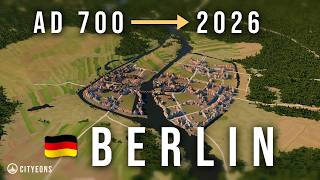 Watch BERLIN Grow for 1,300 Years - 3D Timelapse (No AI imagery)314K views · 1w ago · +27/h
 Watch LONDON Grow for 2,000 Years - 3D Timelapse (No AI imagery)504K views · 2w ago · +65/h
Statistics from the YouTube Data API, tracked by FameX. Views per hour, revenue and comparisons are FameX estimates.