THE FIRST NEANDERTHAL WAS ONE OF THE LAST
Long-form19:13Education
Published Sep 24, 2026, 4:00 PM · 3w ago
Highly Compelling
100K subscribers · median 20.9K views
AI imagery · confirmed$Likely
Views
19,744
+14 views/hour
Likes
290
1.5% of views
Comments
22
0.11% of views
Checked every 12 h while the video is this age · last check 8h ago · next in 208 min. YouTube itself updates public counts with a short delay.
Views / hour now
14
measured 8h ago
Peak views / hour
20
1d ago
Avg views / day
859
since upload
First 24 hours
—
not tracked from upload
vs channel median
0.9×
Rank in channel
#11
of 21 tracked
Engagement
1.6%
likes + comments / views
Est. ad revenue
$79–$178
lifetime, $4–9 RPM
Views over time
3 readings · line: total views · bars: views gained per hour
Description
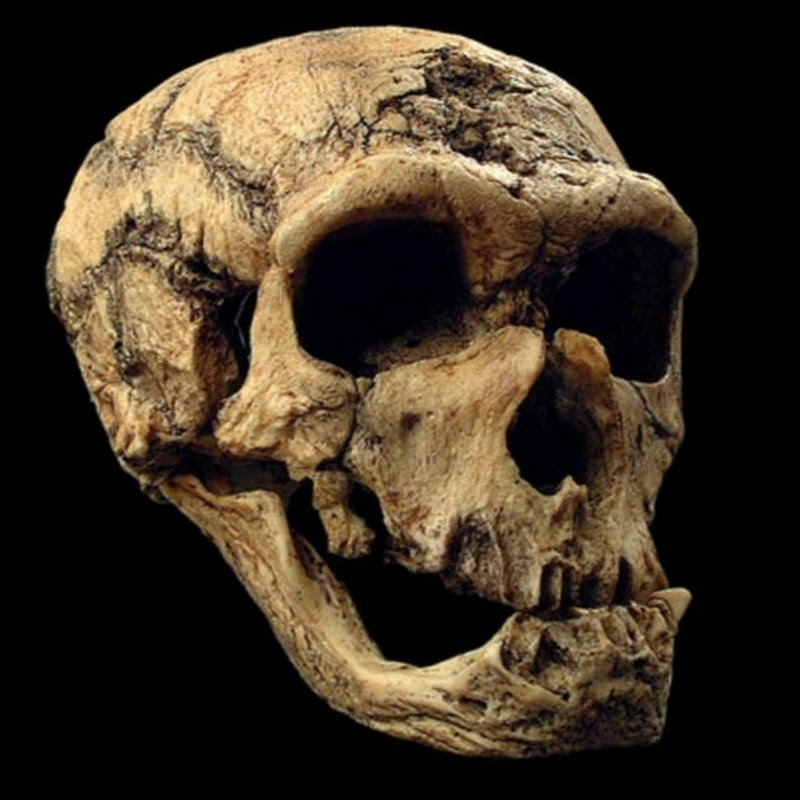
The first Neanderthal recognized by science may also have been one of the last Neanderthals to inhabit Germany.
Discovered in the Neander Valley in 1856, Neanderthal 1 became the type specimen of *Homo neanderthalensis*. More than 140 years later, archaeologists relocated sediment discarded during the original discovery and recovered additional bones—three of which physically joined the historic skeleton. DNA extracted from the original remains then made Neanderthal 1 the first Neanderthal ever genetically sequenced.
In this video, we follow the extraordinary history of the Feldhofer skeleton, from the destruction of its cave and rediscovery of its missing bones to the recovery of its mitochondrial and nuclear DNA. We also examine new genetic evidence suggesting that the surviving Neanderthal population began declining sharply around 45,000 years ago and reached a minimum approximately 3,000 years later.
Neanderthal 1 was not an early representative of his people. He belonged to their final European population, living near the period when Homo sapiens entered northern Europe and the remaining Neanderthal maternal lineages began disappearing. Yet his nuclear DNA helped establish that Neanderthals were not completely replaced. Part of their ancestry survived through interbreeding and remains in living people today.
TIMESTAMPS
00:00 The first Neanderthal was one of the last
00:58 The discovery in the Neander Valley
02:20 The fossil that created a new human species
03:42 Destruction of the Feldhofer cave
04:50 Archaeologists rediscover the lost site
05:53 Three bones that fitted perfectly
06:48 At least three Neanderthals in one cave
07:37 Injuries, survival and possible treatment of the dead
08:38 How old was Neanderthal 1?
09:31 The first Neanderthal DNA ever recovered
10:47 What mitochondrial DNA actually revealed
11:54 Why the original genetic conclusion was incomplete
12:51 Nuclear DNA proves Neanderthal interbreeding
13:54 The Neanderthal population collapse
15:02 One of Germany’s final Neanderthals
16:04 Neanderthals disappeared—but were not erased
SOURCES AND FURTHER READING
Ralf W. Schmitz et al., “The Neandertal Type Site Revisited: Interdisciplinary Investigations of Skeletal Remains from the Neander Valley, Germany,” *PNAS* (2002):
[https://doi.org/10.1073/pnas.192464099](https://doi.org/10.1073/pnas.192464099)
Matthias Krings et al., “Neandertal DNA Sequences and the Origin of Modern Humans,” *Cell* (1997):
[https://doi.org/10.1016/S0092-8674(00)80310-4](https://doi.org/10.1016/S0092-8674%2800%2980310-4)
Matthias Krings et al., “DNA Sequence of the Mitochondrial Hypervariable Region II from the Neandertal Type Specimen,” *PNAS* (1999):
[https://doi.org/10.1073/pnas.96.10.5581](https://doi.org/10.1073/pnas.96.10.5581)
Adrian W. Briggs et al., “Targeted Retrieval and Analysis of Five Neandertal mtDNA Genomes,” *Science* (2009):
[https://doi.org/10.1126/science.1174462](https://doi.org/10.1126/science.1174462)
Richard E. Green et al., “A Draft Sequence of the Neandertal Genome,” *Science* (2010):
[https://doi.org/10.1126/science.1188021](https://doi.org/10.1126/science.1188021)
Christina M. Fotiadou et al., “Archaeogenetic Insights into the Demographic History of Late Neanderthals,” *PNAS* (2026):
[https://doi.org/10.1073/pnas.2520565123](https://doi.org/10.1073/pnas.2520565123)
Jürgen Richter, “Leave at the Height of the Party: A Critical Review of the Middle Paleolithic in Western Central Europe from Its Beginnings to Its Rapid Decline,” *Quaternary International* (2016):
[https://doi.org/10.1016/j.quaint.2016.01.018](https://doi.org/10.1016/j.quaint.2016.01.018)
DEATHREVOL—research into Paleolithic treatment of the dead:
[https://deathrevol.com/](https://deathrevol.com/)
#Neanderthal #HumanOrigins #AncientDNA #Paleoanthropology #Archaeology #NeanderthalDNA #HumanEvolution #Prehistory
Details
- Published
- Sep 24, 2026, 4:00 PM
- Length
- 19:13 (1,153 s)
- Format
- Long-form
- Category
- Education
- Audio language
- EN
- Quality
- HD
- Captions
- No
- Made for kids
- No
- Licensed content
- Yes
- Video ID
- 8cnf-WGPEAE
More from Highly Compelling
 The Buried Truth About Aboriginal Australian Origins30.7K views · 23h ago · +1.8K/h
 Why Out of African Theorists Hid The Truth About Neanderthals26.9K views · 2d ago · +47/h
 Did Neanderthals Reach This Mediterranean Island?6.7K views · 4d ago · +2/h
 The Cave Discovery That Changes Everything About Human History19.3K views · 1w ago · +8/h
 What Happened to Earth 41,000 Years Ago is Terrifying22.1K views · 1w ago · +6/h
 CHINA’S LOST VALLEY OF HUMANS THAT COULD REWRITE HUMAN ORIGINS28K views · 2w ago · +3/h
 Were Early Humans at War in the Levant 100,000 Years Ago?7.6K views · 2w ago
 This Study is the Nail in the Coffin to the "Out of East Africa Theory"50.2K views · 2w ago · +4/h
Statistics from the YouTube Data API, tracked by FameX. Views per hour, revenue and comparisons are FameX estimates.