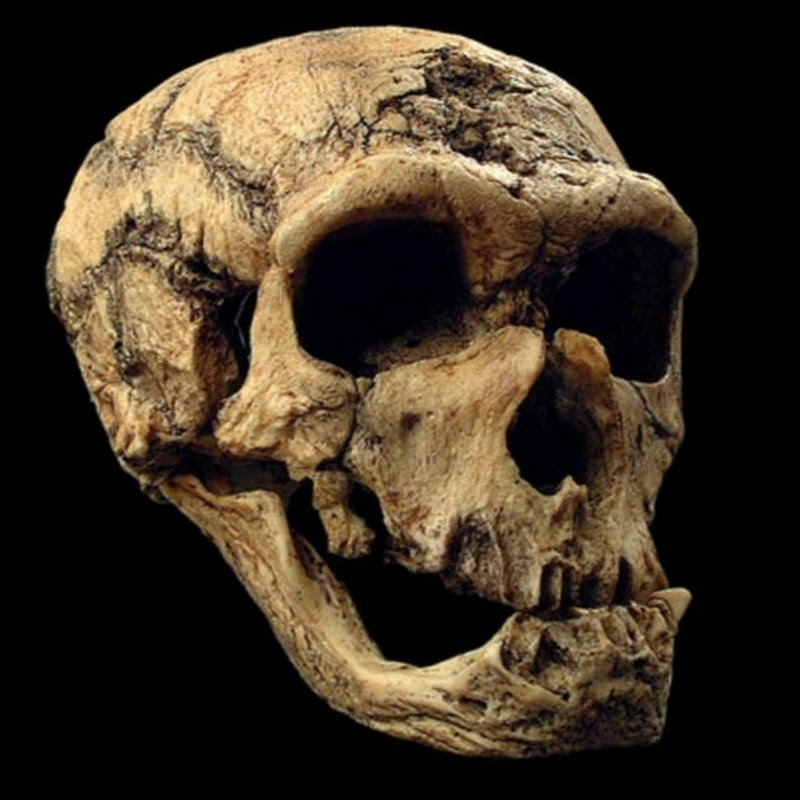
CHINA’S LOST VALLEY OF HUMANS THAT COULD REWRITE HUMAN ORIGINS
Long-form20:41Education
Published Oct 2, 2026, 4:00 PM · 2w ago
Highly Compelling
100K subscribers · median 20.9K views
AI imagery · confirmed$Likely
Views
28,025
+3 views/hour
Likes
473
1.7% of views
Comments
63
0.22% of views
Checked every 12 h while the video is this age · last check 12h ago · next in 0 min. YouTube itself updates public counts with a short delay.
Views / hour now
3
measured 12h ago
Peak views / hour
4
1d ago
Avg views / day
1.8K
since upload
First 24 hours
—
not tracked from upload
vs channel median
1.3×
Rank in channel
#6
of 21 tracked
Engagement
1.9%
likes + comments / views
Est. ad revenue
$112–$252
lifetime, $4–9 RPM
Views over time
3 readings · line: total views · bars: views gained per hour
Description
Could China’s Three Gorges region have been one of the last great refuges—or even a heartland—of the Denisovans?
Between roughly 300,000 and 50,000 years ago, a chain of caves along the Yangtze and Han river systems preserved human teeth, jaw fragments, stone tools and worked animal remains. This video explores the evidence from Yumidong, Xinglongdong, Changyang, Huanglong and Bailong caves, including the unusual Xinglongdong teeth, the Changyang jaw fragment and the controversial engraved ivory object sometimes described as a tusk fragment.
The Three Gorges may have formed a natural migration corridor connecting the Tibetan Plateau, central China and the plains of eastern Asia. Although no DNA or proteins have yet identified the Three Gorges fossils as Denisovan, discoveries at Xiahe, Harbin, Penghu and Tam Ngu Hao 2 show that Denisovan populations occupied enormously different environments across eastern Asia. That expanding evidence raises a serious question: should Chinese fossils from this period now be investigated primarily within a Denisovan framework, just as contemporary European fossils are routinely considered within a Neanderthal one?
### Timestamps
00:00 China’s unidentified ancient humans
01:12 Europe’s Neanderthals—and Asia’s missing population
02:31 The Three Gorges migration corridor
04:02 Yumidong: repeated occupation beside the Yangtze
05:34 Xinglongdong: human teeth and worked ivory
07:27 The mysterious engraved tusk fragment
08:42 Changyang and its fragmentary jaw
10:04 Huanglong and Bailong caves
11:37 Why teeth may reveal Denisovan connections
13:01 Xiahe, Harbin, Penghu and Laos
14:38 Was central China a Denisovan heartland?
16:08 A hypothesis waiting for proteins and DNA
### Sources
- Shao et al., “The Chronology of Early Human Settlement in Three Gorges Region, China—Contribution of Coupled Electron Spin Resonance and Uranium-Series Dating Method,” *Frontiers in Earth Science* (2022):
https://doi.org/10.3389/feart.2022.939766
- Gao et al., “120–150 ka Human Tooth and Ivory Engravings from Xinglongdong Cave, Three Gorges Region, South China,” *Chinese Science Bulletin* (2004):
https://doi.org/10.1360/03wd0214
- Chen et al., “A Late Middle Pleistocene Denisovan Mandible from the Tibetan Plateau,” *Nature* (2019):
https://doi.org/10.1038/s41586-019-1139-x
- Zhang et al., “Denisovan DNA in Late Pleistocene Sediments from Baishiya Karst Cave on the Tibetan Plateau,” *Science* (2020):
https://doi.org/10.1126/science.abb6320
- Zhang et al., “Middle and Late Pleistocene Denisovan Subsistence at Baishiya Karst Cave,” *Nature* (2024):
https://doi.org/10.1038/s41586-024-07612-9
- Demeter et al., “A Middle Pleistocene Denisovan Molar from the Annamite Chain of Northern Laos,” *Nature Communications* (2022):
https://doi.org/10.1038/s41467-022-29923-z
- Jacobs et al., “Timing of Archaic Hominin Occupation of Denisova Cave in Southern Siberia,” *Nature* (2019):
https://doi.org/10.1038/s41586-018-0843-2
- Douka et al., “Age Estimates for Hominin Fossils and the Onset of the Upper Palaeolithic at Denisova Cave,” *Nature* (2019):
https://doi.org/10.1038/s41586-018-0870-z
The identification of the Three Gorges fossils as Denisovan remains a hypothesis. Their ages and geography make the connection plausible, but direct ancient DNA or palaeoproteomic evidence will be required to confirm it. :chatgpt-content-reference{index="0"}
Details
- Published
- Oct 2, 2026, 4:00 PM
- Length
- 20:41 (1,241 s)
- Format
- Long-form
- Category
- Education
- Audio language
- EN
- Quality
- HD
- Captions
- No
- Made for kids
- No
- Licensed content
- Yes
- Video ID
- BMSUxyjISEY
More from Highly Compelling
 The Buried Truth About Aboriginal Australian Origins30.7K views · 1d ago · +1.8K/h
 Why Out of African Theorists Hid The Truth About Neanderthals26.9K views · 3d ago · +47/h
 Did Neanderthals Reach This Mediterranean Island?6.7K views · 5d ago · +2/h
 The Cave Discovery That Changes Everything About Human History19.3K views · 1w ago · +8/h
 What Happened to Earth 41,000 Years Ago is Terrifying22.1K views · 1w ago · +6/h
 Were Early Humans at War in the Levant 100,000 Years Ago?7.6K views · 2w ago
 This Study is the Nail in the Coffin to the "Out of East Africa Theory"50.2K views · 2w ago · +4/h
 THE FIRST NEANDERTHAL WAS ONE OF THE LAST19.7K views · 3w ago · +14/h
Statistics from the YouTube Data API, tracked by FameX. Views per hour, revenue and comparisons are FameX estimates.