Why did so many prehistoric animals have sails?
Long-form10:31
Published Oct 7, 2026, 10:57 AM · 1w ago

Evolution Explained
3.8K subscribers · median 4.8K views
Animation · confirmed$Likely
Views
2,131
+0 views/hour
Likes
24
1.1% of views
Comments
5
0.24% of views
Checked every 12 h while the video is this age · last check 10h ago · next in 68 min. YouTube itself updates public counts with a short delay.
Views / hour now
0
measured 10h ago
Peak views / hour
1
2d ago
Avg views / day
229
since upload
First 24 hours
—
not tracked from upload
vs channel median
0.4×
Rank in channel
#12
of 21 tracked
Engagement
1.4%
likes + comments / views
Est. ad revenue
$9–$21
lifetime, $4–10 RPM
Views over time
4 readings · line: total views · bars: views gained per hour
Description
Why did animals like Dimetrodon evolve those enormous sails on their backs?
For more than a century, scientists have proposed everything from thermoregulation and defense to swimming and visual display. But every explanation has problems — and even today, there still isn’t a confirmed answer.
In this video, we explore the strange Early Permian world where multiple unrelated animals evolved similar sail-like structures at roughly the same time, why some of the most famous theories started falling apart, and why display and communication may be the strongest explanation left.
We’ll look at the fossil evidence, the missing blood vessels, the lack of effective airborne hearing, the unusual ecology of the Early Permian, and the possibility that these sails were used to signal health, attract mates, intimidate rivals, or even change color depending on the animal’s state.
Maybe the sail had one purpose.
Maybe it had several.
Or maybe the real answer disappeared 300 million years ago with the animals that carried it.
If you enjoyed the video, make sure to like, subscribe, and let me know what evolution or prehistoric mystery you want me to cover next.
#evolution #paleontology #science
Details
- Published
- Oct 7, 2026, 10:57 AM
- Length
- 10:31 (631 s)
- Format
- Long-form
- Category
- —
- Audio language
- —
- Quality
- —
- Captions
- —
- Made for kids
- —
- Licensed content
- —
- Video ID
- Cp7L84HI-wU
More from Evolution Explained
 When It Rained for 2 Million Years998 views · 2d ago · +6/h
 Why are there no flying dinosaurs?4.1K views · 6d ago · +1/h
 The Deadliest Land Predators in Earth's History386 views · 3w ago
 The Dinosaur That Made No Sense - Stegosaurus599 views · 3w ago
 Are Dinosaurs Birds or Reptiles?910 views · 4w ago
 Earth Before Dinosaurs Would Have Killed You Instantly9K views · 4w ago
 How Did Dinosaurs Survive In The Arctic?583 views · 5w ago
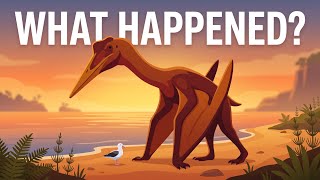 Why Were Pterosaurs So Much Bigger Than Modern Birds?1.1K views · 6w ago · +1/h
Statistics from the YouTube Data API, tracked by FameX. Views per hour, revenue and comparisons are FameX estimates.