Science & spaceMechDiskThe ripples on Damascus blades weren't decoration, they were the steel's insides
The ripples on Damascus blades weren't decoration, they were the steel's insides
Long-form1:57Science & TechnologyPublished Oct 17, 2026, 10:00 PM · 1d ago

Views
43,716
+78 views/hour
Views / hour now
78
measured 15m ago
Peak views / hour
728
14h ago
First 24 hours
40.2K
views at 24 h
Engagement
2.1%
likes + comments / views
Likes
930
2.1% of views
Comments
6
0.01% of views
Est. ad revenue
—
channel not monetized
Checked every 30 min while the video is this age · last check 15m ago · next in 14 min. YouTube itself updates public counts with a short delay.
Avg views / day
26.1K
since upload
vs channel median
0.1×
this video's views ÷ the channel's usual
Rank in channel
#18
of 20 tracked
Views over time
30 readings
Total views Views gained per hour
Description
This steel made legendary blades, but forge it like normal iron, too hot and too hard, and it could crack in seconds. The famous watery ripples on Damascus blades were never painted on. They grew from inside the steel.
Southern Indian smiths melted iron in sealed clay crucibles to make wootz, about 1.5% carbon. The fix was the opposite of instinct: dozens of cooler heat-and-hammer cycles, until carbide bands lined up and showed through as ripples. By the 1800s the craft was lost. In the 1980s researchers found the missing clue: vanadium, just four parts in a hundred thousand.
Sources:
• Verhoeven, Pendray & Dauksch, The key role of impurities in ancient Damascus steel blades (JOM, 1998) · http://dtrinkle.matse.illinois.edu/MatSE584/articles/key_role_impurities/key_role.html
• Verhoeven, Damascus steel, Part I: Indian wootz steel (2007) · https://www.tf.uni-kiel.de/matwis/amat/iss/kap_a/articles/verhoeven_2007.pdf
Tags
damascus steelwootz steelwootzdamascus swordwatered steelblacksmithingforging
Details
- Published
- Oct 17, 2026, 10:00 PM
- Length
- 1:57 (117 s)
- Format
- Long-form
- Category
- Science & Technology
- Audio language
- EN-US
- Quality
- HD
- Captions
- No
- Made for kids
- No
- Licensed content
- Yes
- Video ID
- EaUftkb52mw
More from MechDisk
 Engineers shut off Niagara Falls in 1969 because the cliff was falling apart326K views · 1d ago · +1.5K/h
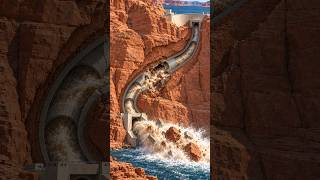 Why Glen Canyon Dam started spitting boulders out of its spillway in 1983907K views · 2d ago · +4.3K/h
 Why a 1,000-year-old wooden tower survived earthquakes and cannons but not a repair job56.6K views · 2d ago · +465/h
 Why Japan built a concrete cathedral just north of Tokyo that's designed to flood533K views · 3d ago · +2.6K/h
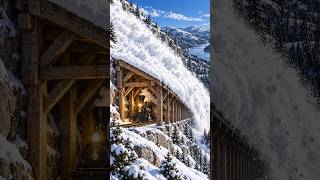 Why avalanches roar over this Sierra railroad and the trains never slow down135K views · 3d ago · +312/h
 How engineers made a deal with the Mississippi: keep your 30 percent, not 31475K views · 4d ago · +472/h
 Why the Falkirk Wheel needs only about eight kettles of power to turn 2,000 tons68.9K views · 5d ago · +554/h
 The Washington Monument Was a Stone Stump in a Cow Pasture for 25 Years999K views · 5d ago · +2.2K/h
Statistics from the YouTube Data API, tracked by FameX. Views per hour, revenue and comparisons are FameX estimates.