Homesteading & gardeningNature Lost VaultSharper Than the Pepper You Buy, Free in Your Yard. Why Don't You Know About It?
Sharper Than the Pepper You Buy, Free in Your Yard. Why Don't You Know About It?
3.7× channel medianLong-form11:22Howto & StylePublished Oct 9, 2026, 5:27 PM · 1w ago

Views
49,417
+32 views/hour
Views / hour now
32
measured 1h ago
Peak views / hour
109
13h ago
First 24 hours
—
not tracked from upload
Engagement
2.0%
likes + comments / views
Likes
935
1.9% of views
Comments
44
0.09% of views
Est. ad revenue
$247–$544
lifetime, $5–11 RPM
Checked every 12 h while the video is this age · last check 1h ago · next in 638 min. YouTube itself updates public counts with a short delay.
Avg views / day
5.1K
since upload
vs channel median
3.7×
this video's views ÷ the channel's usual
Rank in channel
#2
of 21 tracked
Views over time
2 readings
Total views Views gained per hour
Description
📔 Our NEW BOOK is OUT! Nature's Lost Vault Volume II: 40 more plants they wanted forgotten. Launch price ends 22 October; https://naturelostvault.com/book.html
Free black pepper has been growing in the crack at the end of your driveway this whole time.
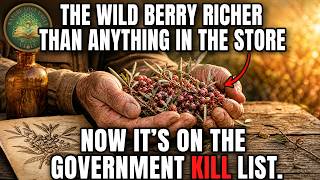
In this episode of Nature’s Lost Vault we follow peppergrass, the wild edible plant most Americans know only as a lawn nuisance. Its other names tell you what it used to be worth. Poor man’s pepper. Virginia pepperweed. Lepidium virginicum. It grows free in driveway cracks, alley gravel, and field edges across nearly all of North America, and it is one of the easiest plants in American foraging to identify.
Crush one of its flat green seedpods between your fingers. You get a sharp bite somewhere between cracked black pepper and horseradish, because this plant belongs to the mustard family and carries the same class of pungent sulfur compounds. The young leaves work as a wild green, raw or wilted in a pan, and carry protein, vitamin A, and vitamin C. The green seedpods are a direct black pepper substitute. Dry the mature pods, crush them, and you have free spice from a plant you have been mowing for forty years.
Now hold that against the pepper in your grinder. Black pepper built empires. Venice held the trade by the throat, Portugal sent fleets around Africa to break the grip, and pepper still accounts for roughly one fifth of the global spice trade. All of that value came from distance. Pepper had to be shipped, taxed, insured, and resold, and every hand it passed through added a margin. A spice you cannot grow at home is a spice somebody can price.
This plant was worth nothing for the opposite reason. It was underfoot. The Cherokee cooked the young greens and used the root on the skin, the Menominee made a poison ivy wash from it, the Houma used it in Louisiana, and the Hoh and the Quileute ate the leaves on the Pacific coast. In Mexico it is called lentejilla and never stopped being a household remedy. Yet no merchant advertised it, no company branded it, and it ended up on broadleaf control lists instead.
Then the laboratories arrived. Researchers in Mexico put the traditional use to the test and published what they found on inflammation and on human cell lines. A team in Puebla turned the plant’s essential oil into a working fruit preservative. And in twenty twenty five, a university team took an unusual protein out of this roadside plant, built a medical imaging agent from it, and filed a United States provisional patent application.
Four hundred years of worthless, and the paperwork arrives the moment one piece of it can be owned.
This is the honest story of peppergrass: how to identify the bottlebrush spike and the flat stacked seedpods, when to harvest the leaves and the green pods, and three ways to put free pepper on your own shelf.
📚Sources
- Hamel, Paul B., and Mary U. Chiltoskey. Cherokee Plants and Their Uses: A 400 Year History. Sylva, NC: Herald Publishing Co., 1975.
- Witthoft, John. “Cherokee Indian Use of Potherbs.” Journal of Cherokee Studies 2, no. 2 (1977): 250-255.
- Smith, Huron H. “Ethnobotany of the Menomini Indians.” Bulletin of the Public Museum of the City of Milwaukee 4 (1923): 1-174.
- Speck, Frank G. “A List of Plant Curatives Obtained From the Houma Indians of Louisiana.” Primitive Man 14 (1941): 49-75.
- Reagan, Albert B. “Plants Used by the Hoh and Quileute Indians.” Transactions of the Kansas Academy of Science 37 (1936): 55-70.
- Cruz-Munoz, Jose Ramon, et al. “Ethanolic Extract from Lepidium virginicum L. Ameliorates DNBS-Induced Colitis in Rats.” Journal of Ethnopharmacology 289 (2022): 115056. doi:10.1016/j.jep.2022.115056.
- Gallegos-Saucedo, Rodrigo, et al. “Cytotoxic Activity of Lepidium virginicum L. Methanolic Extract on Human Colorectal Cancer Cells, Caco-2, through p53-Mediated Apoptosis.” Molecules 29, no. 16 (2024): 3920. doi:10.3390/molecules29163920.
- Pacheco-Hernandez, Yesenia, Nemesio Villa-Ruano, et al. “Essential Oil of Lepidium virginicum: Protective Activity on Anthracnose Disease and Preservation Effect on the Nutraceutical Content of Tamarillo Fruit.” Chemistry and Biodiversity 18, no. 3 (2021): e2000941. doi:10.1002/cbdv.202000941.
- Tsang, Victor T. C., et al. “Lepidium virginicum Water-Soluble Chlorophyll-Binding Protein with Chlorophyll A as a Novel Contrast Agent for Photoacoustic Imaging.” Sensors 25, no. 11 (2025): 3492. doi:10.3390/s25113492.
- Food and Agriculture Organization of the United Nations. FAOSTAT: Crops and Livestock Products, Pepper, Raw. Rome: FAO, 2023.
#Foraging #WildEdibles #HerbalMedicine #NaturesLostVault
Tags
peppergrasspoor man’s pepperVirginia pepperweedLepidium virginicumpepperweedwild pepperblack pepper substitutefree spiceedible weedsforagingwildcraftingwild edible plantsbackyard foragingmustard familyseedpodsnative plantsforgotten remediesnatural remediesplant identificationsurvival foodherbal medicineNature’s Lost Vault
Details
- Published
- Oct 9, 2026, 5:27 PM
- Length
- 11:22 (682 s)
- Format
- Long-form
- Category
- Howto & Style
- Audio language
- EN
- Quality
- HD
- Captions
- No
- Made for kids
- No
- Licensed content
- Yes
- Video ID
- FB0-0r-ZA_I
More from Nature Lost Vault
 17x the Antioxidants of a Tomato, and It’s Ripe Right Now. Why Isn’t Anyone Picking It?8.4K views · 13h ago · +243/h
 6 Months of Food, No Power, No Bill, NEVER Breaks Down. Why Did Every Farm Give This Up?6.9K views · 1d ago · +64/h
 The Garden Daisy That STOPS Migraines. Grows for Free. Why Won’t Doctors Prescribe It?5.5K views · 4d ago
 Sweet as Honey, Gentle on Blood Sugar. The Inca Grew It. Why Won’t Any Store Sell It?49.2K views · 1w ago · +28/h
 Tastes Like Banana Custard. It's Ripe in the Woods RIGHT NOW. Lewis and Clark Lived on It.9.1K views · 1w ago · +1/h
 7 Perennial Vegetables That Feed You for 30 Years. Why Did Most Catalogs Drop Them?20.9K views · 2w ago · +2/h
 This Cold Remedy Sold Out in 2020. It Grows Free Outside. Be Ready Next Time.14.9K views · 2w ago
 Grows Free in the Woods. Women Trusted It For the Change of Life. Now It's a Pill You PAY For.8.7K views · 3w ago · +1/h
Statistics from the YouTube Data API, tracked by FameX. Views per hour, revenue and comparisons are FameX estimates.