History & cultureAncient Canada TVScientists Found a Baby Tyrannosaur Claw in Canada — What It Reveals Is Terrifying
Scientists Found a Baby Tyrannosaur Claw in Canada — What It Reveals Is Terrifying
Long-form15:34People & BlogsPublished Oct 7, 2026, 6:45 PM · 1w ago

Views
9,195
+0 views/hour
Views / hour now
0
measured 8h ago
Peak views / hour
—
First 24 hours
—
not tracked from upload
Engagement
1.5%
likes + comments / views
Likes
141
1.5% of views
Comments
1
0.01% of views
Est. ad revenue
$37–$83
lifetime, $4–9 RPM
Checked every 12 h while the video is this age · last check 8h ago · next in 213 min. YouTube itself updates public counts with a short delay.
Avg views / day
784
since upload
vs channel median
1.1×
this video's views ÷ the channel's usual
Rank in channel
#10
of 20 tracked
Views over time
1 readings
Total views Views gained per hour
Live tracking started
The chart fills in as FameX records new readings.
Description
Ancient Canada reveals one of the rarest tyrannosaur discoveries ever made: a tiny fossil claw from Alberta belonging to an animal that never even hatched.
The claw was found in rock around 71.5 million years old near Morrin, Alberta, and has been attributed to Albertosaurus, one of the large tyrannosaurs that lived in western Canada before Tyrannosaurus rex appeared.
What makes it extraordinary is its age at death. Researchers concluded that the claw came from an embryo still developing inside its egg. Before this discovery, no confirmed tyrannosaur embryo or egg had ever been identified despite more than a century of fossil collecting.
By comparing the claw with tyrannosaurs at different stages of growth, scientists estimated that the unhatched animal may already have been around 1.1 metres long from nose to tail — roughly the length of a medium-sized dog.
The same research also examined an embryonic tyrannosaur jaw from Montana. Together, the two fossils revealed that baby tyrannosaurs already possessed many of the distinctive features seen in adults before they even hatched.
The findings also allowed researchers to estimate the size of a tyrannosaur egg. Based on the embryos, the eggs may have been around 43 centimetres long, placing them among the largest dinosaur eggs ever estimated.
Yet no confirmed tyrannosaur nest or egg has ever been found. Scientists still do not know whether these predators nested in environments where eggs rarely fossilized, whether their shells have simply been overlooked, or whether unidentified tyrannosaur eggs are already sitting in museum collections.
In this video, we explore how scientists identified an unborn tyrannosaur from a single claw, how large these predators were before hatching, what their eggs may have looked like, and why the earliest stage of tyrannosaur life remained hidden for so long.
#AncientCanada #CanadaHistory #Dinosaurs #PrehistoricCanada #Paleontology
⚠️ Some visuals are illustrative. Certain materials may be used under Fair Use for commentary and educational purposes.
Tags
ancient canadacanada ancient historyhistory documentarycanadian mysteriesancient history canada
Details
- Published
- Oct 7, 2026, 6:45 PM
- Length
- 15:34 (934 s)
- Format
- Long-form
- Category
- People & Blogs
- Audio language
- EN
- Quality
- HD
- Captions
- No
- Made for kids
- No
- Licensed content
- No
- Video ID
- Gy3Rbp2MPBk
More from Ancient Canada TV
 A Scientist Chiselled Into a Dinosaur Skull From Alberta — It Had a Fleshy Comb Like a Rooster11.1K views · 1d ago · +41/h
 Gem Miners Hit a Sea Monster in Alberta — Its Neck Had More Bones Than Any Animal Ever Found26.6K views · 3d ago · +20/h
 A Teacher Followed Bones Up a Canadian Creek — He Found a Herd of Thousands of Dinosaurs107K views · 5d ago · +36/h
 A Geologist Went Fishing in Alberta — He Found a Horned Skull Sticking Out of the Cliff24.9K views · 1w ago · +49/h
 A Reservoir in Alberta Dropped 10 Metres — What Was Printed on the Bottom Shocked Scientists12.3K views · 1w ago
 Coal Miners Dug Into a Mountain in Canada — They Exposed a Wall of 10,000 Dinosaur Tracks195K views · 1w ago
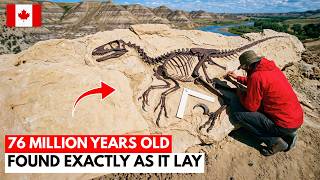 Scientists Found a Raptor in Canada With Almost Every Bone in Place — What It Showed Is Shocking107K views · 2w ago · +39/h
 A Gold Miner Hit Something Frozen in Canada — It Was a Baby Mammoth With Skin and Hair898 views · 2w ago
Statistics from the YouTube Data API, tracked by FameX. Views per hour, revenue and comparisons are FameX estimates.