What Ancient Humans Did When They Ran Out of Food in Winter
Long-form10:40People & BlogsPublished Sep 30, 2026, 12:31 PM · 3w ago

Views
907
+0 views/hour
Views / hour now
0
measured 2h ago
Peak views / hour
—
First 24 hours
—
not tracked from upload
Engagement
0.9%
likes + comments / views
Likes
8
0.9% of views
Comments
0
0.00% of views
Est. ad revenue
$4–$8
lifetime, $4–9 RPM
Checked every 12 h while the video is this age · last check 2h ago · next in 599 min. YouTube itself updates public counts with a short delay.
Avg views / day
41
since upload
vs channel median
1.3×
this video's views ÷ the channel's usual
Rank in channel
#9
of 21 tracked
Views over time
2 readings
Total views Views gained per hour
Description
How did ancient humans survive the brutal winters of the Ice Age when temperatures stayed below freezing, food disappeared, firewood ran out, and there was nowhere to escape?
Surviving an Ice Age winter required far more than simply finding a cave and starting a fire. Ancient humans and Neanderthals had to develop an entire survival system involving fire, animal hides, prehistoric clothing, food preservation, body fat, bone tools, mammoth bones, communal sleeping, and cooperation.
In this video, we explore some of the darkest and most ingenious things ancient humans did to survive extreme cold.
You'll discover how prehistoric humans protected caves from deadly winter winds, kept fires burning throughout the night, carried glowing embers between camps, created warm clothing from animal hides, and used ancient bone needles to sew fitted winter clothing.
But staying warm was only the beginning.
During the Ice Age, food could become even more dangerous than the cold. Animals grew lean, plants disappeared beneath the snow, and humans needed calorie-rich fat to survive. Hunters prized marrow, animal fat, brains, and other energy-rich foods. Even bones could be smashed and processed to extract bone grease.
When wood became scarce, bones could even become fuel.
Some prehistoric communities took resourcefulness even further. At Mezhyrich in Ukraine, mammoth bones were used to construct enormous prehistoric dwellings.
And then there is the darker archaeological evidence.
At Gough's Cave in England, archaeologists discovered ancient human bones bearing cut marks, evidence of marrow extraction, and human tooth marks. Some skulls were carefully modified into skull cups. At Goyet Cave in Belgium, Neanderthal remains also show evidence of processing, with some human bones apparently turned into tools.
But these discoveries don't automatically prove starvation cannibalism. Researchers have debated whether some of these practices were connected to survival, ritual behavior, or a combination of factors.
Perhaps the most remarkable evidence of Ice Age survival comes from somewhere else entirely.
At Shanidar Cave, the remains of a severely injured Neanderthal suggest that an individual who may have been unable to hunt survived for years. In a world where every calorie mattered, survival wasn't only about strength.
It was about cooperation.
From prehistoric fire-making and Ice Age shelters to fur clothing, food storage, bone grease, mammoth-bone houses, Neanderthals, ancient cannibalism evidence, and communal survival, this is the story of how ancient humans survived some of the harshest environments our species ever faced.
🔥 Could you survive an Ice Age winter?
0:00 The Reality of the Last Ice Age
0:54 Mastering Shelter and Flame
3:10 The Innovation of Tailored Survival
4:16 The Vital Importance of Fat
7:46 Unsettling Choices in the Dark
#AncientHumans #IceAge #PrehistoricHumans #HumanHistory #Neanderthals #Prehistory #AncientHistory #Survival #IceAgeSurvival #Archaeology
Tags
ice age survivalancient humansstone age technologyprehistoric lifeIce AgeIce Age survivalancient human survivalprehistoric humansprehistoric survivalhow ancient humans survived winterIce Age winterancient humans winterNeanderthalsNeanderthal survivalhow Neanderthals survivedprehistoric winterprehistoric clothingmammoth bone housesShanidar Caveancient cannibalismhuman evolutionarchaeologyancient historyice age
Details
- Published
- Sep 30, 2026, 12:31 PM
- Length
- 10:40 (640 s)
- Format
- Long-form
- Category
- People & Blogs
- Audio language
- EN
- Quality
- HD
- Captions
- No
- Made for kids
- No
- Licensed content
- Yes
- Video ID
- h4g1I0CUHx4
More from GRENY
 Surviving -25°F: The Mountain Man’s Secret to Staying Warm9 views · 4h ago · +10/h
 How Did Ancient Persians Keep ICE in 50°C Desert Heat?124 views · 1d ago
 How Did Medieval People Sleep in Freezing Stone Castles?3K views · 2d ago · +43/h
 How Did Vikings Survive Freezing Seas Without Fire?2K views · 3d ago · +16/h
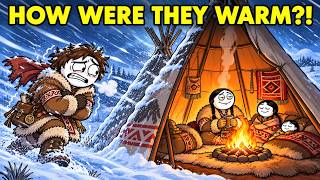 How Did Native Americans Survive −30°F Winters Inside a Tipi?465 views · 4d ago · +7/h
 How Ancient Egyptians Stored Food for a Year Without Losing It583 views · 4d ago
 How Ancient Egyptians Survived Deadly Infections Without Antibiotics465 views · 5d ago
 How Did Ancient Egyptians Drink Nile Water Without Getting Sick?2K views · 6d ago
Statistics from the YouTube Data API, tracked by FameX. Views per hour, revenue and comparisons are FameX estimates.