Education & explainersProcess Decoderरेत पर खड़ा Burj Khalifa गिरता क्यों नहीं? इसके नीचे की Engineering चौंका देगी 😳
रेत पर खड़ा Burj Khalifa गिरता क्यों नहीं? इसके नीचे की Engineering चौंका देगी 😳
Long-form13:37Science & TechnologyPublished Oct 19, 2026, 11:05 AM · 1h ago

Views
334
+191 views/hour
Views / hour now
191
measured 9m ago
Peak views / hour
262
38m ago
First 24 hours
—
not tracked from upload
Engagement
6.0%
likes + comments / views
Likes
13
3.9% of views
Comments
7
2.10% of views
Est. ad revenue
$1–$3
lifetime, $4–10 RPM
Checked every 30 min while the video is this age · last check 9m ago · next in 21 min. YouTube itself updates public counts with a short delay.
Avg views / day
334
since upload
vs channel median
0.0×
this video's views ÷ the channel's usual
Rank in channel
#21
of 21 tracked
Views over time
3 readings
Total views Views gained per hour
Description
How does the world’s tallest building stand securely on Dubai’s sandy ground even without solid bedrock directly beneath it? The answer lies in one of the most fascinating examples of skyscraper engineering, deep foundation design, structural engineering, wind-resistant architecture, and high-rise construction technology.
In this video, we explain how the 828-meter-tall Burj Khalifa supports its enormous weight, why it does not sink into the desert, and how engineers built a foundation capable of supporting a 163-story skyscraper on challenging ground conditions.
Instead of relying on solid rock, engineers created a massive foundation system using 192 deep reinforced-concrete piles combined with an enormous raft foundation. These piles transfer the building’s load through the surrounding soil, while the thick concrete raft distributes the enormous weight across the entire foundation system.
But the Burj Khalifa engineering story goes far beyond its foundation.
You’ll also discover how engineers protected the underground structure from salty groundwater and corrosion, why the tower uses its famous three-winged design, and how its shape helps reduce the effect of powerful desert winds.
We also explore how concrete was pumped hundreds of meters into the sky, why major concrete pours were carried out at night, and how chilled materials and crushed ice helped prevent the concrete from becoming too hot during construction.
This video explores:
Burj Khalifa foundation engineering
Why Burj Khalifa does not sink
Burj Khalifa foundation piles
192 piles under Burj Khalifa
Burj Khalifa raft foundation
How Burj Khalifa was built
Burj Khalifa construction technology
Burj Khalifa structural engineering
Burj Khalifa wind resistance
Buttressed core structural system
Burj Khalifa concrete pumping
Why concrete was poured at night
Burj Khalifa glass facade technology
How Burj Khalifa stays cool
Burj Khalifa condensation water system
Stack effect in skyscrapers
Burj Khalifa sewage system
Burj Khalifa drainage system
Burj Khalifa elevators
Burj Khalifa sky lobbies
Burj Khalifa steel spire
Burj Khalifa lightning protection
Skyscraper engineering
Dubai megaproject engineering
The tower’s exterior also required advanced engineering. Ordinary glass would allow enormous amounts of desert heat into the building, so high-performance reflective glazing and specially engineered facade systems were used to reduce solar heat while still allowing daylight inside.
Temperature changes also cause the exterior structure to expand and contract, which means the glass facade must be able to move slightly without cracking. Flexible joints and sealants help the outer skin respond safely to these thermal changes.
Another fascinating part of the building is its condensation recovery system. Moisture produced by the cooling system is collected instead of simply being wasted and can be reused for landscaping around the tower.
Inside the building, engineers also had to control the stack effect — the powerful movement of air caused by pressure and temperature differences inside an extremely tall skyscraper.
Even wastewater becomes an engineering challenge at this height. Burj Khalifa uses an engineered soil, waste, vent, and drainage system that moves wastewater through vertical plumbing networks toward the municipal sewer system while managing airflow and pressure inside the pipes.
Moving thousands of people through a 163-story vertical city required another extraordinary solution. High-speed elevators, vertical zoning, express routes, local elevators, and sky lobbies work together to transport passengers efficiently through the tower.
And when conventional construction methods reached their limits near the top, engineers used another remarkable technique. Major sections of the Burj Khalifa’s steel spire were assembled within the upper structure and raised into position using hydraulic systems, helping the tower reach its final height of 828 meters.
Burj Khalifa is not the result of one extraordinary invention. It is a combination of foundation engineering, concrete technology, aerodynamics, plumbing, elevators, cooling systems, facade engineering, corrosion protection, drainage, lightning protection, and hundreds of interconnected systems working together.
If you enjoy engineering documentaries, skyscraper construction, megaprojects, civil engineering, structural engineering, architecture, How It Works videos, construction technology, and modern engineering documentaries, this video takes you deep inside the engineering that made the Burj Khalifa possible.
Watch till the end to understand how engineers turned weak desert ground, extreme heat, powerful winds, enormous height, and complex building services into the tallest skyscraper ever constructed.
#BurjKhalifa #Engineering #Dubai #Skyscraper #Megaprojects #CivilEngineering #StructuralEngineering #Construction #HowItWorks #BurjKhalifaEngineering
Channel: Process Decoder
Tags
Burj KhalifaBurj Khalifa engineeringBurj Khalifa foundationBurj Khalifa constructionhow Burj Khalifa was builtBurj Khalifa foundation pilesBurj Khalifa raft foundationBurj Khalifa factsBurj Khalifa Dubaiskyscraper engineeringtallest building in the worldcivil engineeringstructural engineeringmegaprojectsconstruction technologyDubai megaprojectBurj Khalifa Hindiengineering documentaryhow skyscrapers are builtProcess Decoder
Details
- Published
- Oct 19, 2026, 11:05 AM
- Length
- 13:37 (817 s)
- Format
- Long-form
- Category
- Science & Technology
- Audio language
- HI
- Quality
- HD
- Captions
- No
- Made for kids
- No
- Licensed content
- Yes
- Video ID
- kMzI6n03urQ
More from Process Decoder
 बिना एक भी नदी वाला देश : Saudi Arabia पानी कैसे पीता है?819K views · 2d ago · +67.3K/h
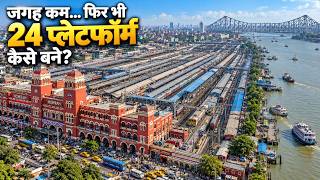 नदी और शहर के बीच 24 Platforms कैसे बना दिए? Howrah Station की Engineering Story64.6K views · 3d ago · +2.7K/h
 Factory में Eraser कैसे बनता है? 😱 दूध से Rubber बनने का पूरा Process | How Erasers Are Made52.4K views · 4d ago · +25/h
 Factory में Pen कैसे बनती है? 😳 Plastic से Pen बनने का पूरा Process | How Pens Are Made47.7K views · 4d ago · +137/h
 समुद्र के नीचे Japan ने Bullet Train की सुरंग कैसे बनाई? 😱 | Underwater Tunnel Engineering68.9K views · 6d ago · +508/h
 पहाड़ काटकर ROAD कैसे बनाते हैं? वो इंजीनियरिंग जो आज भी लोगों को हैरान कर देती है51.7K views · 1w ago · +94/h
 रेत से 2nm Chip: How the World’s Most Advanced Semiconductor Is Made315K views · 1w ago · +1.1K/h
 नदी के बीच इतना मजबूत Pillar कैसे बनता है? पानी को मात देने वाली Engineering 😳429K views · 1w ago · +315/h
Statistics from the YouTube Data API, tracked by FameX. Views per hour, revenue and comparisons are FameX estimates.