Complaint to Ea Nasir - Sung Mesopotamian Music
3.7× channel medianLong-form1:51MusicPublished Sep 25, 2026, 1:00 PM · 3w ago
Views
126,473
+20 views/hour
Views / hour now
20
measured 2h ago
Peak views / hour
22
1d ago
First 24 hours
—
not tracked from upload
Engagement
5.5%
likes + comments / views
Likes
6.4K
5.1% of views
Comments
538
0.43% of views
Est. ad revenue
$253–$569
lifetime, $2–4.5 RPM
Checked every 12 h while the video is this age · last check 2h ago · next in 583 min. YouTube itself updates public counts with a short delay.
Avg views / day
4.6K
since upload
vs channel median
3.7×
this video's views ÷ the channel's usual
Rank in channel
#3
of 21 tracked
Views over time
4 readings
Total views Views gained per hour
Description
Vocals & music by Farya Faraji. Vocals & music by Farya Faraji. Artwork by Endegor: https://www.deviantart.com/endegor/art/Babylon-Processional-Way-741022134
The text being sung is the Akkadian language complaint to Ea Nasir, or at least a part of it, now a massively popular entity that attained meme status on the Internet. Despite the admittedly comedic choice of text and video, the point of this video is to try and bring a little more awareness in the public sphere as to the known elements of Ancient Mesopotamian music. Whilst many extremely talented artists such as Peter Pringle have created vast amounts of amazing music inspired by the themes of Ancient Mesopotamia, these pieces of music firstly reflect artistic and creative choices, rather than a musicological desire to reconstruct the actual soundscape of Ancient Mesopotamia. Indeed, such pieces of music tend to draw from modern Middle-Eastern musical sounds and instruments, using modern Turkish, Persian etc instruments and musical material that did not exist in Ancient Mesopotamia.
Whilst I would usually describe a project such as the one uploaded here as a "historically informed approximation" of the culture's music, the scarcity of sources regarding Mesopotamian music make this choice of words inaccurate. Too little is known of actual Mesopotamian music in order to even employ the term "historically informed performance."
We don't really know what their melodic patterns would have been like, what their instrumental techniques would have been like, how the percussions would have sounded, how the vocals would have been sung, etc. We do know one thing however, that is virtually one of the only things agreed upon as fact, and as consensus in the field: Mesopotamian music employed diatonic modes.
Diatonic modes are the melodic material that we nowadays associate most strongly with the "Western" sound, given that they constitute the bulk of Western music today. The musical traditions of modern day West Asia, on the other hand, are characterised to a massive degree by the usage of non-diatonic modes, giving it that distinctly "oriental" feel we now associate with the region. Such modes and sonorities, however, are not attested in the corpus of evidence that we currently have, and as far as we know, Mesopotamian music would have been characterised by modes that sound distinctly "un-Middle-Eastern" to our modern ears.
Therefore, instead of pretending that this is in any way shape or form a tangible approximation of ancient music, this video's goal is instead to challenge the preconceived assumption pop-culture has injected us with, that Mesopotamian music must be imagined as necessarily having a sonority close to that of modern Middle-Eastern music. This is done by applying what little we know of Mesopotamian music, to showcase that whatever it would have sounded like, current evidence indicates it would not have sounded very similar to the eastern makam traditions.
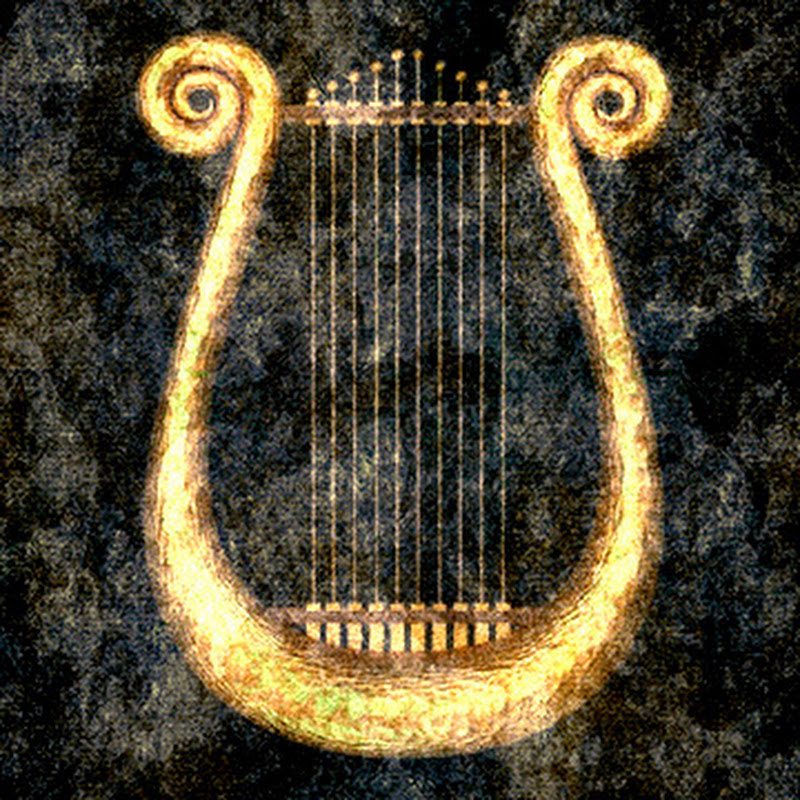
With that said, this performance also incorporates working theories in current scholarship: namely the dichordal model of Mesopotamian music. Many scholars posit that Mesopotamian music would have been characterised by a dichordal harmonic framework, with two notes always harmonising together. A tentative attempt at the possible sound of such harmony is thus present in the instrumental of this piece, played on a reconstructed ancient lyre. For more information about this harmonic, dichordal model, as well as Mesopotamian music more broadly, I recommend two videos on my channel:
My video essay on Mesopotamian music:
https://www.youtube.com/watch?v=mHCfrNwkwu0&t=1738s
And my interview with scholar Stefan Hagel:
https://www.youtube.com/watch?v=jtFT6S1rY4A&t=1597s
I based the pronunciation on this excellent video:
https://www.youtube.com/watch?v=s0ga7XCpncM
The composition follows the prosody of the Akkadian text, letting the natural accents and stresses dictate the composition. The lyrics and translation are available in the pinned comment below.
Tags
ea nasircomplaint to ea nasir
Details
- Published
- Sep 25, 2026, 1:00 PM
- Length
- 1:51 (111 s)
- Format
- Long-form
- Category
- Music
- Audio language
- EN
- Quality
- HD
- Captions
- No
- Made for kids
- No
- Licensed content
- Yes
- Video ID
- lFCYKhuDZN0
More from Farya Faraji & World Musicians
 The Anglo-Saxon Musical & Linguistic World with Graham Scheper7.6K views · 11h ago · +340/h
 Ja Urani Jutros Rano - Serbian Song24.9K views · 3d ago · +353/h
 Envoyons de l'Avant - French Canadian Song feat. Michael Burnyeat15.4K views · 6d ago · +46/h
 The Trooper and the Maid - Scottish Song feat. Rosie Amrit20.8K views · 1w ago · +22/h
 Rodrigo Martínez - Spanish Renaissance Song22.2K views · 1w ago · +19/h
 La Guillotine Permanente - French Revolution Song feat. Iriny Markevitch64.9K views · 2w ago · +62/h
 Makam in Greek Music - feat. Danai Papadopoulou34.4K views · 2w ago · +4/h
 Peter Emberley - Canadian Song12.3K views · 3w ago · +2/h
Statistics from the YouTube Data API, tracked by FameX. Views per hour, revenue and comparisons are FameX estimates.