Why Do Predators Chase Runners But Ignore Walkers?
Long-form11:49People & BlogsPublished Oct 1, 2026, 11:02 AM · 3w ago

Views
1,516
+0 views/hour
Views / hour now
0
measured 5h ago
Peak views / hour
—
First 24 hours
—
not tracked from upload
Engagement
0.8%
likes + comments / views
Likes
11
0.7% of views
Comments
1
0.07% of views
Est. ad revenue
$6–$15
lifetime, $4–10 RPM
Checked every 12 h while the video is this age · last check 5h ago · next in 384 min. YouTube itself updates public counts with a short delay.
Avg views / day
70
since upload
vs channel median
0.4×
this video's views ÷ the channel's usual
Rank in channel
#15
of 22 tracked
Views over time
5 readings
Total views Views gained per hour
Description
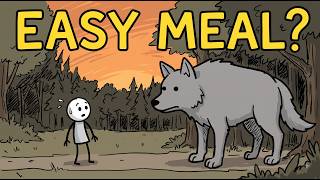
Two people walk the same trail past a mountain lion hidden in the brush. One strolls. One jogs. Only the jogger gets chased — and it has nothing to do with speed.
A 2011 study reviewing decades of fatal mountain lion attacks across North America found the highest risk fell on runners and cyclists, not the slowest or smallest people on the trail. Shouting and standing your ground actually lowered the odds of an attack. Running and crouching raised them. The danger was never about being seen. It's about how you move once you are.
We break down why the chase isn't a decision, it's a reflex. Biologists map a fixed sequence in nearly every wild hunter, orient, eye, stalk, chase, grab-bite, and the thing that trips the chase is a specific kind of motion, not size or smell. It's the same reason a well-fed house cat with a full bowl still can't resist pouncing on a laser dot it knows isn't food. We cover why the National Park Service says mountain lions genuinely don't seem to recognize a standing human as prey, but a person who crouches or bends over "looks a lot like a four-legged prey animal" — and why that's exactly why rangers tell parents to pick small children straight up instead of letting them run. We also do the honest math on speed: you top out around 15 mph, a mountain lion hits 50, a grizzly bear runs 35. Running was never actually going to save you.
Then the payoff: biologist Tim Caro's years of research on Thomson's gazelles "stotting," leaping straight up in front of a cheetah instead of running. Cheetahs abandon far more hunts when a gazelle does this, and succeed far less often when they still chase. It isn't panic. It's a message: I see you, the surprise is gone, don't bother.
We're honest about the limits too, including the real story of the Tsavo man-eaters of 1898.
The twist: a predator isn't deciding whether you're dangerous. It's running software with only a few inputs, and you get to choose which ones you feed it — not with how fast you move, but with whether you move away at all.
💬 Did you know running toward a predator's trigger was the actual danger, not just the speed?
🔔 Subscribe to Poko for the hidden science hiding in plain sight.
#Wildlife #AnimalBehavior #MountainLions #Nature #Science #Survival #Poko
Details
- Published
- Oct 1, 2026, 11:02 AM
- Length
- 11:49 (709 s)
- Format
- Long-form
- Category
- People & Blogs
- Audio language
- EN
- Quality
- HD
- Captions
- No
- Made for kids
- No
- Licensed content
- Yes
- Video ID
- mbJbAUBFkpo
More from Poko
 Why Would a Wild Animal Trust Us When It’s in Trouble?127 views · 9h ago · +62/h
 Why Wild Animals Fear One Unarmed Human More Than a Lion ?1.5K views · 1d ago
 Why Do Wild Animals Come Closer When You’re Alone?9.4K views · 2d ago · +286/h
 Why Do Predators Walk Away When a Human Stops Moving? (original) !!!1.1K views · 3d ago
 Why Do Predators Watch Children But Rarely Attack?793 views · 5d ago
 Why Do Wild Mothers Bring Their Babies Toward Humans ?4.3K views · 6d ago · +1/h
 Why Do Some Animals Trust Us With Their Babies?5.2K views · 1w ago
 Wild Animals Remember Your Face (And They Hold Grudges) !!!717 views · 1w ago
Statistics from the YouTube Data API, tracked by FameX. Views per hour, revenue and comparisons are FameX estimates.