How the Black Death Made Workers Richer
Long-form15:50EducationPublished Sep 4, 2026, 3:00 PM · 6w ago

Views
14,449
+1 views/hour
Views / hour now
1
measured 11h ago
Peak views / hour
1
11h ago
First 24 hours
—
not tracked from upload
Engagement
1.7%
likes + comments / views
Likes
232
1.6% of views
Comments
20
0.14% of views
Est. ad revenue
$144–$347
lifetime, $10–24 RPM
Checked every 24 h while the video is this age · last check 11h ago · next in 775 min. YouTube itself updates public counts with a short delay.
Avg views / day
311
since upload
vs channel median
0.7×
this video's views ÷ the channel's usual
Rank in channel
#16
of 20 tracked
Views over time
0 readings
Total views Views gained per hour
Live tracking started
The chart fills in as FameX records new readings.
Description
The Black Death killed millions — and made surviving workers more powerful than they had been in generations.
When plague tore through Europe in the fourteenth century, it did more than create a demographic catastrophe. It shattered the balance between labor and capital. In England, workers suddenly became scarce, wages rose, peasants moved for better opportunities, and landlords lost the ability to dictate terms as easily as before.
In this episode of The Financial Historian, we explore how the Black Death transformed labor markets, weakened parts of the feudal system, triggered government wage controls, and revealed a rule that still shapes the modern economy: workers earn more bargaining power when employers need them more than they need any single employer.
From the Statute of Labourers and the Peasants’ Revolt to modern wage inflation, labor shortages, job switching, automation, and financial freedom, this is a story about scarcity, wages, and who really holds power in the labor market.
Key Facts & Insights
• The Black Death reached England in 1348 and killed an estimated 30–45% of the population during its first major outbreak, with repeated epidemics helping reduce the population even further in the decades that followed.
• The collapse in population created an extreme labor shortage. Farms, workshops, estates, and towns still needed workers, but the supply of available labor had fallen dramatically.
• Scarcer labor gave surviving workers more bargaining power. Many demanded higher wages, moved between employers, and sought better terms.
• The English government responded with the Ordinance of Labourers in 1349 and the Statute of Labourers in 1351, which attempted to restrict wage increases and limit workers’ ability to move freely between employers.
• These wage controls reveal a central tension in economic history: markets are often treated as “natural” when they benefit owners, but become politically controversial when bargaining power shifts toward workers.
• Over the longer term, higher wages and greater worker mobility helped weaken older feudal labor relationships in parts of Western Europe, although the transition was uneven and far from universal.
• The 1381 Peasants’ Revolt reflected broader tensions over taxation, serfdom, labor restrictions, and the changing balance of power between peasants, workers, landlords, and the state.
• The modern lesson is not that labor shortages are inherently good. It is that wages depend not only on effort or productivity, but also on scarcity, mobility, alternatives, and the ability to walk away.
Further Reading
• The Great Mortality by John Kelly — a vivid and accessible history of the Black Death and the social world it destroyed.
• The Black Death: The Great Mortality of 1348–1350 by Ole J. Benedictow — a deeper demographic and historical study of the plague’s extraordinary scale and consequences.
• Making a Living in the Middle Ages by Christopher Dyer — an excellent guide to work, wages, markets, peasants, and everyday economic life in medieval England.
#BlackDeath #EconomicHistory #FinancialHistory #LaborEconomics #WageGrowth #Wages #Inflation #LaborShortage #BargainingPower #Feudalism #MiddleAges #FinancialEducation #HowMoneyWorks #MoneyAndPower #EconomicInequality #WorkersRights #HistoryOfMoney #EconomicsExplained #financialhistorian
If this gave you a new perspective, hit subscribe. History has the answers—and I’ll show you where to look.
Tags
medieval economybubonic plaguewealth inequalityblack deathblack death 1348black death europefeudal economicsmedieval economicsmedieval europethe black deaththe black death plaguehistorical economicsplague historypeasants revoltpeasants revolt 1381medieval businesshistory of the black deathblack death plaguemedieval londonthe great plaguemedieval societymedieval timesmedieval historymedieval wealthmedieval financeplague
Details
- Published
- Sep 4, 2026, 3:00 PM
- Length
- 15:50 (950 s)
- Format
- Long-form
- Category
- Education
- Audio language
- EN-CA
- Quality
- HD
- Captions
- Yes
- Made for kids
- No
- Licensed content
- Yes
- Video ID
- msWDyH8hpds
More from Financial Historian
 The World Is Rearming. What Gets Cut to Pay for It?9.1K views · 1d ago · +86/h
 How the Great Fire of London Created Modern Insurance8.8K views · 4d ago · +20/h
 Why Does the Richest Country Feel So Poor?15.1K views · 6d ago · +12/h
 What Happens When “Risk-Free” Debt Becomes the Risk?17K views · 1w ago · +10/h
 Why Financial Crises Create Strongmen23.9K views · 1w ago · +3/h
 The World Is Building a Backup Economy10.9K views · 1w ago · +2/h
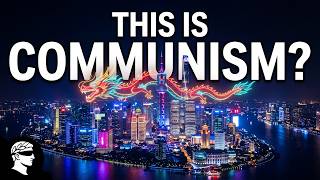 Is China Actually Communist?67.9K views · 2w ago · +3/h
 Why Every Empire Eventually Prints Too Much Money38.3K views · 2w ago · +3/h
Statistics from the YouTube Data API, tracked by FameX. Views per hour, revenue and comparisons are FameX estimates.