Why Don’t Predators See Humans as Prey?
2.5× channel medianLong-form11:54People & BlogsPublished Oct 2, 2026, 11:01 AM · 2w ago

Views
8,715
+0 views/hour
Views / hour now
0
measured 6h ago
Peak views / hour
—
First 24 hours
—
not tracked from upload
Engagement
0.4%
likes + comments / views
Likes
27
0.3% of views
Comments
9
0.10% of views
Est. ad revenue
$35–$87
lifetime, $4–10 RPM
Checked every 12 h while the video is this age · last check 6h ago · next in 327 min. YouTube itself updates public counts with a short delay.
Avg views / day
423
since upload
vs channel median
2.5×
this video's views ÷ the channel's usual
Rank in channel
#5
of 22 tracked
Views over time
5 readings
Total views Views gained per hour
Description
You're asleep in a tent, deep in the dark, and something is watching you. It has the teeth, the speed, the claws to reach you before you'd even open your eyes. And it turns and walks away.
In the 1980s, people in India's Sundarbans forest started wearing a second face on the backs of their heads, and the tigers stopped attacking. Not because a rubber mask is scary — because of what a face means to something that hunts for a living.
We break down six stacked reasons predators don't see you as prey. Your shape doesn't match any predator's search image — upright reads as strange, not dinner, which is why safari guides warn against crouching near big cats. Your eyes sit forward like a hunter's, not sideways like prey, and a 2017 UC Santa Cruz study found wild pumas fled human voices 83% of the time, abandoning fresh kills entirely, while ignoring frog calls as a control. You don't run, and flight is what triggers the chase reflex in the first place. Your voice has become one of the most feared sounds on the planet — a 2023 Kruger National Park study playing lions, gunshots, and calm human speech to 19 species found 95% of them feared human voices more than an actual lion. And the numbers behind it: a 2015 study of over 300 predators found humans kill adult prey at up to 14 times the rate of any other predator, and uniquely target the strongest breeding adults instead of the young, old, or sick the way every natural predator does.
Then the payoff: the real story of the Sundarbans masks, why tigers that ambush from behind kept circling around to a face and calling off the attack — and why it eventually stopped working once the tigers caught on.
We're honest about the limits too, including the Tsavo man-eaters of 1898.
The twist: pumas fled kills at the mere sound of human voices with nobody actually there, and had to hunt more just to make up the difference — reshaping an entire ecosystem's "landscape of fear" around a threat that never shows up in person. You're a predator that hunts by reputation alone.
💬 Did the Sundarbans mask story surprise you? Would you have guessed a fake face could work?
🔔 Subscribe to Poko for the hidden science hiding in plain sight.
#Wildlife #AnimalBehavior #Tigers #Nature #Science #Survival #Poko
Details
- Published
- Oct 2, 2026, 11:01 AM
- Length
- 11:54 (714 s)
- Format
- Long-form
- Category
- People & Blogs
- Audio language
- EN
- Quality
- HD
- Captions
- No
- Made for kids
- No
- Licensed content
- Yes
- Video ID
- qnWCCZc1IvQ
More from Poko
 Why Would a Wild Animal Trust Us When It’s in Trouble?127 views · 10h ago
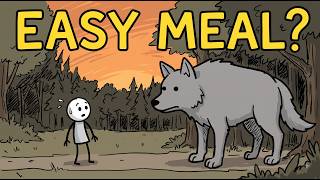 Why Wild Animals Fear One Unarmed Human More Than a Lion ?1.6K views · 1d ago · +63/h
 Why Do Wild Animals Come Closer When You’re Alone?9.4K views · 2d ago · +286/h
 Why Do Predators Walk Away When a Human Stops Moving? (original) !!!1.1K views · 3d ago · +1/h
 Why Do Predators Watch Children But Rarely Attack?794 views · 5d ago
 Why Do Wild Mothers Bring Their Babies Toward Humans ?4.3K views · 6d ago
 Why Do Some Animals Trust Us With Their Babies?5.2K views · 1w ago
 Wild Animals Remember Your Face (And They Hold Grudges) !!!717 views · 1w ago
Statistics from the YouTube Data API, tracked by FameX. Views per hour, revenue and comparisons are FameX estimates.