Kallipolian Dance - Ancient Greek Music
2.3× channel medianLong-form2:45MusicPublished Sep 3, 2026, 7:50 PM · 7w ago
Views
78,517
+21 views/hour
Views / hour now
21
measured 14h ago
Peak views / hour
27
1d ago
First 24 hours
—
not tracked from upload
Engagement
2.4%
likes + comments / views
Likes
1.8K
2.2% of views
Comments
112
0.14% of views
Est. ad revenue
$157–$353
lifetime, $2–4.5 RPM
Checked every 24 h while the video is this age · last check 14h ago · next in 542 min. YouTube itself updates public counts with a short delay.
Avg views / day
1.6K
since upload
vs channel median
2.3×
this video's views ÷ the channel's usual
Rank in channel
#5
of 21 tracked
Views over time
0 readings
Total views Views gained per hour
Live tracking started
The chart fills in as FameX records new readings.
Description
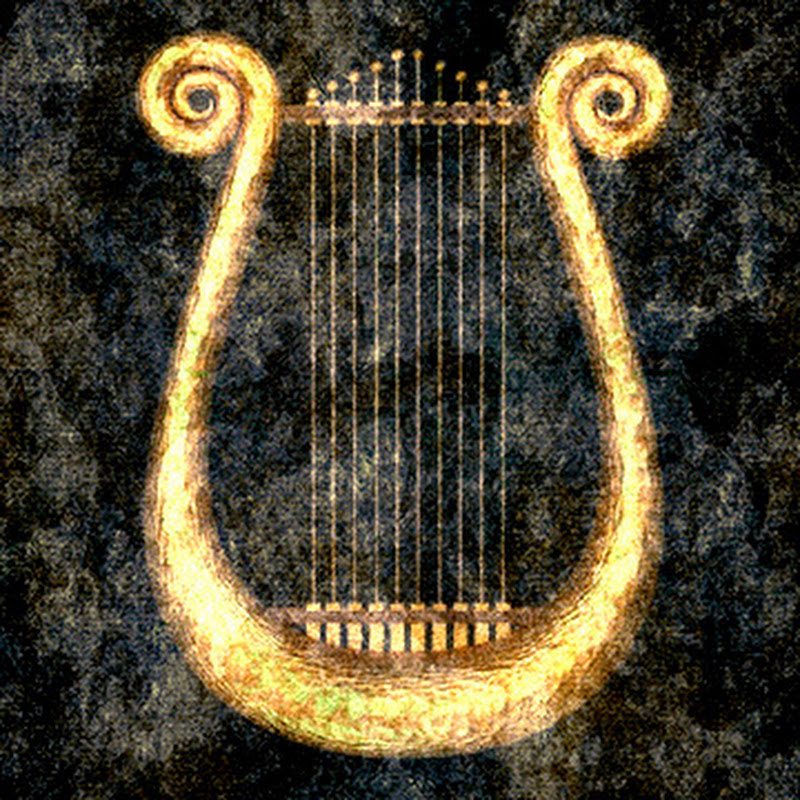
Arrangement by Farya Faraji. This is another historically informed approximation of what Ancient Greek music may have sounded like based on the available evidence and current working theories. Many thanks to @SEIKILO Museum for building me this wonderful reconstructed phorminx lyre using period strings. Check out their amazing channel and site: https://seikilo.com
Explore the musical instruments of the ancient world at SEIKILO:
https://www.youtube.com/@SEIKILO
The Phorminx heard in this recording was handcrafted in Greece by the Koumartzis family of LUTHIEROS:
https://luthieros.com
This improvisation is in the enharmonic genus of the Ancient Greek modes, the one that employed dense microtonal intervals which sound extremely alien and out of tune to our modern ears.
According to many scholarly frameworks such as those of prof. Stefan Hagel, Armand d'Angour and Barnaby Brown, Ancient Greek music was in many ways a polyphonic form of music which employed a dichordal framework of each note being accompanied by another one. This would have expressed itself on the Ancient Greek lyre through the block-and-strum technique, which was the main way Greeks played the lyre. Unlike the modern notion of playing it like a harp be plucking the strings with the fingers, which would have been secondary, the lyre's strings were primarily strummed with a plectrum, with the fingers muting the strings not to be heard, leaving out only the one, or ones, to be heard. Within the dichordal framework, the fingers would thus leave at all times two strings open, that harmonised with one another. The evidence is clear that this dichordal framework would have applied to all genuses, including the enharmonic, which had grown strange even to the ears of Ancient Greeks themselves by the Hellenistic era.
The question of how such a polyphony would have worked is unknown, so this performance is a tentative test into the question. I mostly kept the dichords limited to a drone on the tonic being the accompanying "harmony" for the melody, with occasional usage of other notes harmonising with the microtones.
The rhythm is in 7 metres, which is attested in the sources and known to have existed in Ancient Greek music.
For more information on the academic sources consulted in this reconstruction, check out the Epic Talking playlist where I interview scholars on the subject of Ancient Greek music, as well as analyse scholarly sources.
Tags
ancient greek musicmusic of ancient greecegreek music reconstructionancient lyreancient greek lyreancient lyre reconstruction
Details
- Published
- Sep 3, 2026, 7:50 PM
- Length
- 2:45 (165 s)
- Format
- Long-form
- Category
- Music
- Audio language
- ZXX
- Quality
- HD
- Captions
- No
- Made for kids
- No
- Licensed content
- Yes
- Video ID
- rzf7DFX7GiI
More from Farya Faraji & World Musicians
 The Anglo-Saxon Musical & Linguistic World with Graham Scheper7.8K views · 12h ago · +378/h
 Ja Urani Jutros Rano - Serbian Song25.7K views · 3d ago · +275/h
 Envoyons de l'Avant - French Canadian Song feat. Michael Burnyeat15.4K views · 6d ago · +9/h
 The Trooper and the Maid - Scottish Song feat. Rosie Amrit20.8K views · 1w ago · +22/h
 Rodrigo Martínez - Spanish Renaissance Song22.2K views · 1w ago · +19/h
 La Guillotine Permanente - French Revolution Song feat. Iriny Markevitch64.9K views · 2w ago · +62/h
 Makam in Greek Music - feat. Danai Papadopoulou34.4K views · 2w ago · +4/h
 Peter Emberley - Canadian Song12.3K views · 3w ago · +2/h
Statistics from the YouTube Data API, tracked by FameX. Views per hour, revenue and comparisons are FameX estimates.