Every Star Just Discovered Explained In 17 Minutes
Long-form17:01People & Blogs
Published Sep 8, 2026, 5:55 PM · 5w ago

Cosmic Jojo
2.3K subscribers · median 4.5K views
Animation · confirmed$Likely
Views
8,800
+0 views/hour
Likes
92
1.1% of views
Comments
7
0.08% of views
Checked every 24 h while the video is this age · last check 15h ago · next in 532 min. YouTube itself updates public counts with a short delay.
Views / hour now
0
measured 15h ago
Peak views / hour
1
3d ago
Avg views / day
224
since upload
First 24 hours
—
not tracked from upload
vs channel median
2.0×
Rank in channel
#6
of 21 tracked
Engagement
1.1%
likes + comments / views
Est. ad revenue
$35–$88
lifetime, $4–10 RPM
Views over time
0 readings · line: total views · bars: views gained per hour
Live tracking started
The chart fills in as FameX records new readings.
Description
R136a1
The most massive star known sits at a distance that makes its existence difficult to fully grasp. It lies about 160,000 light years away in the Tarantula Nebula, a stellar nursery inside the Large Magellanic Cloud, a small companion galaxy orbiting the Milky Way. It is a Wolf-Rayet star, a type so hot and so violent that it is steadily blasting its own outer layers into space through a dense, high-speed wind. Estimates of its mass have shifted repeatedly as instruments improved, ranging from over 300 times the mass of the Sun in earlier measurements down to somewhere between 170 and 230 times in the sharpest images taken to date. Even at the lower figure, it holds the record. Its surface burns at roughly 46,000 Kelvin, about eight times hotter than the Sun, and it radiates several million times more energy. It pours out more light in four seconds than the Sun produces in an entire year.
Tags
EveryStarExplained
Details
- Published
- Sep 8, 2026, 5:55 PM
- Length
- 17:01 (1,021 s)
- Format
- Long-form
- Category
- People & Blogs
- Audio language
- EN
- Quality
- HD
- Captions
- No
- Made for kids
- No
- Licensed content
- Yes
- Video ID
- wQwT9TE5zi0
More from Cosmic Jojo
 Every Hidden Thing On Venus Explained In 17 Minutes1.3K views · 3d ago · +2/h
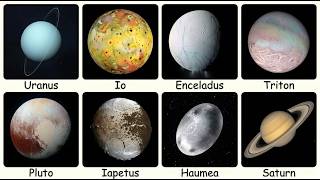 The Strangest Worlds In Our Solar System Explained5.3K views · 6d ago · +14/h
 Every Way The Sun Will Die Explained In 16 Minutes4.2K views · 1w ago · +1/h
 What Would Happen If You Lived On Mars?684 views · 1w ago
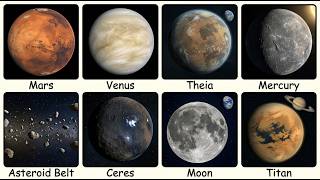 The Scariest Ghost Worlds In Our Solar System8.3K views · 1w ago · +1/h
 Every Lost World In Our Solar System Explained In 14 Minutes28.2K views · 2w ago · +13/h
 Every Ghost World In Our Solar System Explained In 15 Minutes81.9K views · 2w ago · +8/h
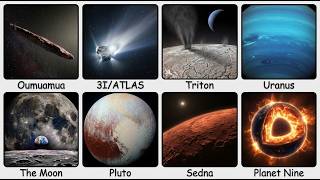 Every Object That Shouldn't Be In Our Solar System Explained In 16 Minutes3.8K views · 3w ago
Statistics from the YouTube Data API, tracked by FameX. Views per hour, revenue and comparisons are FameX estimates.