The NEW Denisovan Discovery That Truly Changes Everything
Long-form18:25Education
Published Sep 21, 2026, 4:00 PM · 3w ago
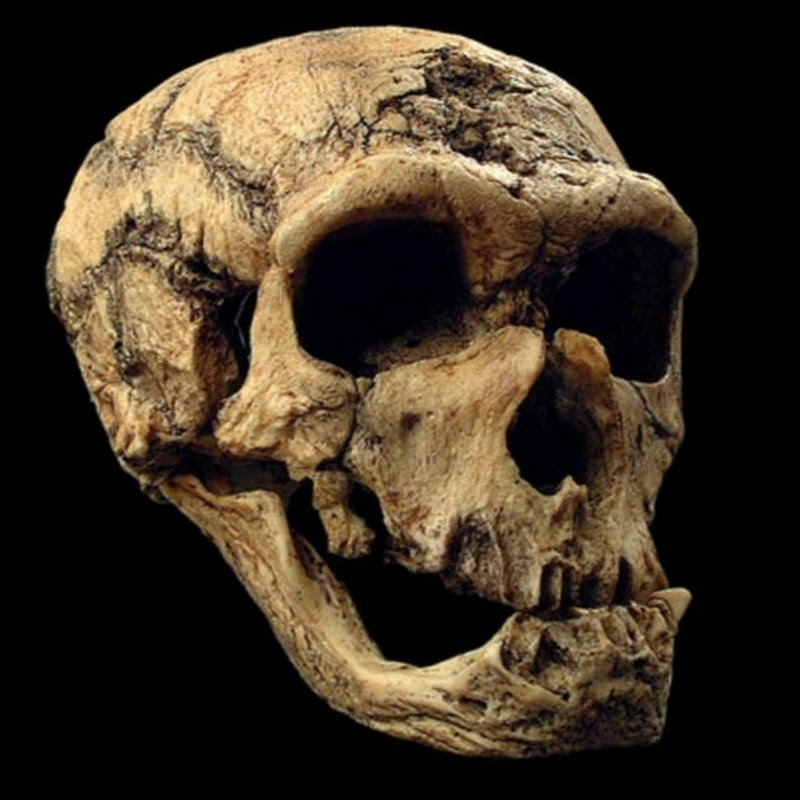
Highly Compelling
100K subscribers · median 20.9K views
AI imagery · confirmed$Likely
Views
8,932
+1 views/hour
Likes
273
3.1% of views
Comments
30
0.34% of views
Checked every 12 h while the video is this age · last check 9h ago · next in 125 min. YouTube itself updates public counts with a short delay.
Views / hour now
1
measured 9h ago
Peak views / hour
1
1d ago
Avg views / day
343
since upload
First 24 hours
—
not tracked from upload
vs channel median
0.4×
Rank in channel
#18
of 21 tracked
Engagement
3.4%
likes + comments / views
Est. ad revenue
$36–$80
lifetime, $4–9 RPM
Views over time
3 readings · line: total views · bars: views gained per hour
Description
A new discovery from Bianfu Cave in southwestern China is transforming what we know about the Denisovans. Ancient proteins recovered from human teeth and bones reveal that Denisovans occupied this mountainous region between approximately 167,000 and 134,000 years ago. They hunted large animals, butchered carcasses, extracted marrow, produced bone tools and manufactured a surprisingly straightforward stone-tool industry.
Located in Yunnan Province, Bianfu Cave fills a major geographic gap between the Denisovans of Siberia and Tibet and a mysterious Denisovan-like molar found at Cobra Cave in Laos. The two sites are only around 770 kilometres apart, and their dates overlap almost perfectly. Together, they point toward a southern Denisovan population corridor extending through southwestern China and mainland Southeast Asia.
The discovery also raises a much larger question. If fragmentary teeth and bones from Bianfu could only be recognized as Denisovan through ancient proteins, how many other Denisovans remain unidentified in Chinese museum collections? Fossils from Hualongdong, Tongzi, Panxian Dadong and Xujiayao possess unusual dental characteristics that may deserve renewed comparison with securely identified Denisovan remains.
Even older protein evidence from approximately 400,000-year-old fossils traditionally assigned to East Asian Homo erectus could indicate relationships with the later Denisovan lineage. This does not prove that every archaic Chinese fossil was Denisovan, but it challenges the old picture of Denisovans as a rare Siberian population known only from a few fragments. They may instead have represented one of the most geographically widespread and successful human populations in Pleistocene Asia.
In this video, we examine the Denisovan remains from Bianfu Cave, their tools and hunting behavior, the connection with Cobra Cave in Laos, and the possibility that some of China’s most mysterious fossils have been hiding under the wrong names.
TIMESTAMPS
00:00 Denisovans Were Hiding in Plain Sight
00:55 The Discovery at Bianfu Cave
02:10 Teeth and Bones Identified Through Proteins
03:42 The Protein Link with East Asian Homo erectus
05:10 Surprisingly Simple Denisovan Stone Tools
06:35 Skilled Hunters of Southwestern China
08:02 A Denisovan Population Spanning Asia
09:22 The Connection with Cobra Cave in Laos
10:43 China’s Unidentified Denisovan Teeth
12:21 Hualongdong, Tongzi and Panxian Dadong
13:43 Were Some “Homo erectus” Early Denisovans?
15:05 Rewriting the Human History of Asia
Research discussed includes the 2026 Bianfu Cave studies published in *Nature*, research on the Denisovan-like molar from Tam Ngu Hao 2 in Laos, and recent paleoproteomic work examining Middle Pleistocene human fossils from eastern Asia.
#Denisovans #HumanEvolution #Paleoanthropology #Archaeology #AncientHumans #HomoErectus #China #Denisovan #AncientDNA
Details
- Published
- Sep 21, 2026, 4:00 PM
- Length
- 18:25 (1,105 s)
- Format
- Long-form
- Category
- Education
- Audio language
- EN
- Quality
- HD
- Captions
- No
- Made for kids
- No
- Licensed content
- Yes
- Video ID
- zGt6G4Jl7NI
More from Highly Compelling
 The Buried Truth About Aboriginal Australian Origins30.7K views · 1d ago · +1.8K/h
 Why Out of African Theorists Hid The Truth About Neanderthals26.9K views · 3d ago · +47/h
 Did Neanderthals Reach This Mediterranean Island?6.7K views · 5d ago · +2/h
 The Cave Discovery That Changes Everything About Human History19.3K views · 1w ago · +8/h
 What Happened to Earth 41,000 Years Ago is Terrifying22.1K views · 1w ago · +6/h
 CHINA’S LOST VALLEY OF HUMANS THAT COULD REWRITE HUMAN ORIGINS28K views · 2w ago · +3/h
 Were Early Humans at War in the Levant 100,000 Years Ago?7.6K views · 2w ago
 This Study is the Nail in the Coffin to the "Out of East Africa Theory"50.2K views · 2w ago · +4/h
Statistics from the YouTube Data API, tracked by FameX. Views per hour, revenue and comparisons are FameX estimates.