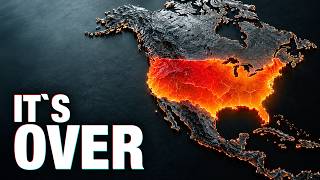
The Worst Possible US Disaster Just Got EVEN WORSE?!?
25.2× channel medianLong-form18:14EducationPublished Sep 20, 2026, 3:00 PM · 4w ago

Views
1,712,277
+135 views/hour
Views / hour now
135
measured 12h ago
Peak views / hour
135
12h ago
First 24 hours
—
not tracked from upload
Engagement
0.3%
likes + comments / views
Likes
4.8K
0.3% of views
Comments
346
0.02% of views
Est. ad revenue
$6,849–$17,123
lifetime, $4–10 RPM
Checked every 24 h while the video is this age · last check 12h ago · next in 667 min. YouTube itself updates public counts with a short delay.
Avg views / day
53K
since upload
vs channel median
25.2×
this video's views ÷ the channel's usual
Rank in channel
#2
of 20 tracked
Views over time
3 readings
Total views Views gained per hour
Description
The next major earthquake on the San Andreas Fault raises a question that has little to do with when it will strike. The bigger question is: **where will the rupture stop?**
In 1857, one of the most powerful earthquakes in U.S. history ruptured nearly 220 miles of the San Andreas Fault before reaching Cajon Pass — and stopping there.
But an earthquake in 1812 produced a very different outcome. Its rupture reached the same junction, yet continued through it, connecting with another fault system.
The location was almost identical. The result was not.
Now, a 2026 study has reconstructed roughly 1,000 years of earthquake history to investigate what might control these different outcomes. The research suggests that Cajon Pass could act as an **“earthquake gate”** — a critical point where the balance of stress between the San Andreas and San Jacinto fault systems may influence whether a rupture stops or jumps from one fault to another.
And according to the model, present-day stress levels are unusually high.
In this documentary, we’ll follow a hypothetical earthquake as it approaches Cajon Pass, revisit the very different ruptures of 1857 and 1812, examine what the new stress model reveals, and explore what could happen if the next major rupture crosses the junction instead of stopping there.
This is not a prediction of when the next earthquake will happen.
It is an exploration of the physics that could determine how far the rupture travels.
Tags
earthsciencedocumentaryplanetnatureenvironmentoceanweatherclimategeologyphysicsmeteorologyearthquakequakemegaquakemagnitudepacificamericausasan andreasfaultfault linecascadiasubductiontsunamicascadia megaquakecuriositiesmegaquake warningmysteryscientists
Details
- Published
- Sep 20, 2026, 3:00 PM
- Length
- 18:14 (1,094 s)
- Format
- Long-form
- Category
- Education
- Audio language
- EN
- Quality
- HD
- Captions
- No
- Made for kids
- No
- Licensed content
- Yes
- Video ID
- 4UdV7GKsr6U
More from Space Matters
 The Worst Possible US Disaster Just Got EVEN WORSE69.9K views · 5d ago · +4.2K/h
 Why Anyone Who Goes to Mars Will NEVER Come Back to Earth42.1K views · 1w ago · +5/h
 A SUPER El Niño Triggered History’s DEADLIEST Disaster. THIS One Might Be Worse103K views · 2w ago · +8/h
 A Light-Year Is So Huge Your Brain Can’t Comprehend It3.1M views · 3w ago · +433/h
 NASA's New Telescope Might Break the Universe456K views · 5w ago · +31/h
 What Super El Nino Will Do To Our Weather In Coming Months?493K views · 6w ago · +7/h
 We Were Wrong About Pluto! James Webb’s New Discovery Changes Everything10.7K views · 7w ago
 Voyager 1 Just Sent Back Something NASA Can't Explain65.9K views · 2mo ago · +8/h
Statistics from the YouTube Data API, tracked by FameX. Views per hour, revenue and comparisons are FameX estimates.