How the U.S. Built a Massive Border Wall Where It Seemed Impossible
Long-form13:53Science & Technology28.1× channel median
Published Sep 26, 2026, 1:02 PM · 2w ago

FctryBuilt
7.8K subscribers · median 6.4K views
AI imagery · confirmed$Likely
Views
180,052
+103 views/hour
Likes
599
0.3% of views
Comments
30
0.02% of views
Checked every 12 h while the video is this age · last check 7h ago · next in 264 min. YouTube itself updates public counts with a short delay.
Views / hour now
103
measured 7h ago
Peak views / hour
123
1d ago
Avg views / day
9K
since upload
First 24 hours
—
not tracked from upload
vs channel median
28.1×
Rank in channel
#3
of 21 tracked
Engagement
0.4%
likes + comments / views
Est. ad revenue
$720–$1,801
lifetime, $4–10 RPM
Views over time
2 readings · line: total views · bars: views gained per hour
Description
How do you build a massive border barrier across scorching deserts, steep mountains, unstable terrain, and remote locations?
From the outside, a border wall can look like nothing more than rows of steel panels. But the real construction process is far more complicated. Before a single panel is installed, crews may have to prepare foundations, cut working benches into mountainsides, move enormous amounts of earth, build access roads, manage drainage, position heavy cranes, and coordinate multiple construction crews across difficult terrain.
In this video, we go behind the scenes of the engineering and construction systems used to build border barriers across extreme environments.
You'll see how massive steel panels are transported and positioned, how alignment and foundations become critical, why construction can continue after sunset in extreme heat, how steel bollards can be combined with concrete, and why building on steep mountains requires an entirely different construction strategy.
But the physical wall is only one part of the system.
Modern border infrastructure can also include patrol roads, lighting, cameras, sensors, radar, communications networks, drainage systems, maintenance infrastructure, and other technology designed to operate alongside physical barriers.
The result is not simply a wall. It is a large infrastructure corridor made up of many interconnected systems — built section by section across some of the most difficult terrain in the United States.
This video focuses on the engineering, construction methods, infrastructure, and technology involved in border barrier systems. It does not promote or oppose any political position.
📚 SOURCES
U.S. Government Accountability Office — Southwest Border: Award and Management of Barrier Construction Contracts:
[GAO — Border Barrier Construction Contracts]
https://www.gao.gov/products/gao-23-106893?
U.S. Government Accountability Office — Border Security, Technology and Tactical Infrastructure:
[GAO — Border Security Technology and Infrastructure]
https://www.gao.gov/products/gao-18-397t?
U.S. Customs and Border Protection — Rio Grande Valley Barrier Environmental Stewardship Plan:
[CBP — Rio Grande Valley Barrier Environmental Stewardship Plan]
https://www.cbp.gov/sites/default/files/2024-11/final_esp_rgv_barrier_october_2024_508_compliant.pdf?
⚠️ DISCLAIMER
🔍 Digital Creation: This video has been created using Artificial Intelligence (AI) technology, strictly for educational and documentary purposes.
⚖️ For Information Only: The content is meant solely for informational use and may not accurately reflect real-world events or constitute professional advice.
❗No Affiliation: Any similarity to real persons, organizations, or events is entirely coincidental and unintentional.
#usborderwall #borderwall #engineering #construction #civilengineering #megaproject #infrastructure #engineeringmarvels #constructiontechnology #usborder #desertconstruction #mountainconstruction #surveillance #technology #engineeringdocumentary #infrastructure
Details
- Published
- Sep 26, 2026, 1:02 PM
- Length
- 13:53 (833 s)
- Format
- Long-form
- Category
- Science & Technology
- Audio language
- EN
- Quality
- HD
- Captions
- No
- Made for kids
- No
- Licensed content
- Yes
- Video ID
- 7_ksnbcMQbc
More from FctryBuilt
 How Tokyo Is Spending $109 Billion to Prepare for the Next Megaquake214 views · 1d ago
 How America Builds 500,000-Volt Power Lines Across 235 Miles of Desert1.4K views · 6d ago
 How the USA Built a Massive 800-Mile Oil Pipeline Across Frozen Alaska16.6K views · 1w ago · +82/h
 China Built a $31 Billion Dam So Massive It Changed the Planet1.1K views · 2w ago
 How a Himalayan Glacier Became a Wall of Death: Nepal's 2026 Disaster Explained7.1K views · 3w ago
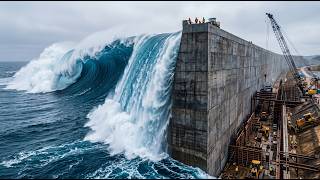 Japan Built a 400 KM Wall to Stop the Sea — Here’s How6.6K views · 4w ago · +2/h
 How China Turned a Mountain Into a Giant Train Station113K views · 5w ago · +9/h
 Japan Built a $20 Billion Airport on the Ocean — Now It’s Sinking1.5M views · 6w ago · +589/h
Statistics from the YouTube Data API, tracked by FameX. Views per hour, revenue and comparisons are FameX estimates.