DIY & repairFrank The FirefighterThis Kitchen Outlet Almost Burned the House Down (Here's What Went Wrong)
This Kitchen Outlet Almost Burned the House Down (Here's What Went Wrong)
Long-form13:29People & Blogs6.7× channel median
Published Oct 7, 2026, 7:00 PM · 1w ago

Frank The Firefighter
64 subscribers · median 470 views
AI avatar · confirmed6%
Views
3,165
+7 views/hour
Likes
17
0.5% of views
Comments
11
0.35% of views
Checked every 12 h while the video is this age · last check 1h ago · next in 634 min. YouTube itself updates public counts with a short delay.
Views / hour now
7
measured 1h ago
Peak views / hour
14
22h ago
Avg views / day
419
since upload
First 24 hours
—
not tracked from upload
vs channel median
6.7×
Rank in channel
#3
of 20 tracked
Engagement
0.9%
likes + comments / views
Est. ad revenue
—
channel not monetized
Views over time
5 readings · line: total views · bars: views gained per hour
Description
It started with something almost every home has:
**a kitchen outlet.**
But behind the cover plate, a small electrical problem was generating heat—and given enough time, it could have turned into a house fire.
Electrical outlets can overheat for several reasons. A **loose connection** can create increased resistance, producing heat at the terminal. Worn receptacles may no longer grip plugs securely. Damaged wiring, overloaded circuits, improper connections, or appliances drawing heavy current can make the situation even worse.
And kitchens are especially demanding.
Toasters, coffee makers, microwaves, kettles, air fryers, and other countertop appliances can draw significant power. That's one reason modern electrical codes include specific requirements for kitchen receptacles and circuits.
The warning signs aren't always dramatic.
A warm or unusually hot outlet, discoloration, buzzing or crackling sounds, a burning smell, sparks, or plugs that repeatedly fall loose can indicate a problem that shouldn't be ignored.
In this video, we examine what can cause an ordinary kitchen receptacle to overheat, what the damage can look like behind the wall plate, and the warning signs homeowners should recognize before a small electrical fault becomes something much more dangerous.
Sometimes the biggest warning isn't a tripped breaker.
It's the heat quietly building where you can't see it.
If an outlet is scorched, unusually hot, sparking, or smells like it's burning, stop using it and have the electrical system inspected by a qualified electrician.
SOURCES:
National Fire Protection Association
https://www.nfpa.org/
U.S. Consumer Product Safety Commission
https://www.cpsc.gov/
Electrical Safety Foundation International
https://www.esfi.org/
National Electrical Manufacturers Association
https://www.nema.org/
#ElectricalSafety #HomeSafety #ElectricalFire #KitchenSafety #Homeowners #DIYElectrical #HouseFire #Electrician
Details
- Published
- Oct 7, 2026, 7:00 PM
- Length
- 13:29 (809 s)
- Format
- Long-form
- Category
- People & Blogs
- Audio language
- EN
- Quality
- HD
- Captions
- No
- Made for kids
- No
- Licensed content
- No
- Video ID
- J8NHX4WPxD8
More from Frank The Firefighter
 This Woodpile Almost Burned the House Down (Here's What Went Wrong)41 views · 14h ago
 Why You Should NEVER Stack Firewood Against Your House425 views · 3d ago · +10/h
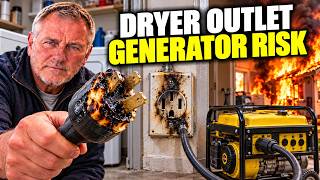 Why You Should NEVER Plug a Generator Into Your Dryer Outlet231 views · 5d ago · +3/h
 Avoid Disaster! 8 Extension Cord Mistakes Most Homeowners Unknowingly Make412 views · 1w ago
 DO NOT Use a Space Heater Like This (It Could Start a House Fire)107 views · 2w ago
 Don’t Run Your Generator at Night Until You Check These 7 Things701 views · 2w ago
 7 Water Heater Mistakes That Can Cost You Thousands246 views · 2w ago
 The #1 DIY Electrical Panel Mistake: Can You Put Two Wires Under One Breaker?653 views · 2w ago
Statistics from the YouTube Data API, tracked by FameX. Views per hour, revenue and comparisons are FameX estimates.