Earth's Most Violent Catastrophe Wasn't an Asteroid
Long-form1:26:32EducationPublished Sep 2, 2026, 11:00 PM · 7w ago

Views
5,715
+1 views/hour
Views / hour now
1
measured 21h ago
Peak views / hour
1
1d ago
First 24 hours
—
not tracked from upload
Engagement
0.8%
likes + comments / views
Likes
46
0.8% of views
Comments
0
0.00% of views
Est. ad revenue
$30–$74
lifetime, $5.2–13 RPM
Checked every 24 h while the video is this age · last check 21h ago · next in 127 min. YouTube itself updates public counts with a short delay.
Avg views / day
114
since upload
vs channel median
0.5×
this video's views ÷ the channel's usual
Rank in channel
#13
of 21 tracked
Views over time
0 readings
Total views Views gained per hour
Live tracking started
The chart fills in as FameX records new readings.
Description
There were no polar ice caps. Forests reached into high latitudes, reefs crowded the warm shallow seas, and the climate had been stable for millions of years. Nothing in that world suggested what was coming. Then the crust split open along thousands of fissures, and up to 90 to 96 percent of all marine species were wiped out, along with roughly 70 percent of land vertebrates.
This is the most violent event in the planet's history, and it did not arrive in a single afternoon. Flood basalts poured out for longer than our species has existed. Sulfur aerosols dimmed the sun and chilled the surface; when they washed out, the carbon dioxide left behind drove temperatures hard the other way. The oceans warmed, lost their oxygen and turned acidic, and bacteria in the stagnant depths filled the water with hydrogen sulfide.
Then came the long night. Phytoplankton collapsed and took the marine food web down with them. Reefs disappeared. Forests burned and their soils washed into the sea. Trilobites, which had survived everything for hundreds of millions of years, were gone for good, and ferns and mosses inherited the emptied ground.
All of it is still readable in the rock: carbon isotope excursions in limestone, black shales laid down in oxygen-free water, mercury spikes from volcanic ash, spore layers where forests failed, and ancient temperatures locked inside fossil shells.
So what does it take to nearly sterilise a living planet? And how do you read a catastrophe out of a layer of stone?
Settle in for the full story, and subscribe for more feature-length documentaries on Earth's deep past.
#MassExtinction #PrehistoricEarth #Documentary
Tags
permian extinctionprehistoric earthearth historyhistory of earthprehistoric documentaryscience documentarydocumentarynature documentaryearth documentarylarge igneous provincefissure eruptionssulfur dioxidehydrogen sulfidemethane releaseacid rainglobal coolingecosystem collapserefugiakeystone speciesstratigraphypaleontologyasteroid impactprehistoric animals
Details
- Published
- Sep 2, 2026, 11:00 PM
- Length
- 1:26:32 (5,192 s)
- Format
- Long-form
- Category
- Education
- Audio language
- EN
- Quality
- HD
- Captions
- No
- Made for kids
- No
- Licensed content
- Yes
- Video ID
- TRa8DGzJ7Wo
More from Paleora
 The Entire History of Earth in 1 Video | Full Documentary5K views · 2d ago · +120/h
 Why Earth Stopped Building Monsters ?31.4K views · 6w ago · +2/h
 The Asteroid Hits. Then the Real Nightmare Begins | Full Documentary1.7K views · 6w ago
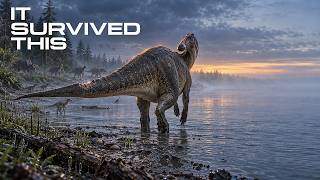 Prehistoric Animals That Survived the Unthinkable | Full Documentary14.5K views · 6w ago
 Sir David Attenborough: A Billion Years of Earth's History Are Missing | Full Documentary471K views · 6w ago · +374/h
 Heat Death, Big Rip or Big Crunch: How Does It All End? | Full Documentary1.6K views · 6w ago
 The Future of the Universe: Everything That Happens After Us | Full Documentary28.9K views · 6w ago · +2/h
 A 9-Foot Skull That Bit an Ichthyosaur Clean in Half10.6K views · 7w ago · +1/h
Statistics from the YouTube Data API, tracked by FameX. Views per hour, revenue and comparisons are FameX estimates.