History & cultureUNSEEN EARTHLiving in Kiribati: The Country That Could Become Unlivable Before It Disappears
Living in Kiribati: The Country That Could Become Unlivable Before It Disappears
Long-form16:37Education4.0× channel median
Published Oct 9, 2026, 10:00 PM · 1w ago
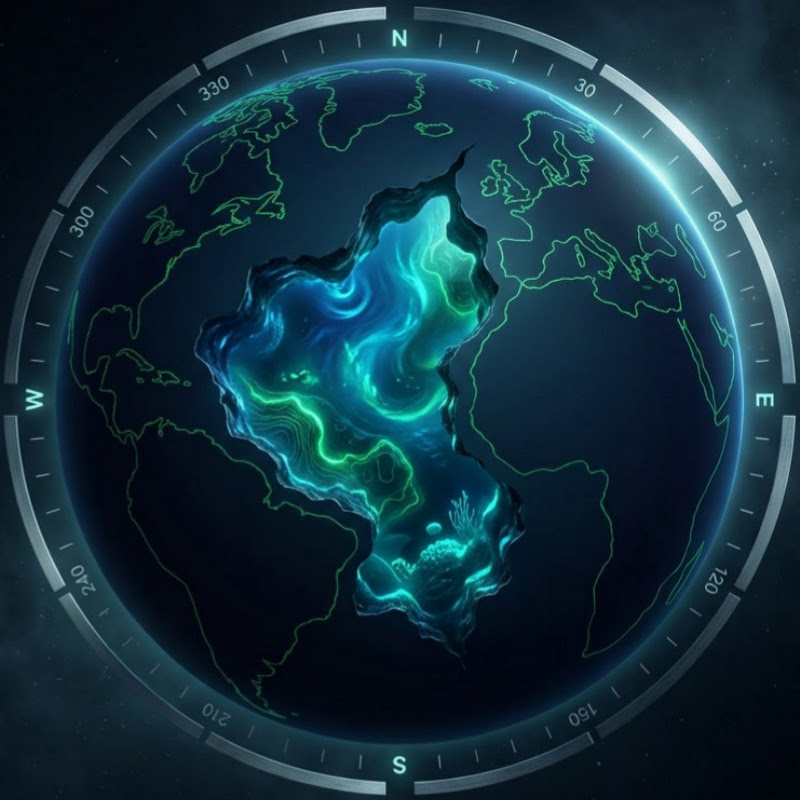
UNSEEN EARTH
1.5K subscribers · median 188 views
Stock footage · likely16%
Views
745
+1 views/hour
Likes
3
0.4% of views
Comments
0
0.00% of views
Checked every 12 h while the video is this age · last check 8h ago · next in 217 min. YouTube itself updates public counts with a short delay.
Views / hour now
1
measured 8h ago
Peak views / hour
1
14h ago
Avg views / day
105
since upload
First 24 hours
—
not tracked from upload
vs channel median
4.0×
Rank in channel
#9
of 20 tracked
Engagement
0.4%
likes + comments / views
Est. ad revenue
—
channel not monetized
Views over time
7 readings · line: total views · bars: views gained per hour
Description
Kiribati erased a day from its own calendar so that one country could finally live in one day.
Then it faced a problem the headlines rarely mention, and it sits beneath the sand.
Thirty-three islands are scattered across more than three thousand kilometers of the Pacific.
Together their dry land is about eight hundred square kilometers, yet the country's ocean territory is roughly three and a half million.
About one hundred and twenty thousand people live here.
Most of the land sits two or three meters above the sea.
For most of the twentieth century the international date line ran straight through the country.
One island lived Monday while another, a few hundred kilometers away, was still on Sunday.
At the end of 1994 the government moved the line, the eastern islands skipped December 31st, and Kiribati became home to the earliest time zone on Earth.
This film follows how people actually live on these coral rings: the thin layer of fresh water that every home, garden and family depends on, the maneaba where a village decides everything by talking, the hymns on Sunday, the seafarers who send wages home, and the tuna licenses that pay for schools and clinics.
It also covers the Phoenix Islands, where a very poor country protected one of the largest marine areas on Earth, then reopened it to fishing under financial pressure.
We say so plainly, because the record is clear on both halves.
No manufactured mystery.
Rising seas are real, and the film shows what they are already doing. But the evidence points to something quieter failing first, and the people of Kiribati are planning around it rather than waiting for a verdict.
Chapters:
00:00 - Tomorrow Arrives Here First
01:12 - Four Hemispheres, One Missing Day
02:59 - Rings of Coral
03:45 - The Layer Beneath the Sand
06:10 - The Maneaba
07:22 - A Day on the Atoll
09:33 - Where These People Came From
10:47 - Fishing Licenses and Seafarers
11:30 - The Phoenix Islands Trade-Off
12:42 - The Rising Sea
14:00 - A Nation Making Its Case
14:56 - Why They Stay
15:41 - Tomorrow Arrives Here
Unseen Earth goes where the map runs thin and reports only what the record can prove, and where it stops. Subscribe, and the next place will find you.
Sources:
Geography of Kiribati (land area, island count, ocean territory, four-hemisphere position): https://en.wikipedia.org/wiki/Geography_of_Kiribati
History: Kiribati skips a day (1994 date line change): https://www.history.co.uk/this-day-in-history/31-december/kiribati-skips-a-day
World Bank, Drilling for water in Kiribati (freshwater lens, South Tarawa groundwater and salinity): https://blogs.worldbank.org/en/eastasiapacific/drilling-for-water-in-kiribati
Phoenix Islands Protected Area, IUCN World Heritage Outlook (size, 2010 inscription, post-2022 reopening, 2025 assessment): https://worldheritageoutlook.iucn.org/node/1160
Phoenix Islands Protected Area (2008 expansion, 2015 closure to commercial fishing): https://en.wikipedia.org/wiki/Phoenix_Islands_Protected_Area
Undercurrent News, Kiribati reopens vast area to tuna fishing (January 2023): https://www.undercurrentnews.com/2023/01/20/kiribati-reopens-vast-area-to-tuna-fishing/
Earth.org, 2021 announcement of plans to reopen the protected area: https://earth.org/worlds-largest-marine-reserve-to-open-for-commercial-fishing-for-tuna/
Anglican Communion News, Kiribati buys land in Fiji (July 2014): https://www.anglicannews.org/news/2014/07/threatened-by-climate-change,-kiribati-buys-land-in-fiji-from-cofe.aspx
Teitiota v. New Zealand, UN Human Rights Committee decision (2020), International Legal Materials: https://doi.org/10.1017/ilm.2020.46
#Kiribati #Pacific #UnseenEarth #Documentary #ClimateChange #Geography
Tags
HistoryAncienthistoryDocumentaryArchaeology
Details
- Published
- Oct 9, 2026, 10:00 PM
- Length
- 16:37 (997 s)
- Format
- Long-form
- Category
- Education
- Audio language
- EN-US
- Quality
- HD
- Captions
- No
- Made for kids
- No
- Licensed content
- No
- Video ID
- _TJj6_ugT9U
More from UNSEEN EARTH
 Living In La Mosquitia: How Life Works In a Land With No Roads to the Outside World364 views · 2d ago
 Living in La Mosquitia: Life in a Land Without Roads to the Outside World223 views · 3d ago · +5/h
 Lord Howe Island & Ball's Pyramid: The Rock That Hid an Extinct Species for 80 Years659 views · 6d ago · +9/h
 Living in Kiribati: Families Here Have Stayed for Generations. The Reason Isn’t the Land.135 views · 6d ago
 Saba Island: The Road Engineers Said Couldn't Be Built1.6K views · 1w ago
 Takht-e Soleyman: Where Did the Persian Kings' Fire Go?826 views · 1w ago
 Living on Lord Howe Island: Why Australia Protects This Remote Paradise53 views · 1w ago
 Saba: The Caribbean Road They Said Couldn’t Be Built.4.4K views · 1w ago
Statistics from the YouTube Data API, tracked by FameX. Views per hour, revenue and comparisons are FameX estimates.