History & cultureHidden Annunaki with ThomasSumerian Text Reveals the One Thing Enki Said the Winning Species Fears
Sumerian Text Reveals the One Thing Enki Said the Winning Species Fears
Long-form1:30:23
Published Sep 26, 2026, 3:30 PM · 2w ago
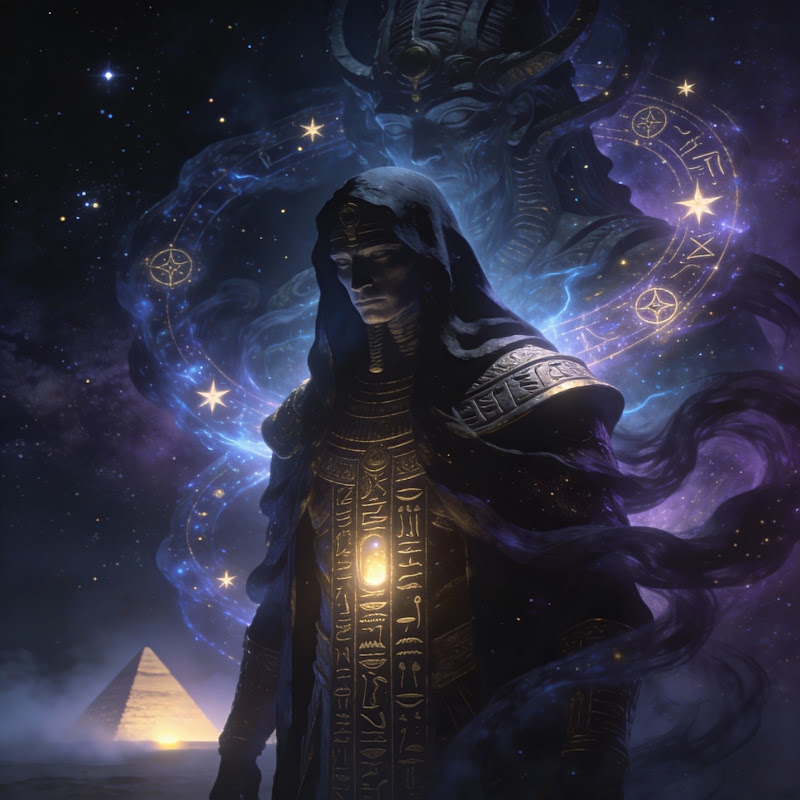
Hidden Annunaki with Thomas
16.5K subscribers · median 4.2K views
AI imagery · confirmed$Likely
Views
7,513
+0 views/hour
Likes
45
0.6% of views
Comments
6
0.08% of views
Checked every 12 h while the video is this age · last check 41m ago · next in 678 min. YouTube itself updates public counts with a short delay.
Views / hour now
0
measured 41m ago
Peak views / hour
—
Avg views / day
382
since upload
First 24 hours
—
not tracked from upload
vs channel median
1.8×
Rank in channel
#7
of 22 tracked
Engagement
0.7%
likes + comments / views
Est. ad revenue
$30–$68
lifetime, $4–9 RPM
Views over time
4 readings · line: total views · bars: views gained per hour
Description
The Clay Tablets That Describe Why Humanity Was Built to Die.
There is a set of Akkadian cuneiform tablets in the British Museum that describes the engineering of a replacement species. The text is called the Atrahasis. It does not read like a hymn or a prayer. It reads like a production log. A divine labor force revolted after thousands of years of canal work. The solution was a new species, manufactured in a batch of fourteen, designed with enough intelligence to do the job and built with one critical limitation. The god who designed that species, Enki, deliberately withheld the one quality that would have made the new beings uncontrollable. A second tablet, the Adapa myth, describes the single time a human came close to overriding that limitation, and how Enki personally sabotaged the attempt. Seven ancient civilizations recorded the same pattern independently.
THE SCIENCE
The Atrahasis tablets date to approximately sixteen hundred and forty BCE in their oldest surviving copies. The critical edition was published by W.G. Lambert and A.R. Millard through Oxford Clarendon Press in 1969 and remains the standard academic text. The creation sequence describes a stepwise procedure, including the selection and slaughter of a named divine donor, the extraction and transfer of a cognitive component called etemmu, the division of raw material into fourteen batches gestated in fourteen surrogate vessels, and the deliberate non-transfer of divine permanence to the finished product. Parallel accounts appear in the Enuma Elish, the Adapa myth, the Eridu Genesis, and the Sumerian King List. Cross-cultural structural parallels appear in Genesis, the Book of Enoch, Hesiod's Theogony, the Vedic Samudra Manthan, the K'iche' Maya Popol Vuh, the Yoruba Ifa corpus, and Hopi emergence traditions.
SOURCES
W.G. Lambert and A.R. Millard, Atra-Hasis: The Babylonian Story of the Flood, Oxford Clarendon Press, 1969
Stephanie Dalley, Myths from Mesopotamia: Creation, the Flood, Gilgamesh
Tags
AnunnakiSumerianmythologyancientcivilizationscosmicenergiesspiritualsymbolismMesopotamianhistoryancientsecretslostknowledgeEgyptianmysteriessacredgeometryancientgodscosmicawakeningancientwisdommythologypyramids
Details
- Published
- Sep 26, 2026, 3:30 PM
- Length
- 1:30:23 (5,423 s)
- Format
- Long-form
- Category
- —
- Audio language
- —
- Quality
- —
- Captions
- —
- Made for kids
- —
- Licensed content
- —
- Video ID
- gZG43iQ4CuI
More from Hidden Annunaki with Thomas
 Sumerian Text Reveals Mars Is Not a Planet But an Anunnaki Prison — And Who's Still Trapped There4.1K views · 16h ago · +291/h
 The Anunnaki Tablet That Says Certain Humans Hear a Sound Others Can't — And What Age It Begins5K views · 1d ago
 The Anunnaki Tablet That Says Enki Marked Certain Humans With His Own Hand— And Who Still Carries It34.3K views · 2d ago · +706/h
 Sumerian Tablet That Says Dogs Served the Goddess of Healing — And the 30 Buried at Her Door722 views · 3d ago · +2/h
 The Anunnaki Tablet That Says Cats Carry a Mark Humans Can’t See — And What It Protects Them From29.1K views · 4d ago · +240/h
 Sumerian Text Reveals the One Place on Earth Even the Anunnaki Were Afraid to Enter7.4K views · 5d ago · +7/h
 They Finally Translated the Anunnaki Tablet Found Beneath Baalbek — It Explains the Stones7K views · 6d ago · +1/h
 Sumerian Text Reveals Why the Anunnaki Needed Gold to Survive — And What Happens When It Runs Out4.1K views · 1w ago
Statistics from the YouTube Data API, tracked by FameX. Views per hour, revenue and comparisons are FameX estimates.