Why Everything on Earth Almost Died 252 Million Years Ago | Documentary
Long-form1:35:00EducationPublished Sep 1, 2026, 10:00 PM · 7w ago

Views
12,246
+0 views/hour
Views / hour now
0
measured 22h ago
Peak views / hour
1
1d ago
First 24 hours
—
not tracked from upload
Engagement
0.7%
likes + comments / views
Likes
78
0.6% of views
Comments
2
0.02% of views
Est. ad revenue
$64–$159
lifetime, $5.2–13 RPM
Checked every 24 h while the video is this age · last check 22h ago · next in 60 min. YouTube itself updates public counts with a short delay.
Avg views / day
239
since upload
vs channel median
1.1×
this video's views ÷ the channel's usual
Rank in channel
#10
of 21 tracked
Views over time
0 readings
Total views Views gained per hour
Live tracking started
The chart fills in as FameX records new readings.
Description
Two hundred and sixty million years ago, Earth was thriving. The continents were fused into Pangaea, vast glossopteris forests covered the southern hemisphere, gorgonopsians hunted with saber-like teeth, and reefs crowded the shallow seas. Then, in a geological instant, nearly 90% of all marine species and around 70% of land vertebrates were gone. The end-Permian extinction - the Great Dying - is the closest life has ever come to being erased.
The killer was Siberia. For roughly a million years, fissures in the crust poured out between one and four million cubic kilometres of lava. What survives of it still covers two million square kilometres, an area larger than Mexico. As magma forced its way upward it burned through buried coal, venting carbon dioxide, methane, sulfur dioxide and halogen gases straight into the atmosphere. For scale: when Mount Tambora erupted in 1815, it chilled the planet enough that 1816 became known as the Year Without a Summer. Siberia did that for a million years.
Global temperatures climbed by ten to fifteen degrees Celsius - roughly twice the difference between the last ice age and today. Warming oceans lost their oxygen, and bacteria in the anoxic depths filled the water with hydrogen sulfide. Acid rain stripped the forests. The ozone layer thinned. Around the equator, the fossil record simply goes blank.
Trilobites, which had ruled the seas for 270 million years, disappeared for good. Reefs vanished for millions of years. And on a scoured continent, one small dicynodont called Lystrosaurus spread from Africa to Antarctica and dominated an emptied world almost alone.
So what does it actually take to nearly kill a planet? And how did anything survive it at all?
Settle in for the full story, and subscribe for more feature-length documentaries on Earth's deep past.
#GreatDying #MassExtinction #Documentary
Tags
permian extinctionprehistoric earthprehistoric documentaryscience documentarydocumentaryearth historyhistory of earthnature documentarysiberian trapsmethane releasesulfur dioxideacid rainbrachiopodsammonoidsglossopterisecosystem collapsepermian perioddicynodontsprehistoric animalscarboniferous periodearly triassicpaleontologyasteroid impactearth documentary
Details
- Published
- Sep 1, 2026, 10:00 PM
- Length
- 1:35:00 (5,700 s)
- Format
- Long-form
- Category
- Education
- Audio language
- EN
- Quality
- HD
- Captions
- No
- Made for kids
- No
- Licensed content
- Yes
- Video ID
- oulGlBqoQuw
More from Paleora
 The Entire History of Earth in 1 Video | Full Documentary5K views · 2d ago · +120/h
 Why Earth Stopped Building Monsters ?31.4K views · 6w ago · +2/h
 The Asteroid Hits. Then the Real Nightmare Begins | Full Documentary1.7K views · 6w ago
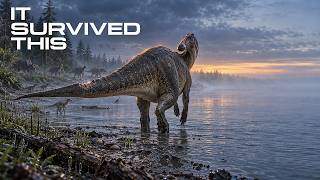 Prehistoric Animals That Survived the Unthinkable | Full Documentary14.5K views · 6w ago
 Sir David Attenborough: A Billion Years of Earth's History Are Missing | Full Documentary471K views · 6w ago · +374/h
 Heat Death, Big Rip or Big Crunch: How Does It All End? | Full Documentary1.6K views · 6w ago
 The Future of the Universe: Everything That Happens After Us | Full Documentary28.9K views · 6w ago · +2/h
 A 9-Foot Skull That Bit an Ichthyosaur Clean in Half10.6K views · 7w ago · +1/h
Statistics from the YouTube Data API, tracked by FameX. Views per hour, revenue and comparisons are FameX estimates.