OtherWildVerseAFRICAN LIONS | Deadliest Battles for Survival (Full Episode) | Nature Animal Documentary
AFRICAN LIONS | Deadliest Battles for Survival (Full Episode) | Nature Animal Documentary
Long-form3:57:48EducationPublished Sep 25, 2026, 9:59 AM · 3w ago

Views
43,320
+11 views/hour
Views / hour now
11
measured 10h ago
Peak views / hour
11
10h ago
First 24 hours
—
not tracked from upload
Engagement
1.1%
likes + comments / views
Likes
458
1.1% of views
Comments
41
0.10% of views
Est. ad revenue
$169–$451
lifetime, $3.9–10.4 RPM
Checked every 12 h while the video is this age · last check 10h ago · next in 115 min. YouTube itself updates public counts with a short delay.
Avg views / day
1.6K
since upload
vs channel median
0.9×
this video's views ÷ the channel's usual
Rank in channel
#11
of 20 tracked
Views over time
2 readings
Total views Views gained per hour
Description
AFRICAN LIONS | Deadliest Battles for Survival (Full Episode) | Nature Animal Documentary. Dawn spreads flat across the African savannah, gold to every horizon and nowhere to hide, and a lioness lying in the grass has already chosen her moment. Across four hours of chained chapters, the African lion meets buffalo, hyena clans and the herds of the open plain, and every hunter on Earth learns the same law: the survivor is not the strongest, but the one that knows exactly where it stands.
Through cinematic footage and educational storytelling, the first hour follows that law from the savannah into the sea. A cheetah brings down a gazelle and loses it to hyenas in the ten minutes it cannot breathe. A lioness tears at a warthog burrow while her prey explodes from a side tunnel dug in advance. A leopard drops from an acacia onto an impala and hauls a kill heavier than itself into the branches, the only big cat that stores its prey in a tree. Then the light turns from gold to blue. An octopus with five hundred million neurons vanishes into rock in under a second. Seagrass meadows covering two tenths of one percent of the seafloor hold nearly half the organic carbon in ocean sediment, tended by green sea turtles that eat four and a half pounds a day, a species upgraded from Endangered to Least Concern in October 2025. Reef sharks hunt a crevice after dark. A sea otter stops at the invisible line where the kelp forest becomes an urchin desert. Humpback whales in Alaska close a net of bubbles around a herring shoal and lift their yield seven times. And on a reef in Misool, where local fishermen became rangers, a manta ray with a twenty three foot wingspan comes home to a cleaning station after years of absence.
0:00 Nowhere to Hide
2:18 The Kori and the Crane
4:27 Cheetah: No Plan B
6:02 Hyenas Take the Kill
7:17 Lioness at the Warthog Burrow
8:23 The Escape Tunnel
9:37 Leopard: Death From Above
12:17 The Waterhole Truce
14:09 The Ocean: Same Law, Blue Light
16:09 The Octopus: Three Layers of Camouflage
20:45 Seagrass: Half the Carbon in the Sea
22:15 The Green Sea Turtle Returns
24:11 Mangroves: the Walking Wall
25:57 Coral: One Percent, a Quarter of Life
27:37 Clownfish and the Anemone
29:14 Reef Sharks After Dark
31:27 Seventy One Percent Gone
31:54 Kelp Forest: the Sea Otter
33:49 The Urchin Barren Line
36:37 Alaska: the Herring Run
38:39 Humpbacks and the Bubble Net
40:58 Puffins and the Sandeel Ban
41:42 Coral Bleaching
43:41 The Chain Breaking
44:47 Overfishing: the Symptom
48:45 Atacama: Three Million Cormorants
52:00 Misool: the Manta Comes Home
55:17 Thirty by Thirty
56:12 The Smallest Link
1:01:37 African Lions vs Buffalo: the Herd Turns
2:01:37 Lion Pride vs Prey at the Waterhole
3:01:37 Lions vs Hyenas: War for the Carcass
Epic Moments in This Documentary:
A cheetah standing down from its own kill as the hyenas close in
A lioness tearing at a burrow while the warthog bursts from a side tunnel
A leopard hauling an impala heavier than itself into the acacia canopy
An octopus turning to stone and back in under a second
A green sea turtle grazing seagrass like a gardener trimming a lawn
Whitetip sharks pouring into a crevice the moment darkness falls
A sea otter at the boundary between kelp cathedral and urchin desert
Humpbacks rising through a bubble net with mouths open as one
Three million cormorants taking an hour to leave the Atacama cliffs
A manta ray settling onto a Misool cleaning station after years away
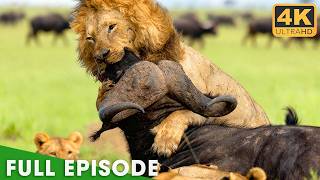
Lions closing on a buffalo herd as the cows turn to defend a calf
A lion pride holding a kill against a hyena clan at night
Behind the drama is a system. Ocean shark populations have fallen by more than seventy one percent since 1970. The fourth global bleaching event touched eighty four percent of the reefs on Earth. And where people chose to stop, the chain came back stronger than it began: anchovies feeding five million seabirds off the Atacama, shark numbers twenty five times higher inside Misool than outside, fish biomass up six hundred percent in a decade. The smallest link sometimes holds everything else together.
This documentary contains raw, unfiltered footage of nature at its most intense. Viewer discretion is advised. All footage is captured in the wild with no interference to natural animal behavior.
If this story gave you new eyes for the natural world, hit SUBSCRIBE and the bell so you never miss the next chapter. Drop a comment and tell us: which link in the chain surprised you most, the lion, the otter, or the octopus?
#natureanimaldocumentary #wildlifedocumentary #africansafari #natgeo #planetearth #AfricanLions #DeadliestBattles #wildverse
Tags
nature animal documentarywildlife documentaryanimal documentarynature animalsfull documentaryfree documentary4k animal documentarydocumentaryanimalswildlifesciencesurvivalnaturenat geonational geographicworld's deadliest mega episodeour planetbaby animalsmigration documentaryour planet Netflixplanet earthblue planet#wildverseAfrican LionsDeadliest Battleslion pride huntingafrican safaribig five africa
Details
- Published
- Sep 25, 2026, 9:59 AM
- Length
- 3:57:48 (14,268 s)
- Format
- Long-form
- Category
- Education
- Audio language
- EN-US
- Quality
- HD
- Captions
- No
- Made for kids
- No
- Licensed content
- Yes
- Video ID
- LA1EYZW9_70
More from WildVerse
 Ultimate Predators | Africa's Most Dangerous Predators | FULL EPISODE | Wildlife Documentary21.5K views · 1d ago
 Greatest Fights of the Most Dangerous Predators | FULL EPISODE | Nature Animal Documentary33.2K views · 3d ago · +23/h
 Savannah's Deadliest Fights of Strongest Predators | FULL EPISODE | Nature Animal Documentary40.8K views · 6d ago · +237/h
 Win or Die | No Mercy in the Fight to Survive (Full Episode) | Nature Animal Documentary95.3K views · 1w ago · +38/h
 African Savannah | Nature’s Deadliest Fight for Survival | Nature Animal Documentary48.6K views · 1w ago · +20/h
 Most Dangerous Battles for Survival in Serengeti | FULL EPISODE | Nature Animal Documentary125K views · 1w ago · +62/h
 The Most Dangerous Predators of the African Savannah | FULL EPISODE | Nature Animal Documentary21.1K views · 2w ago · +20/h
 African Savannah | Deadliest Fight for Survival | FULL EPISODE | Nature Animal Documentary33.4K views · 2w ago · +4/h
Statistics from the YouTube Data API, tracked by FameX. Views per hour, revenue and comparisons are FameX estimates.