Why Were Animals Bigger In Prehistoric Times?
Long-form24:1397.4× channel median
Published Aug 19, 2026, 11:01 AM · 8w ago

Evolution Explained
3.8K subscribers · median 3.1K views
Animation · confirmed$Likely
Views
304,694
+115 views/hour
Likes
2.3K
0.8% of views
Comments
307
0.10% of views
Checked every 24 h while the video is this age · last check 4h ago · next in 1159 min. YouTube itself updates public counts with a short delay.
Views / hour now
115
measured 4h ago
Peak views / hour
290
3d ago
Avg views / day
5.2K
since upload
First 24 hours
—
not tracked from upload
vs channel median
97.4×
Rank in channel
#1
of 22 tracked
Engagement
0.9%
likes + comments / views
Est. ad revenue
$1,219–$3,047
lifetime, $4–10 RPM
Views over time
0 readings · line: total views · bars: views gained per hour
Live tracking started
The chart fills in as FameX records new readings.
Description
Why were animals so much larger in prehistoric times?
Most people imagine the prehistoric world as a place where everything was bigger. Giant insects. Giant sea scorpions. Armoured fish. Dinosaurs. Marine reptiles. Terror birds. Mammoths. Giant snakes. Massive mammals.
But the real story is more interesting than that.
Prehistoric animals did not simply get huge because the past was more extreme. Each era of giants had its own specific explanation.
In the Carboniferous, high oxygen levels allowed insects like Meganeura and Arthropleura to reach sizes that would be impossible today. In ancient oceans, the absence of major competition allowed sea scorpions like Jaekelopterus to dominate before jawed fish took over. In the Devonian, an evolutionary arms race produced Dunkleosteus, one of the most powerful armoured fish ever discovered.
Then came the dinosaurs.
For over 165 million years, dinosaurs used a unique biological toolkit: hollow bones, efficient breathing systems, rapid growth, and ecosystems filled with enormous prey. That combination produced some of the largest land animals Earth has ever seen, from T. rex and Giganotosaurus to Brachiosaurus, Argentinosaurus, and Patagotitan.
But gigantism did not stop with dinosaurs.
Warm prehistoric climates helped reptiles like Titanoboa reach impossible sizes. Ecological vacancy after the asteroid allowed terror birds to become apex predators. And once dinosaur dominance was gone, mammals finally had their own age of giants, producing mammoths, woolly rhinoceroses, giant ground sloths, Paraceratherium, and more.
This video explains why prehistoric animals got so big, why they disappeared, and why the biggest animal ever is actually still alive today: the blue whale.
The age of giants was not one era.
It was many.
And each one tells us something remarkable about the relationship between life and the planet it lives on.
Like and subscribe for more cinematic documentaries about evolution, dinosaurs, prehistoric
Details
- Published
- Aug 19, 2026, 11:01 AM
- Length
- 24:13 (1,453 s)
- Format
- Long-form
- Category
- —
- Audio language
- —
- Quality
- —
- Captions
- —
- Made for kids
- —
- Licensed content
- —
- Video ID
- aoQyRSsZqlo
More from Evolution Explained
 When Antarctica Was a Jungle8 views · 1h ago · +8/h
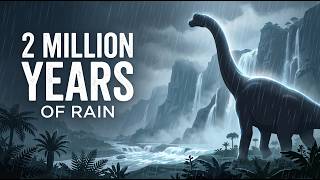 When It Rained for 2 Million Years1.4K views · 3d ago · +27/h
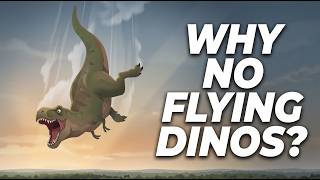 Why are there no flying dinosaurs?4.1K views · 1w ago · +1/h
 Why did so many prehistoric animals have sails?2.1K views · 1w ago
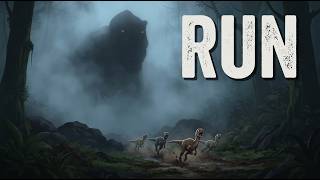 The Deadliest Land Predators in Earth's History387 views · 3w ago
 The Dinosaur That Made No Sense - Stegosaurus602 views · 3w ago
 Are Dinosaurs Birds or Reptiles?926 views · 4w ago · +1/h
 Earth Before Dinosaurs Would Have Killed You Instantly9K views · 5w ago
Statistics from the YouTube Data API, tracked by FameX. Views per hour, revenue and comparisons are FameX estimates.