Science & spaceWild SparksNanotyrannus Was Never What We Thought – Fossil Analysis Reveals Its True Identity
Nanotyrannus Was Never What We Thought – Fossil Analysis Reveals Its True Identity
Long-form13:27EntertainmentPublished Jul 31, 2026, 4:00 PM · 2mo ago

Views
451
+0 views/hour
Views / hour now
0
measured 7h ago
Peak views / hour
—
First 24 hours
—
not tracked from upload
Engagement
3.3%
likes + comments / views
Likes
9
2.0% of views
Comments
6
1.33% of views
Est. ad revenue
$2–$5
lifetime, $4–10 RPM
Checked every 24 h while the video is this age · last check 7h ago · next in 979 min. YouTube itself updates public counts with a short delay.
Avg views / day
6
since upload
vs channel median
0.1×
this video's views ÷ the channel's usual
Rank in channel
#16
of 20 tracked
Views over time
0 readings
Total views Views gained per hour
Live tracking started
The chart fills in as FameX records new readings.
Description
Nano is among the most famous dinosaurs – we all know that. But were Megalodon, Mosasaurus or Pteranodon dinosaurs too?
If you can't answer that, check out how our merch can help: https://wildsparks-shop.fourthwall.com/en-usd
Makes a great gift, too!
____________________________
In this video:
Nanotyrannus was a real, separate dinosaur species, and it lived alongside Tyrannosaurus rex in North America. Two independent research teams confirmed this in 2025, ending a debate that started in 1942.
That year, an unknown fossil collector working Montana's Hell Creek Formation found a small tyrannosaur skull. In 1946, researchers filed it under Gorgosaurus, a different tyrannosaur group. Nobody realized it was something new.
In 1988, paleontologist Robert Bakker reexamined the skull. Its bones had fused, a sign of a fully grown animal. He named it Nanotyrannus and gave the species its own name for the first time.
But...
In 1999, paleontologist Thomas Carr argued the opposite. He said Nanotyrannus was just a juvenile Tyrannosaurus rex, not its own species. His theory spread through textbooks and documentaries for decades.
The debate finally got settled through bone histology, the study of growth rings inside fossilized bone. Growth rings space out during active growth and pack tightly once an animal stops growing for good. This tight pattern is called an external fundamental system.
In 2025, a team led by Lindsay Zanno at the North Carolina Museum of Natural Sciences studied a Nano specimen nicknamed the Dueling Dinosaurs, unearthed in Montana in 2006. A leg bone showed the tight growth rings of a fully mature animal, around twenty years old at death. The skull showed an extra sinus cavity, a differently shaped jaw bone, a higher tooth count than any known Tyrannosaurus rex, and a missing subnarial foramen.
These features are embryonic traits, fixed from birth, and they cannot be explained by growth alone. So it was more proof for Nano as its own species.
A second team studied a different fossil entirely: the hyoid bone, a small throat bone that anchors the tongue. It reached the exact same conclusion. Nanotyrannus was a mature, distinct species.
One specimen, nicknamed Jane, doesn't match this pattern and has been classified as a second species, Nanotyrannus lethaeus.
If you thought the debate was over here, you're mistaken.
Paleontologist Stephen Brusatte has raised an unresolved question: If small tyrannosaur skeletons belong to Nanotyrannus, where are the juvenile Tyrannosaurus rex?
This video breaks down the full story: how a single misidentified skull from 1942 led to one of paleontology's longest-running debates, and how two labs (hopefully) finally settled it in 2025.
#wildsparks #nanotyrannus #dinosaur #dinosaurdocumentary
Details
- Published
- Jul 31, 2026, 4:00 PM
- Length
- 13:27 (807 s)
- Format
- Long-form
- Category
- Entertainment
- Audio language
- EN-US
- Quality
- HD
- Captions
- Yes
- Made for kids
- No
- Licensed content
- Yes
- Video ID
- dvT3xUdzWVc
More from Wild Sparks
 This Megalodon Sighting Reveals It Was More Disturbing Than The Movies136 views · 17h ago
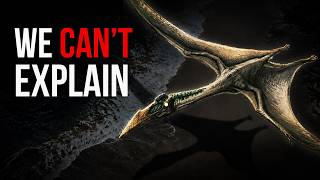 Scientists Unlocked Serious Upgrades From Quetzalcoatlus Fossils862 views · 3d ago · +30/h
 The Deeper You Go, the Creepier Deep Sea Creatures Get181 views · 1w ago
 The Prehistoric Underwater Lakes That Kill Everything They Touch369 views · 1w ago
 Real Megalodon Fossils Reveal It Was More Disturbing Than The Movies2.6K views · 1w ago
 How Have We Been Getting T. Rex Fossils All Wrong?2.4K views · 1w ago
 They Found THIS In T. Rex Fossils, But Something Was Very Wrong8.2K views · 2w ago
 How Have We Been Getting Dinosaur Appearance All Wrong?53.2K views · 2w ago
Statistics from the YouTube Data API, tracked by FameX. Views per hour, revenue and comparisons are FameX estimates.