What If Every Nuclear Weapon Went Off at Once?
Long-form10:57
Published Oct 10, 2026, 6:00 PM · 3d ago

The Last Day
29.4K subscribers · median 101K views
AI imagery · confirmed$Likely
Views
49,477
+48 views/hour
Likes
563
1.1% of views
Comments
95
0.19% of views
Checked every 3 h while the video is this age · last check 48m ago · next in 131 min. YouTube itself updates public counts with a short delay.
Views / hour now
48
measured 48m ago
Peak views / hour
48
48m ago
Avg views / day
13K
since upload
First 24 hours
—
not tracked from upload
vs channel median
0.5×
Rank in channel
#12
of 20 tracked
Engagement
1.3%
likes + comments / views
Est. ad revenue
$198–$495
lifetime, $4–10 RPM
Views over time
2 readings · line: total views · bars: views gained per hour
Description
What if every nuclear weapon on Earth went off at once?
Right now there are around 12,000 nuclear warheads on this planet, sitting
in silos, submarines and storage bunkers across nine countries. This video
asks what would actually happen if all of them detonated in the same
minute, and the answer is stranger than the one most people expect.
It begins with an ordinary morning. A train pulling out of a station in
Chicago. A market opening in Lagos. Children walking to school in Tokyo.
Farmers in the fields of Punjab. None of them know anything is wrong.
Then one launches. Then another answers. Then every arsenal on Earth empties
itself in under thirty minutes.
In this documentary we follow exactly what the physics does next: the
fireballs hotter than the surface of the Sun, the overpressure waves that
flatten steel-framed buildings, the thermal pulse that ignites cities from
the horizon, and the firestorms that follow. Then we get to the part almost
nobody gets right.
Earth would not be destroyed. The crust would not crack. The planet would
not be blown out of its orbit. All 12,000 warheads together carry a tiny
fraction of the energy of the asteroid that ended the dinosaurs. The planet
survives easily. What does not survive is the thin layer of climate and
agriculture that we happen to live inside.
Because the real killer is not the blast. It is the smoke. Enough soot
lifted into the stratosphere to block sunlight for years, dropping global
temperatures, collapsing harvests on every continent at once, and starving
far more people than the explosions ever could.
CHAPTERS
00:00 – An Ordinary Day & 12,000 Warheads
01:45 – The Chain Reaction
03:16 – The Blast, Heat, and Shockwave
05:11 – Why the Earth Survives (The Real Danger)
06:04 – Nuclear Winter & Global Famine
08:03 – The Aftermath & Eventual Recovery
09:23 – A Fragile Peace & ConclusionThis is a science based thought experiment built on real numbers: measured
warhead yields, published nuclear winter climate
Tags
nuclear bombnuclear warwhat if nuclear war happenednuclear weaponsatomic bombnuclear winterwhat is nuclear winternuclear falloutfalloutblast radiusthermal pulsefirestormshockwavemutual assured destructioncold war
Details
- Published
- Oct 10, 2026, 6:00 PM
- Length
- 10:57 (657 s)
- Format
- Long-form
- Category
- —
- Audio language
- —
- Quality
- —
- Captions
- —
- Made for kids
- —
- Licensed content
- —
- Video ID
- 7Z_SlUGxKNA
More from The Last Day
 What Would Happen If The Sun Disappeared For One Week?694K views · 1w ago · +377/h
 What would happen If the Moon Crashed Into Earth?1.6M views · 2w ago · +389/h
 What Happens to Earth If Humans Disappear Tomorrow?680K views · 3w ago · +228/h
 What Would Happen If an Asteroid Hit the Ocean?1.4M views · 4w ago · +3.4K/h
 Nepal's 2026 Disaster: Nine Meters in 30 Minutes80.9K views · 5w ago · +22/h
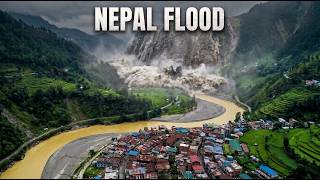 Nepal's 2026 Disaster Explained: The Glacier That Wiped Out a Valley5M views · 5w ago · +249/h
 Therizinosaurus: The Strangest Dinosaur Ever Found7.5K views · 6w ago · +2/h
 The Most Dangerous Time to Be Born As A Dinosaur14.4K views · 6w ago · +2/h
Statistics from the YouTube Data API, tracked by FameX. Views per hour, revenue and comparisons are FameX estimates.