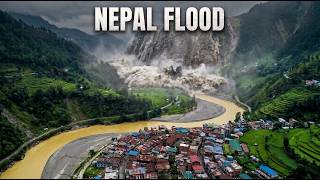
Nepal's 2026 Disaster: Nine Meters in 30 Minutes
Long-form19:59
Published Sep 8, 2026, 5:19 PM · 5w ago

The Last Day
29.4K subscribers · median 101K views
AI imagery · confirmed$Likely
Views
80,919
+22 views/hour
Likes
405
0.5% of views
Comments
24
0.03% of views
Checked every 24 h while the video is this age · last check 3h ago · next in 1205 min. YouTube itself updates public counts with a short delay.
Views / hour now
22
measured 3h ago
Peak views / hour
22
3h ago
Avg views / day
2.3K
since upload
First 24 hours
—
not tracked from upload
vs channel median
0.8×
Rank in channel
#11
of 20 tracked
Engagement
0.5%
likes + comments / views
Est. ad revenue
$324–$809
lifetime, $4–10 RPM
Views over time
0 readings · line: total views · bars: views gained per hour
Live tracking started
The chart fills in as FameX records new readings.
Description
Thirty minutes is not a long time.
It is a shower. A commute. Long enough to cook something simple. In a valley in northern Nepal it was the entire window between a normal afternoon and a place that no longer existed.
This video is about what fills a valley that fast, and why almost nothing in ordinary experience prepares anyone for it.
Because what arrived was not a river rising. A rising river is something you can watch, judge and walk away from. People in that valley knew about floods. There are marks on walls from previous years.
What came down was not a flood in that sense at all. It began as rock and ice, thousands of metres above the village, and by the time it reached the valley floor it was a dense slurry of mud, boulders and water, majority solid material by volume, closer to wet concrete than to anything you would call a flood.
It did not inundate buildings. It struck them.
WHAT THIS VIDEO COVERS
Why high Himalayan rock faces are held together by ice, and what happens when that ice retreats
How a falling rock and ice mass turns itself into a fluid on the way down
Entrainment: why these flows multiply in volume as they descend, arriving many times larger than what fell
Why a debris flow destroys structures that a river flood would leave standing
Why survivors of these events consistently report hearing it before seeing it
Why escape in a steep valley is vertical, not horizontal, and why minutes decide everything
What landslide-dammed lakes mean for the weeks after
ON THE NUMBERS
Figures from this event have been revised repeatedly and will be revised again. Every number shown on screen carries its source and the date it was reported. Where the science is still being worked out, this video says so rather than filling the gap with a guess.
There is no reconstruction footage of people here, and no casualty figure in the thumbnail. The mechanism is the subject. People are still missing and their families are still waiting on news.
SOURCES
ICIMOD, Kathma
Tags
nepal flood 2026nepal disaster 2026nepal flash floodnepal landsliderasuwa floodrasuwagadhibhote koshitrishuli rivernuwakotnepal tibet borderglacier collapseglacial lake outburst floodglofdebris flowentrainment
Details
- Published
- Sep 8, 2026, 5:19 PM
- Length
- 19:59 (1,199 s)
- Format
- Long-form
- Category
- —
- Audio language
- —
- Quality
- —
- Captions
- —
- Made for kids
- —
- Licensed content
- —
- Video ID
- ggpFFdeYPGc
More from The Last Day
 What If Every Nuclear Weapon Went Off at Once?49.5K views · 3d ago · +48/h
 What Would Happen If The Sun Disappeared For One Week?694K views · 1w ago · +377/h
 What would happen If the Moon Crashed Into Earth?1.6M views · 2w ago · +389/h
 What Happens to Earth If Humans Disappear Tomorrow?680K views · 3w ago · +228/h
 What Would Happen If an Asteroid Hit the Ocean?1.4M views · 4w ago · +3.4K/h
 Nepal's 2026 Disaster Explained: The Glacier That Wiped Out a Valley5M views · 5w ago · +249/h
 Therizinosaurus: The Strangest Dinosaur Ever Found7.5K views · 6w ago · +2/h
 The Most Dangerous Time to Be Born As A Dinosaur14.4K views · 6w ago · +2/h
Statistics from the YouTube Data API, tracked by FameX. Views per hour, revenue and comparisons are FameX estimates.