The Haitian Family Trait Test — Do You Have Any of These 20?
Long-form17:34People & BlogsPublished Oct 5, 2026, 11:00 PM · 2w ago
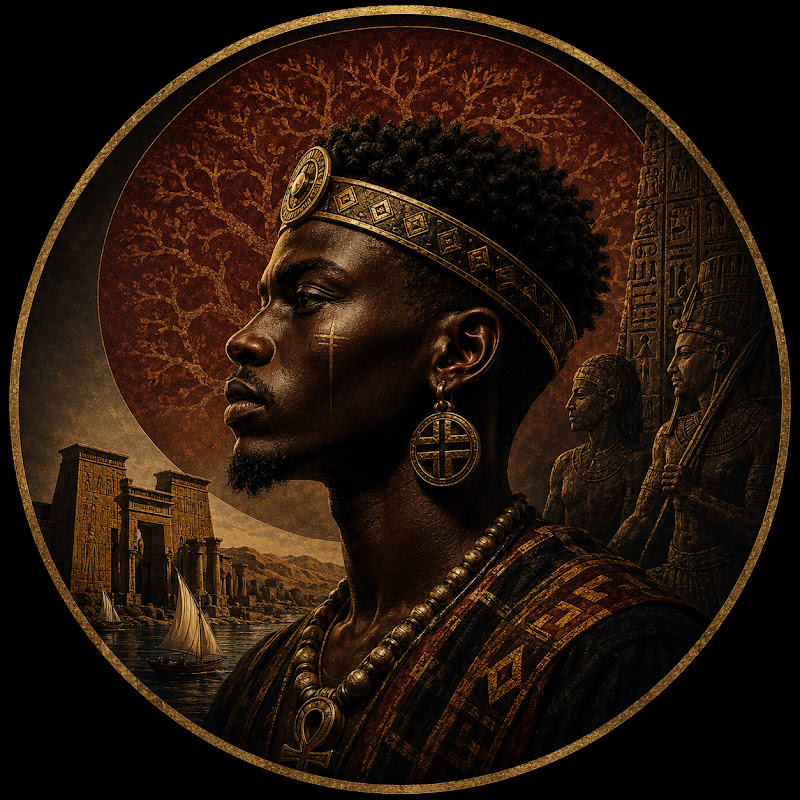
Views
1,368
+1 views/hour
Views / hour now
1
measured 7h ago
Peak views / hour
1
7h ago
First 24 hours
—
not tracked from upload
Engagement
2.9%
likes + comments / views
Likes
35
2.6% of views
Comments
5
0.36% of views
Est. ad revenue
$5–$12
lifetime, $4–9 RPM
Checked every 12 h while the video is this age · last check 7h ago · next in 295 min. YouTube itself updates public counts with a short delay.
Avg views / day
95
since upload
vs channel median
1.3×
this video's views ÷ the channel's usual
Rank in channel
#8
of 20 tracked
Views over time
1 readings
Total views Views gained per hour
Live tracking started
The chart fills in as FameX records new readings.
Description
No trait is exclusively Haitian — but twenty of them are tied to real research and real archives. Six come from the body, fourteen from the paper trail, and the last one is the one almost every Haitian family has and almost none can answer.
In this video we count down twenty traits, each linked to a published study or a documented record:
📌 The body: sickle cell trait, hemoglobin C, G6PD deficiency, Duffy-negative blood, keloid scarring and family high blood pressure — and which of them we could and could not find a Haitian figure for
📌 The paper: ancestors recorded under a single name, surnames that are really plantations, owners' names, chosen names and hidden Sephardic origins (Dessalines/Duclos, Toussaint Bréda/Louverture, Pétion/Sabès, Depas/de Paz)
📌 The migrations: the 1809 wave of Saint-Domingue refugees to New Orleans and the Haitian-descended families and coffee landscape of eastern Cuba
📌 The living memory: Vodou nanchons (Rada, Nago, Ibo, Kongo) and what "we are Kongo" can and cannot tell you
📌 The 2012 Y-chromosome study: 77.2% African and 20.3% European paternal lineages in 123 Haitian men — and why a French surname and a paternal line often did not travel together
📌 Number one: the family story the paper neither proves nor disproves
Every claim in this video is drawn from published research and documented colonial history. Where we could not verify a number, we say so. This is not medical advice, and no single trait can confirm anyone's ancestry.
🔎 Want to know how many of the fourteen paper traits your own family can actually prove? Our surname and record research service goes directly into the surviving colonial, church and civil records tied to your name. Link pinned in the comments.
💬 Drop your surname, your region of Haiti and your score out of 20 below — we read every comment.
Sources referenced in this video:
- Moreno-Estrada, A., et al. (2013). "Reconstructing the Population Genetic History of the Caribbean." PLOS Genetics.
- Simms, T.M., et al. (2012). "Y-chromosomal diversity in Haiti and Jamaica: Contrasting levels of sex-biased gene flow." American Journal of Physical Anthropology.
- Carter, et al. (2014). Study of hemoglobin S/C and G6PD variants in health-center patients, Ouest and Sud-Est departments, Haiti. American Journal of Tropical Medicine and Hygiene.
- Association de Généalogie d'Haïti: surveys of early civil registers
- University of Maryland, "Colony in Crisis" project (African nation labels)
- Geggus, D., archival work on the African origins of enslaved people in Saint-Domingue
- 64 Parishes (Louisiana Endowment for the Humanities): the 1809 Saint-Domingue refugee migration to New Orleans
- UNESCO: Archaeological Landscape of the First Coffee Plantations in the South-East of Cuba; Tumba Francesa
Subscribe — every week this channel goes back into the real documented history behind the Caribbean/African diaspora.
#HaitianHistory #Haiti #Genealogy #HaitianAncestry #AncestryDNA #CaribbeanHistory #BlackHistory
Details
- Published
- Oct 5, 2026, 11:00 PM
- Length
- 17:34 (1,054 s)
- Format
- Long-form
- Category
- People & Blogs
- Audio language
- EN
- Quality
- HD
- Captions
- No
- Made for kids
- No
- Licensed content
- Yes
- Video ID
- PDIR2lRQAts
More from Bloodline Untold
 Alexandre Dumas Was Mocked as "The Negro" in Paris —His Haitian Bloodline Finally Revealed the Truth1.9K views · 1d ago
 The Haitian Polish Ancestry Trait Test — Do You Have Any of These?485 views · 2d ago
 Are Haitians Really Different from Haitian-Cubans?1.3K views · 3d ago · +2/h
 If You Have These Syrian-Haitian Surnames — DNA Finally Revealed Your True Ancestors441 views · 4d ago
 Are Haiti's "Mulâtres" Genetically French? What the DNA Actually Says3.4K views · 5d ago · +1/h
 This Map Reveals Exactly Where Your Haitian Family Came From553 views · 6d ago · +2/h
 We Finally Know Why Millions of White Americans Carry Haitian DNA36K views · 1w ago · +38/h
 Scientists Just Found Out What Haitians DNA Mystery Actually Is989 views · 1w ago
Statistics from the YouTube Data API, tracked by FameX. Views per hour, revenue and comparisons are FameX estimates.