History & cultureBloodline UntoldAre Haiti's "Mulâtres" Genetically French? What the DNA Actually Says
Are Haiti's "Mulâtres" Genetically French? What the DNA Actually Says
3.2× channel medianLong-form16:50People & BlogsPublished Oct 14, 2026, 11:15 PM · 5d ago
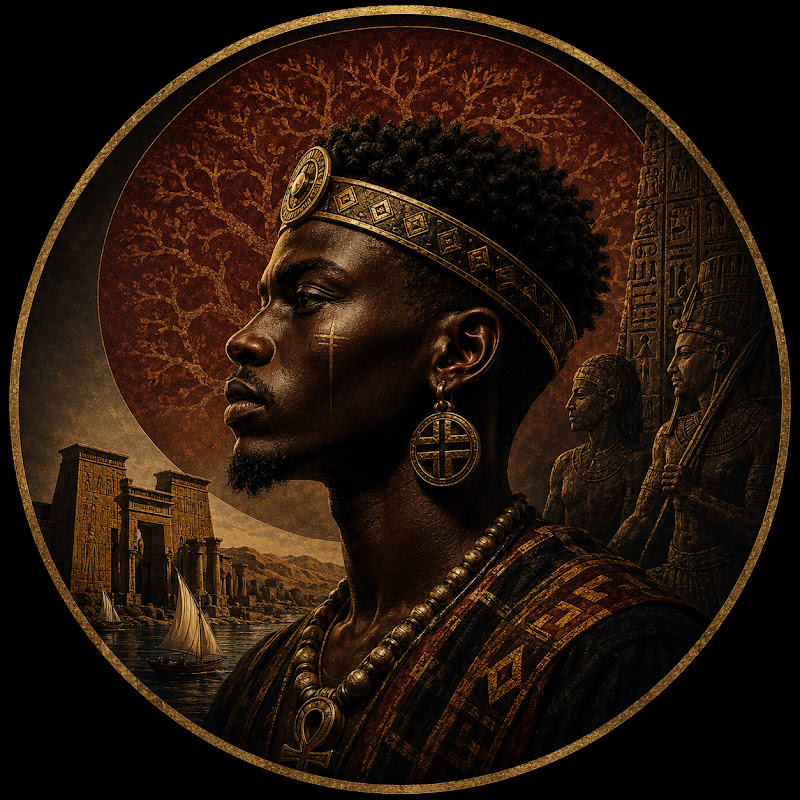
Views
3,359
+1 views/hour
Views / hour now
1
measured 16m ago
Peak views / hour
4
6h ago
First 24 hours
—
not tracked from upload
Engagement
1.8%
likes + comments / views
Likes
51
1.5% of views
Comments
9
0.27% of views
Est. ad revenue
$13–$30
lifetime, $4–9 RPM
Checked every 3 h while the video is this age · last check 16m ago · next in 163 min. YouTube itself updates public counts with a short delay.
Avg views / day
623
since upload
vs channel median
3.2×
this video's views ÷ the channel's usual
Rank in channel
#4
of 20 tracked
Views over time
3 readings
Total views Views gained per hour
Description
No published study has sampled Haiti's mulâtres as a group and compared them with a French population — so no one can honestly give a percentage. But the genetic studies that do exist, read next to the documented history of the free colored class, show what DNA can and can't say about the question.
In this video we walk through the real research and the real history:
📌 Who the free people of color were: about 28,000 anciens libres in 1793 (about 16,000 gens de couleur libres and 12,000 affranchis), owning roughly a third of the colony's land and about a quarter of its enslaved people
📌 Why the class existed: French settlers were mostly men, outnumbering women by roughly 4 to 1 early on — and examples like Thomas-Alexandre Dumas and Alexandre Pétion (born Sabès)
📌 The legal decrees that sorted people by their parents: 15 May 1791 (only if both parents were free), revoked 24 September 1791; 4 April 1792; 4 February 1794
📌 The DNA: ~84% African ancestry on average (PLOS Genetics, 2013); a stronger African signal and minimal non-African input (2010); Y-chromosome lineages 77.2% African / 20.3% European in 123 men (2012) — with the Central African caveat
📌 The maternal line: the first Haitian mitochondrial DNA study (291 people, 2012) — African, with slightly more West-Central African admixture than African Americans and Dominicans
📌 Why "French" is the weakest word in the question: no study isolates French ancestry, and European ancestry in Haiti was not only French (the Depas / de Paz example)
📌 What to do with a family story about a French father
Every claim in this video is drawn from published research and documented history. Where we could not verify something, we say so — including that we found no study of mulâtres as a group.
🔎 Want to turn a family story about a French father into a documented fact? Our surname and record research service goes directly into the surviving colonial, church and civil records tied to your name. Link pinned in the comments.
💬 Drop your surname, your region of Haiti and the family story you grew up hearing — we read every comment.
Sources referenced in this video:
- Moreno-Estrada, A., et al. (2013). "Reconstructing the Population Genetic History of the Caribbean." PLOS Genetics.
- Simms, T.M., et al. (2010). "The genetic structure of populations from Haiti and Jamaica reflect divergent demographic histories." American Journal of Physical Anthropology.
- Simms, T.M., et al. (2012). "Y-chromosomal diversity in Haiti and Jamaica: Contrasting levels of sex-biased gene flow." American Journal of Physical Anthropology.
- Wilson, J.L., et al. (2012). "Forensic Analysis of mtDNA Haplotypes from Two Rural Communities in Haiti Reflects Their Population History." Journal of Forensic Sciences 57(6), 1457–1466.
- Reference summary: Free people of color (population, land, decrees)
- Documented history of Alexandre Pétion (Sabès) and of the Haitian surname Depas
Subscribe — every week this channel goes back into the real documented history behind the Caribbean/African diaspora.
#HaitianHistory #Haiti #Mulatre #Genealogy #AncestryDNA #CaribbeanHistory #BlackHistory
Details
- Published
- Oct 14, 2026, 11:15 PM
- Length
- 16:50 (1,010 s)
- Format
- Long-form
- Category
- People & Blogs
- Audio language
- EN
- Quality
- HD
- Captions
- No
- Made for kids
- No
- Licensed content
- Yes
- Video ID
- wkCAXy5O85I
More from Bloodline Untold
 Alexandre Dumas Was Mocked as "The Negro" in Paris —His Haitian Bloodline Finally Revealed the Truth1.9K views · 1d ago
 The Haitian Polish Ancestry Trait Test — Do You Have Any of These?485 views · 2d ago
 Are Haitians Really Different from Haitian-Cubans?1.3K views · 3d ago · +2/h
 If You Have These Syrian-Haitian Surnames — DNA Finally Revealed Your True Ancestors441 views · 4d ago
 This Map Reveals Exactly Where Your Haitian Family Came From553 views · 6d ago · +2/h
 We Finally Know Why Millions of White Americans Carry Haitian DNA36K views · 1w ago · +38/h
 Scientists Just Found Out What Haitians DNA Mystery Actually Is989 views · 1w ago
 Why Haitian Last Names Sound Like First Names — And What DNA Reveals About Your Real Ancestors647 views · 1w ago
Statistics from the YouTube Data API, tracked by FameX. Views per hour, revenue and comparisons are FameX estimates.