History & cultureHumanity TimelineEvolution of TAJ MAHAL, AGRA: Fixed-Camera Timelapse 12,000 Years in 10 Minutes
Evolution of TAJ MAHAL, AGRA: Fixed-Camera Timelapse 12,000 Years in 10 Minutes
5.0× channel medianLong-form10:54People & BlogsPublished Jul 22, 2026, 12:00 PM · 3mo ago

Views
119,165
+8 views/hour
Views / hour now
8
measured 15h ago
Peak views / hour
8
15h ago
First 24 hours
—
not tracked from upload
Engagement
0.5%
likes + comments / views
Likes
510
0.4% of views
Comments
54
0.04% of views
Est. ad revenue
$477–$1,072
lifetime, $4–9 RPM
Checked every 24 h while the video is this age · last check 15h ago · next in 489 min. YouTube itself updates public counts with a short delay.
Avg views / day
1.3K
since upload
vs channel median
5.0×
this video's views ÷ the channel's usual
Rank in channel
#4
of 20 tracked
Views over time
0 readings
Total views Views gained per hour
Live tracking started
The chart fills in as FameX records new readings.
Description
Evolution of TAJ MAHAL, AGRA: Fixed-Camera Timelapse 12,000 Years in 10 Minutes
For most of history, this was just a bend in the Yamuna River.
A patch of floodplain in northern India - farmed, flooded, traded across and forgotten. No monument. No marble. No name anyone remembers. Just river mud and monsoon sky for twelve thousand years.
Then one emperor lost the person he loved most. And this ordinary ground became the most beautiful building in the world. This is the full story of that ground - from the first hunters on the riverbank to the white dome that now defines it forever.
🎬 IN THIS VIDEO:
⬥ The Yamuna is wide, shallow and untouched. The ground where the Taj Mahal will stand is river mud and tall grass. Nothing suggests what is coming.
⬥ The first seasonal camps appear on the high banks - hunters and fishermen who leave no permanent mark, only ash from their fires.
⬥ Small farming villages take root. Pottery, grain storage, cattle. The river becomes a trade route. The floodplain becomes farmland.
⬥ Agra enters written history - a river crossing, a market town, a place people pass through on the way to somewhere else.
⬥ Sikandar Lodi makes Agra a capital in 1504. For the first time, this bend in the river matters politically.
⬥ Babur defeats Ibrahim Lodi at Panipat in 1526 and rides into Agra. The Mughal Empire begins and with it, the tradition of garden-building along the Yamuna that will eventually produce the Taj.
⬥ Akbar builds the great red sandstone fort that still stands across the river. Agra becomes one of the largest cities in the world.
⬥ Mumtaz Mahal dies in 1631. Shah Jahan chooses this exact piece of riverbank then occupied by a nobleman's estate to build her tomb.
⬥ Twenty thousand workers. Marble hauled from Makrana, 300 kilometers away. Precious stones from across Asia. The construction takes over twenty years.
⬥ In 1653, the last scaffolding comes down. The Taj Mahal is complete.
⬥ Shah Jahan is deposed by his own son in 1658 and imprisoned in Agra Fort - within sight of the tomb he built. He dies there eight years later and is buried beside Mumtaz Mahal.
⬥ The Mughal Empire collapses. The Taj passes through Jat hands, Maratha hands and finally British hands each leaving a different kind of mark on the marble and the garden.
⬥ Lord Curzon launches a sweeping restoration at the turn of the 20th century, replacing the overgrown Mughal garden with the manicured lawns visitors see today.
⬥ India gains independence in 1947. The Taj becomes a symbol of the new nation - no longer a colonial curiosity, but a inheritance.
⬥ UNESCO inscribes it as a World Heritage Site in 1983. The same year, scientists begin documenting what industrial pollution is doing to the marble.
⬥ The Supreme Court of India draws the Taj Trapezium Zone in 1996 - a protected area around the monument. Factories close. The air slowly clears.
📍 THE LOCATION:
Fixed camera position: The northern bank of the Yamuna River, Agra, India - the site of the Taj Mahal.
Cinematography: A single, unmoving wide-angle camera remains fixed in the exact same location for the entire 12,000 year journey, capturing the transformation of this riverbank from post-glacial floodplain to one of the most visited places on earth.
From river mud to world wonder - this is the story of the most extraordinary thing ever built for love.
Like if history like this deserves to exist. Subscribe for more.
—— AI DISCLOSURE ——
This video uses AI-assisted tools to enhance visual and audio quality, providing a better viewing experience. All content on this channel is independently created by me and is entirely original.
#history #worldhistory #cityevolution #cinematichistory #tajmahal #agra #india #tajmahalhistory
Tags
evolution timelapsecity evolutionhistory timelapseevolution of citieshistorical reconstructionancient city reconstructioncity through timecinematic historyhistorical transformationtimeline evolutionimmersive historyAI historical reconstructionfixed camera timelapsetaj mahaltaj mahal indiataj mahal evolutiontaj mahal historyevolution of taj mahalagraagra historytaj mahal agra indiataj mahal agraevolution of indiaindia evolution
Details
- Published
- Jul 22, 2026, 12:00 PM
- Length
- 10:54 (654 s)
- Format
- Long-form
- Category
- People & Blogs
- Audio language
- EN
- Quality
- HD
- Captions
- No
- Made for kids
- No
- Licensed content
- Yes
- Video ID
- gwc0yyYevMg
More from Humanity Timeline
 Evolution of HONG KONG: Victoria Harbour Fixed-Camera Timelapse 12,000 Years in 12 Minutes83.3K views · 2w ago · +105/h
 Evolution of LA HABANA, CUBA: Fixed-Camera Timelapse 12,000 Years in 12 Minutes3.3K views · 4w ago · +3/h
 Evolution of SOUTH DAKOTA: Fixed-Camera Timelapse 12,000 Years in 12 Minutes7.8K views · 5w ago
 Evolution of GIZA, EGYPT | Fixed-Camera Timelapse: 5,000 Years From Desert to Wonder of the World30.3K views · 6w ago · +2/h
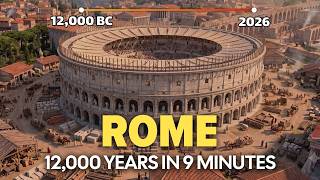 Evolution of ROME: Fixed-Camera Timelapse 12,000 Years in 9 Minutes9.6K views · 7w ago · +1/h
 Evolution of DUBAI: Fixed-Camera Timelapse 12,000 Years in 9 Minutes727K views · 8w ago · +1.4K/h
 Evolution of NEW YORK (12,000 Years in 11 Minutes) | Fixed-Camera Timelapse: Statue of Liberty307K views · 2mo ago · +86/h
 Evolution of PRAGUE: Fixed-Camera Timelapse 12,000 Years in 13 Minutes12.1K views · 2mo ago · +5/h
Statistics from the YouTube Data API, tracked by FameX. Views per hour, revenue and comparisons are FameX estimates.